A Divided City and a Dangerous Choice
In August 1961, the city of Berlin stood on edge. What had once been the heart of Germany was now a tense frontier — a symbol of a world divided between East and West. Barbed wire sliced through streets, families, and friendships. On one side stood democracy; on the other, the iron grip of socialism. And in the middle of it all was a young East German soldier named Hans Conrad Schumann.
At just nineteen years old, Schumann had joined the East German border police with hopes of building a stable life. But the job quickly turned into something darker. Instead of protecting people, he was ordered to keep them trapped inside East Germany. For a young man raised in the ruins of war, that command felt unbearable.
He began to feel like a prisoner guarding other prisoners.
The Moment That Defined a Generation
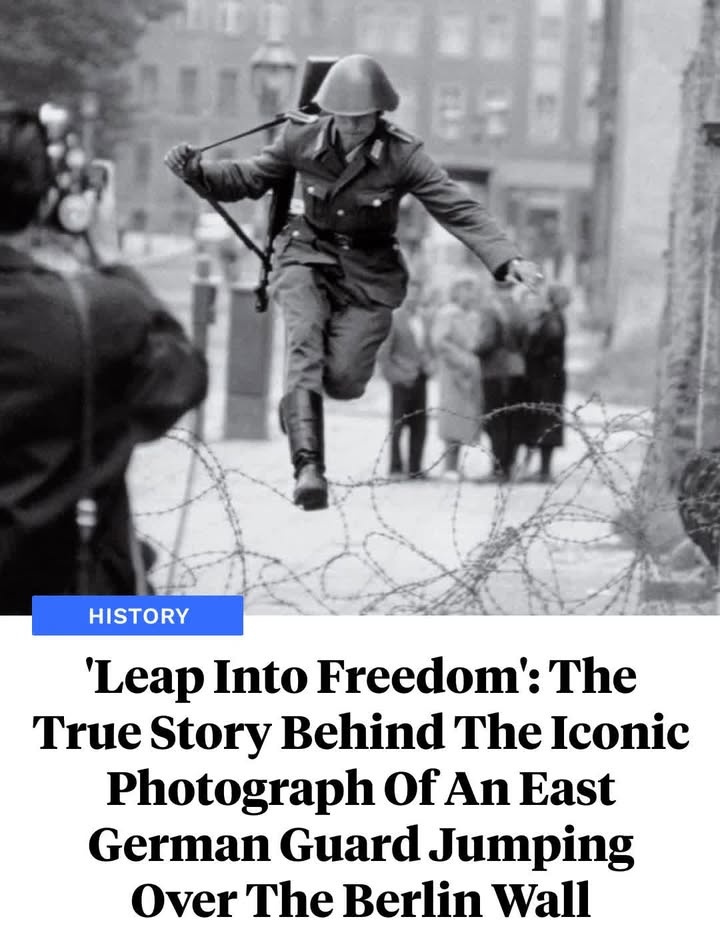
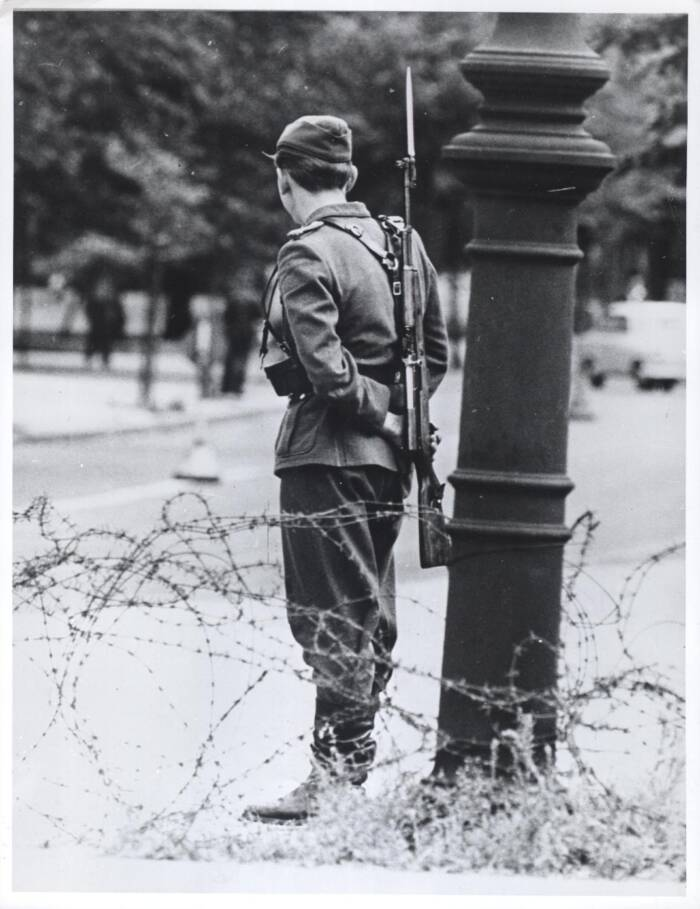
On August 15, 1961, Schumann was assigned to patrol the corner of Ruppiner Straße and Bernauer Straße — where coils of barbed wire had just been laid down to mark the first line of the Berlin Wall. He had no idea that within hours, he would make a choice that would echo through history.
As he stood watch, Schumann could see the pain the new border caused. Families called out to each other across the wire. A young woman tried to hand flowers to her mother on the other side. The reality of what he was enforcing began to sink in.
“I could not stand it any longer,” Schumann later recalled. “I didn’t want to live enclosed.”
Then came the moment that changed everything.
Across the street, a West German police officer noticed Schumann’s unease and whispered, “Jump, come over.” The crowd began to sense what might happen. Their murmurs grew. A photographer named Peter Leibing, stationed nearby, raised his camera — just in case.
Schumann took a deep breath, dropped his submachine gun’s strap, and ran.
Video : Conrad Schumanns Sprung über den Stacheldraht
The Leap Into Freedom
In one powerful motion, Hans Conrad Schumann leapt over the strands of barbed wire — his cap flying, his rifle midair, his body suspended between captivity and freedom. Leibing captured the exact moment the young guard’s boots left the ground.
That photograph would later be titled “Leap Into Freedom.” It became one of the most iconic images of the Cold War — a single second that captured the desperation, courage, and hope of millions trapped behind the Iron Curtain.
Schumann landed safely on the western side and sprinted toward a waiting West Berlin police van. As the doors slammed shut, he finally exhaled. He was free.
Life After the Jump
But freedom, as Schumann would discover, came with its own kind of chains.
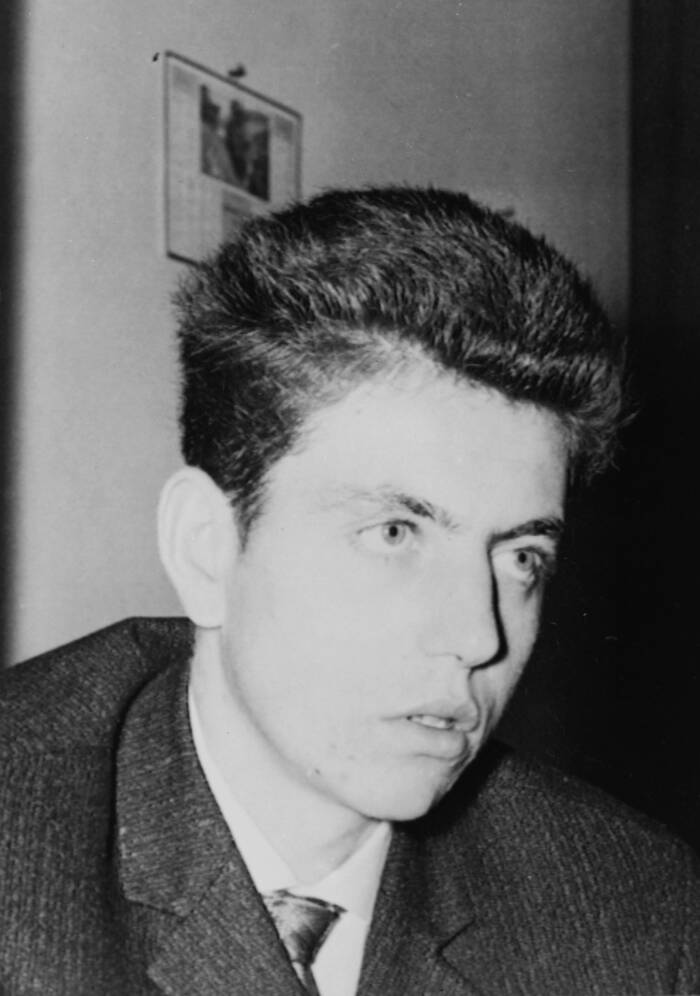
After defecting, he was celebrated as a hero in the West. Newspapers printed his image on front pages around the world. Yet behind the applause, Schumann struggled to build a new life. He worked odd jobs, battled loneliness, and carried a heavy burden — guilt for leaving his family behind.
The Stasi, East Germany’s secret police, never forgot about him. They intercepted his letters to his parents and tried to lure him back home. For years, Schumann lived in fear that he might be captured or assassinated. “I did not know,” he later said, “that the letters my parents sent were dictated by the Stasi.”
He fell in love, married, and tried to move on. But the scars of betrayal and exile ran deep. Even after the Berlin Wall fell in 1989, when he finally returned to his hometown, many people still viewed him as a traitor.
The Weight of Freedom
Schumann’s leap had made him a global symbol of resistance — but it had also taken a personal toll. The young man who once ran toward liberty became a quiet figure in later years, haunted by the past. He struggled with depression and alcoholism, unable to escape the shadow of the wall he’d once defied.
On June 20, 1998, at the age of 56, Hans Conrad Schumann took his own life. His death was a tragic reminder that freedom, while priceless, can also come at an unbearable cost.
The Legacy of a Leap
Despite the pain that followed, Schumann’s act remains one of the most defining images of human courage. That photograph — the young soldier midair, breaking free from oppression — became a timeless symbol of hope.
It spoke to everyone who has ever dreamed of a better life, everyone who has ever felt trapped, and everyone who has ever risked everything for the chance to be free.
In interviews years later, Schumann said, “Only since November 9, 1989, have I felt truly free.” Those words carried both triumph and sorrow — the realization that true freedom had cost him nearly everything.
What We Learn from Schumann’s Story
Hans Conrad Schumann didn’t leap for fame or politics. He didn’t plan to become a symbol. He jumped because he couldn’t stand the walls closing in around him — literal or emotional. His story reminds us that freedom often begins with a single, terrifying step into the unknown.
Video : The Story of Conrad Schumann’s Escape to Freedom as he defects to West Berlin, 1961
That leap over barbed wire was more than an escape from East Germany. It was a declaration — a young man’s refusal to let fear define his future.
Conclusion: The Courage to Jump
When the world remembers Conrad Schumann, it’s not just the image of a man mid-leap that stays with us. It’s what that leap represents: the courage to choose freedom over fear, even when the cost is unimaginable.
His moment of defiance continues to inspire generations who face their own walls — political, emotional, or otherwise. It reminds us that sometimes, all it takes to change history is one heartbeat of courage, one act of faith, and the strength to jump when everything tells you to stay still.
Conrad Schumann’s leap was more than a flight from East to West. It was a leap for all of humanity — a timeless reminder that even in the darkest times, the desire for freedom will always find a way to rise.