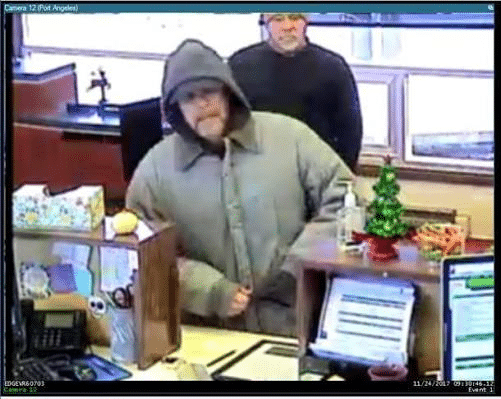
A bank robbery can leave investigators with very little to work with: a blurry security image, a nervous witness, a getaway vehicle, or a few scraps of physical evidence.
In this case, police did not have to search very far.
The robber had already given them the most useful clue of all.
According to reports from Yuba City Police and local news outlets, a man identified as John Chapman entered a bank in the Yuba City area and handed a teller a written demand for $10,000. The note was meant to make the teller act quickly and quietly.
Instead, it helped police identify the person who had written it.
At the bottom of the note was Chapman’s name.
He had apparently signed his own robbery demand.
The Demand Note That Changed Everything
Written notes are not unusual in bank robberies. They allow a suspect to communicate a demand without saying much, while giving the teller clear instructions about what to do.
Chapman’s note followed that basic pattern. He presented his demand and expected the transaction to end with him walking away with cash.
But the final detail changed the entire situation.
His name was written at the bottom of the document.
For a robber trying to hide his identity, it was almost the worst possible mistake. The paper he had handed to the teller was no longer simply evidence of what happened inside the bank. It potentially identified the person responsible.
A Simple Piece of Evidence With a Big Advantage
The note also had another advantage for investigators: it was physical evidence collected immediately after the robbery.
Bank employees are trained to preserve demand notes and turn them over to law enforcement. That meant police did not have to locate the document later or reconstruct what had been written on it.
They already had it.
And they already had a name.
Investigators could use that information as their starting point rather than beginning with an unidentified suspect.
Police Quickly Narrowed the Search
Once investigators connected the name on the note to a real individual, the focus of the case changed.
Instead of asking, “Who robbed the bank?” police could ask a much simpler question:
Where is John Chapman now?
That distinction mattered.
In many robbery investigations, officers may need to work through surveillance footage, witness descriptions, vehicle information and other evidence before they can identify a suspect.
Here, the suspect had apparently supplied his own name.
According to reports about the case, police eventually located Chapman at a Greyhound bus stop. He appeared to be trying to leave the area, but the rapid identification had given officers a crucial head start.
The Bus Stop Became the End of the Escape Plan
For someone attempting to disappear after a robbery, leaving town quickly might seem like a sensible plan.
A bus station offers plenty of movement and unfamiliar faces. Someone can arrive, buy a ticket and potentially travel far from the scene without drawing much attention.
Video: Bank robbery suspect shot, killed by Sacramento officers, police say
But that plan becomes much less useful when police already know exactly who they are searching for.
Chapman was taken into custody at the Greyhound bus stop before he could successfully leave.
The same note that had been intended to pressure a bank teller had helped investigators find the person who wrote it.
From Bank Counter to Police Custody
The sequence was remarkably simple.
A man entered the bank.
He handed over a demand note.
The note contained his name.
Police identified him.
They located him at a bus stop.
He was arrested in connection with the robbery.
What might otherwise have required a longer investigation was shortened by one extraordinary mistake.
Why the Signature Was Such a Serious Mistake
The most striking part of the case is not the amount of money requested. It is the contradiction built into the robbery itself.
The entire purpose of concealing one’s identity is to make identification difficult.
Yet signing a document does exactly the opposite.
A name creates a direct connection between a person and the piece of evidence containing that name. Investigators can then compare the information with available records and begin building a case around a specific individual.
It is a reminder that complicated crimes do not always require complicated solutions.
Video: Yuba City Police arrest two suspects involved in a series of armed robberies, searching for third
Sometimes the most important clue is sitting in plain sight.
Stress Can Lead to Remarkable Mistakes
People often assume that criminals carefully plan every detail before committing a crime.
Real situations can be much messier.
A robbery involves pressure, fear, time constraints and uncertainty. Even someone who has thought through an escape may make a surprisingly basic mistake once the situation begins.
Chapman’s apparent signature is an extreme example.
He reportedly took care of the one piece of paperwork that investigators needed most—by putting his own name on it.
Whether the signature resulted from habit, confusion or a momentary lapse was not clear from the available reporting. Whatever the reason, the consequence was the same.
The evidence pointed directly toward him.
A Crime Solved by Its Own Paper Trail
The story also illustrates why physical evidence can be so valuable.
Modern investigations often rely on sophisticated technology, including surveillance systems and forensic analysis. But investigators still pay close attention to the ordinary objects left behind during a crime.
A handwritten note can contain fingerprints, handwriting evidence, identifying information or other useful clues.
In this case, the most obvious clue was also the simplest.
A name.
And it was on the document the suspect had voluntarily handed to the bank.
The Irony of the $10,000 Demand
The robbery note was supposed to help Chapman control the situation.
Instead, it helped police control the investigation.
His demand reportedly asked for $10,000, but the larger consequence of the note had nothing to do with the money. It gave investigators a direct path toward identifying him and locating him before he could get far from the area.
The paperwork he used to commit the crime became the paperwork that helped bring the investigation to a rapid conclusion.
Conclusion: The Clue Was in His Own Handwriting
The case of John Chapman stands out because the mistake was so simple.
He reportedly entered a bank, handed a teller a demand note and expected the piece of paper to help him get away with a robbery. Instead, the note contained the one detail a bank robber should never want investigators to have: his real name.
Police were able to identify him and later locate him at a Greyhound bus stop, where he was taken into custody.
There was no elaborate mystery behind the breakthrough. No complicated trail had to be followed.
The answer was already sitting at the bottom of the note.
For investigators, it was an unusually convenient piece of evidence. For the person who wrote it, it was a mistake that turned a planned robbery into a much shorter investigation.