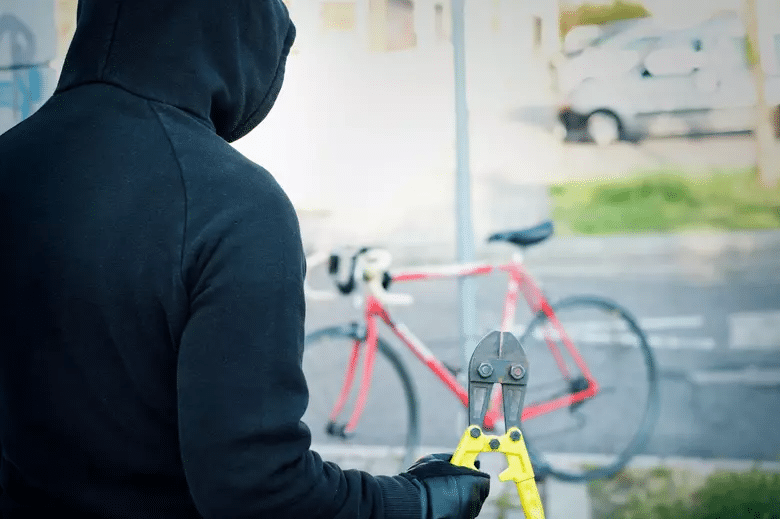
A locked bicycle sitting quietly on a public rack usually doesn’t attract much attention.
But in Grand Junction, Colorado, one particular bike was never meant to be an ordinary bicycle.
It was bait.
Police had deliberately placed a high-end bicycle worth about $4,000 in an area where bike theft had become a recurring problem. Hidden inside the bicycle was a GPS tracker.
Then officers waited.
The idea was simple: if someone stole the bicycle, police could follow the signal and find out where it went.
What happened next was far more revealing than anyone expected.
The tracker eventually led officers to a residential property where they discovered 80 bicycles and arrested seven people in connection with the investigation.
One bicycle had become the thread that began unraveling a much larger story.
Why Grand Junction Police Used a Bait Bike
Bicycle theft can be surprisingly difficult for police to investigate.
A stolen bicycle may disappear within minutes. It can change hands repeatedly, be stripped for parts or end up stored somewhere far from where the original theft occurred.
Unlike a car, a bicycle usually doesn’t have a license plate that automatically identifies it.
That creates a frustrating problem for investigators.
Even when someone reports a stolen bike, police often need a serial number, photographs, receipts or other identifying information before they can confidently connect a recovered bicycle to its owner.
A bait-bike operation reverses that process.
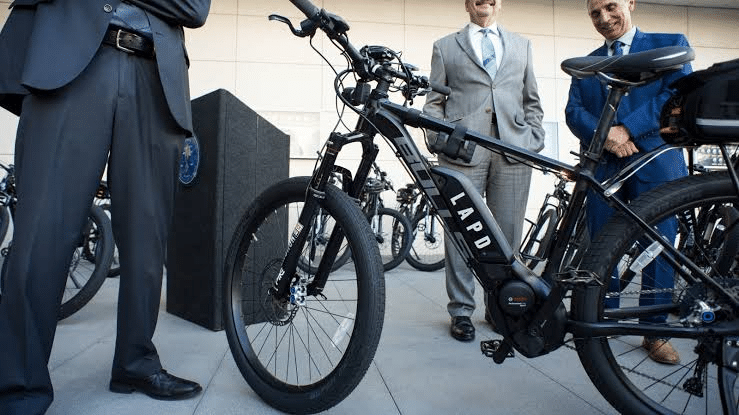
Instead of waiting for a theft and hoping investigators can reconstruct what happened afterward, police place a desirable bicycle in a carefully selected location and equip it with tracking technology.
The bicycle becomes the lure.
The GPS becomes the trail.
Video: Bait Bike Prank!
Why Use a $4,000 Bicycle?
The value of the decoy was significant.
A bicycle worth roughly $4,000 is far more attractive to someone deliberately targeting expensive bikes than an inexpensive department-store model.
Police wanted the bait to look convincing.
It needed to resemble the kind of bicycle a real thief might encounter and immediately recognize as valuable.
Once the bicycle was placed, officers could wait for the opportunity to arise naturally.
They didn’t need to guess where a stolen bike might travel.
They could simply follow the electronic trail.
The Moment the GPS Tracker Activated
Eventually, someone took the bait.
The moment the bicycle began moving, police received the information they had been waiting for.
The GPS tracker transformed the theft from a disappearing-object problem into a moving investigation.
Officers could monitor the bicycle’s location as it traveled through Grand Junction.
Think of it like watching a digital breadcrumb trail.
Each new location gave investigators another clue.
The signal eventually stopped at a residential property.
At that point, the operation changed.
Police no longer had to wonder where the stolen bicycle had gone.
They had a destination.
But the property contained something much bigger than one missing bike.
Video: UW Eau Claire’s ‘bike bait’ program continues to combat thefts
An Open Garage Revealed the First Big Clue
When officers approached the residence, they reportedly noticed that the garage door was open.
That gave investigators an important view from outside.
Inside were numerous bicycles.
Not just one.
Not two.
There were enough bikes visible to suggest that the tracked bicycle had led officers into something much larger than an isolated theft.
The GPS operation had essentially opened a door into a potential bicycle-theft hub.
What began as one stolen bicycle now looked like the tip of an iceberg.
The Garage Changed the Investigation
A bait-bike operation can have a very limited outcome.
Police might recover the decoy, identify one suspect and close the case.
That wasn’t what happened here.
The sheer number of bicycles at the property suggested that investigators might be dealing with a much broader pattern.
The question was no longer simply, “Who stole the bait bike?”
It became:
“Where did all these bicycles come from?”
That question would require investigators to examine each recovered bicycle individually.
Police Recovered 80 Bicycles
When officers searched the property, they recovered approximately 80 bicycles.
That number transformed the operation.
One GPS-equipped bicycle had led police to a garage containing dozens of additional bikes.
However, an important distinction matters here.
Finding 80 bicycles at one property does not automatically establish that every bicycle was stolen.
Investigators still have to determine ownership.
They may compare serial numbers against stolen-property reports, examine purchase records, contact victims and look for other evidence connecting individual bicycles to specific thefts.
That process can take time.
Still, the recovery demonstrated the potential scale of the investigation.
The Serial Numbers Became Crucial
A bicycle’s serial number can be one of the most valuable pieces of information after a theft.
Owners who have recorded those numbers have a much better chance of proving ownership when police recover their property.
For investigators, the process is almost like matching pieces of a giant puzzle.
One recovered bicycle may connect to one police report.
Another may belong to someone who never reported it missing.
A third could have been legally purchased.
The physical recovery is only the beginning.
The identification process determines what happened to each individual bicycle.
Seven Arrests Followed the Investigation
The operation eventually resulted in seven arrests connected to the investigation.
That figure reinforced the idea that officers had uncovered something considerably larger than a single bicycle theft.
The bait bike had served as an entry point.
Instead of investigating one isolated incident, police were able to examine a property containing a large collection of bicycles and pursue multiple people connected to the case.
This is one of the major advantages of GPS bait operations.
A stolen bicycle normally moves away from the crime scene.
With a tracker, that movement becomes useful evidence.
The thief may believe the stolen property is disappearing into the distance.
For investigators, it may actually be leading them directly to the next location in the investigation.
Why Bicycle Theft Can Become a Bigger Problem
Bicycle theft sometimes receives less attention than vehicle theft, but for victims, the loss can be substantial.
Modern bicycles can cost thousands of dollars.
High-end road bikes, mountain bikes, electric bicycles and specialized racing equipment can be particularly valuable.
Once stolen, those bicycles may be resold through informal markets, online listings or personal networks.
That creates an incentive for repeat theft.
A single stolen bicycle may therefore be part of a much larger pattern.
This helps explain why a bait-bike strategy can be useful.
Police aren’t necessarily trying to recover one bicycle.
They’re trying to follow the movement of stolen property far enough to identify the people and locations behind it.
One Bicycle Became a Digital Trail
The most fascinating part of the Grand Junction operation wasn’t simply the number of bikes recovered.
It was the chain of events.
A valuable bicycle was deliberately placed.
A thief took it.
The GPS tracker activated.
Police followed the signal.
The signal led them to a residence.
An open garage revealed a large collection of bicycles.
Investigators recovered approximately 80 bikes.
Seven people were arrested.
That’s an unusually clean investigative sequence.
The technology didn’t solve the entire case by itself.
The tracker simply gave officers something incredibly valuable: location.
From there, traditional police work took over.
Officers still had to investigate the property, recover evidence, identify bicycles and determine which items were connected to reported thefts.
What the Operation Really Revealed
It would be easy to look at the story as a simple case of police tricking a thief.
But the larger lesson is about how investigators can turn movement into evidence.
Without the tracker, the $4,000 bicycle might have disappeared.
With the tracker, its journey became visible.
And that journey apparently led somewhere important.
The garage demonstrated how stolen-property investigations can expand rapidly once police identify a central storage location.
One bicycle may be difficult to trace.
Dozens of bicycles in one place create an entirely different investigative picture.
The Bait Was Only the Beginning
The GPS bicycle didn’t prove the history of every bike in the garage.
It didn’t automatically establish guilt for everyone connected to the property.
And it couldn’t explain how every bicycle had arrived there.
Those questions required further investigation.
But it accomplished something that is often difficult in property crimes: it gave police a direct lead.
Instead of starting with an empty bicycle rack and a missing object, investigators had a moving signal that eventually stopped at a specific address.
That is an enormous difference.
A $4,000 Bike Led to a Much Bigger Discovery
The Grand Junction case illustrates why law enforcement agencies have experimented with GPS-equipped bait bicycles in areas affected by repeated theft.
The strategy is simple but clever.
Put an attractive target where a thief is likely to see it.
Track it if someone takes it.
Then follow the trail.
In this case, that trail went much farther than expected.
A single bicycle valued at approximately $4,000 led investigators to a residential garage containing about 80 bicycles and ultimately contributed to seven arrests.
The investigation still required police to determine the origin and ownership of individual bicycles, so the recovery figure should not be interpreted as proof that every bike had been stolen.
But the broader discovery was undeniable.
The decoy had worked.
Conclusion: One Bike Exposed a Garage Full of Questions
The bicycle looked like an easy target.
Instead, it became a police tracking device hiding in plain sight.
Grand Junction officers placed the approximately $4,000 bike in an area associated with theft, equipped it with GPS technology and waited.
When someone took it, the signal gave police something investigators rarely get in a property-theft case: a real-time path to the stolen item.
That path ended at a residential property.
Inside the garage were approximately 80 bicycles.
Seven people were arrested in connection with the investigation, while police worked to determine the ownership and history of the recovered bikes.
The clever part of the operation wasn’t the bicycle itself.
It was what happened after the bicycle disappeared.
One stolen bike became a signal. The signal became a location. And that location opened the door to an investigation far larger than the original theft.