On November 22, 1987, Chicago television viewers witnessed something that had no place in their Sunday-night programming.
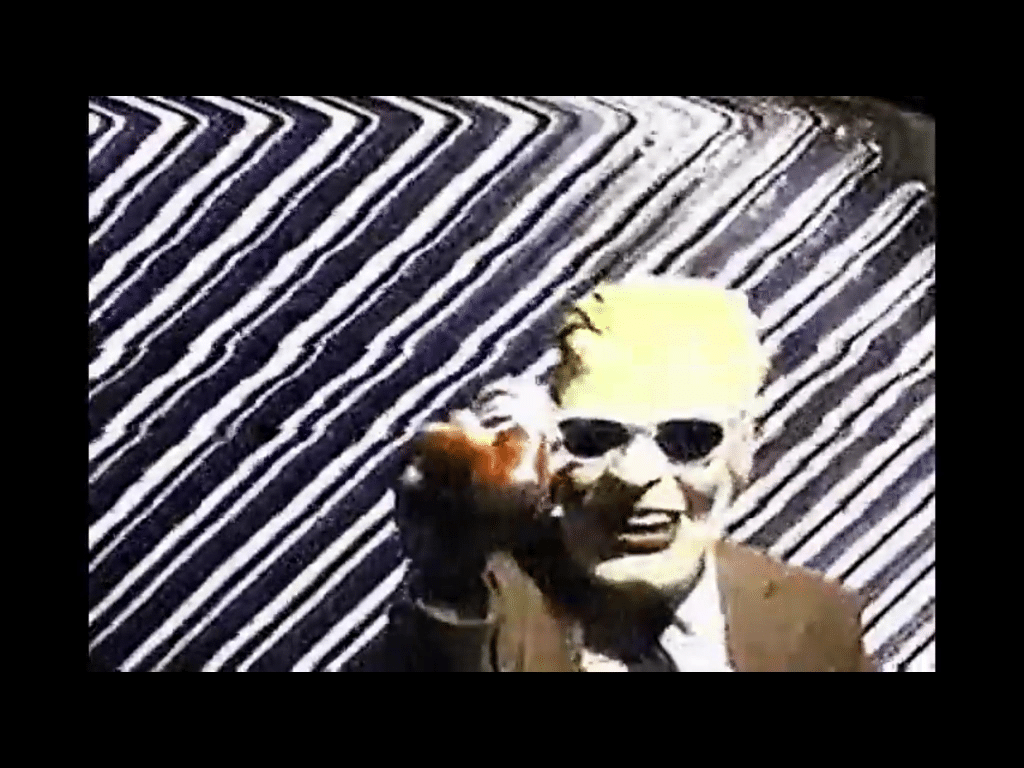
During WGN-TV’s evening news, the broadcast suddenly disappeared. For about 11 seconds, viewers saw a strange figure wearing a Max Headroom mask, sunglasses and a suit. The person stood in front of a rippling sheet of corrugated metal, moving awkwardly while the screen showed no sound.
Then, just as suddenly, the regular program returned.
At the time, viewers had no idea what they had seen. Station engineers were equally puzzled.
But the night was not over.
Roughly two hours later, the same masked figure interrupted another Chicago station—WTTW, the city’s PBS affiliate. This time, the unauthorized broadcast lasted about 90 seconds and included bizarre sounds, fragments of speech and a Pepsi can.
Nearly four decades later, the person behind the mask has never been officially identified.
The incident became known as the Max Headroom signal hijacking, one of the strangest unsolved events in American television history.
The First Broadcast Interruption Shocked WGN Viewers
WGN-TV was broadcasting its 9 p.m. news when the normal signal suddenly disappeared.
Sports anchor Dan Roan had been presenting a segment when viewers were confronted with an unauthorized video. A person wearing a Max Headroom-style mask appeared against a moving corrugated-metal background.
There was no explanation and no warning.
The figure simply appeared.
WGN engineers reacted quickly and managed to restore the legitimate broadcast after approximately 11 seconds. The interruption was so brief that station employees initially had little information about who had caused it or how the signal had been accessed.
The station contacted authorities and began examining what had happened.
At that point, the incident could have been dismissed as an unusual technical attack.
Then WTTW was targeted.
The Second Hijacking Was Much Longer
Later that evening, WTTW was broadcasting Doctor Who when its signal was suddenly replaced by the same mysterious figure.
This time, viewers had much longer to watch.
For approximately 90 seconds, the masked person appeared on screen, moving in front of the same corrugated-metal background. The audio was distorted and strange. The figure hummed, mumbled and appeared to deliver fragments of speech.
At one point, the person held up a can of Pepsi.
The scene became increasingly bizarre before the unauthorized transmission eventually stopped and the regular program returned.
Why WTTW Could Not Cut Away Immediately
The difference between the two incidents was significant.
WGN’s engineers had been able to interrupt the unauthorized signal almost immediately. WTTW did not have the same convenient switching capability available at that moment.
As a result, the pirate transmission continued until it ended on its own.
That gave viewers much more footage to remember—and gave investigators much more material to examine.
The two attacks happened on the same night, only hours apart, making it extremely likely that the incidents were connected.
Who Was Max Headroom?
The mysterious figure was not a random choice.
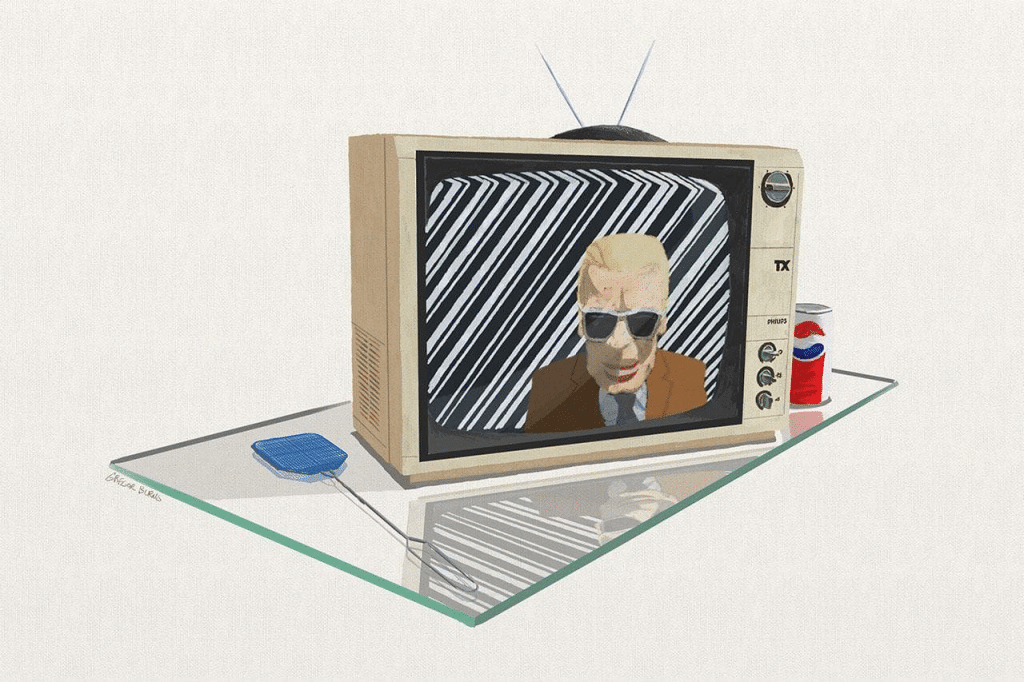
Max Headroom was a fictional television character popular during the 1980s. The character was known for his futuristic appearance, exaggerated facial movements and electronically distorted speech.
Actor Matt Frewer portrayed Max Headroom in television commercials and the science-fiction series Max Headroom.
The hijacker copied that recognizable image but turned it into something much stranger.
The mask, sunglasses and jerky movements were familiar enough for viewers to recognize the reference. Yet the context was completely wrong.
Max Headroom was supposed to appear in commercials and television programs.
Instead, this version had somehow taken over the broadcast itself.
The Strange Footage Became the Biggest Clue
The surviving WTTW footage remains the central piece of evidence from the incident.
It shows the masked figure standing in front of what appears to be a homemade rotating or moving corrugated-metal backdrop. The production does not look like a professional television studio.
That detail raises an obvious question.
How did someone create the video, transmit it to a television station and overpower the station’s legitimate signal?
Video: News reports on 1987 Max Headroom tv broadcast signal intrusion (the “Max Headroom Incident”)
The strange appearance of the broadcast has often distracted people from the technical achievement involved.
The hijacker had to do more than make a bizarre video.
They had to get that video onto the air.
How Could Someone Hijack a Television Signal?
In 1987, television stations commonly used microwave links to move broadcast signals between different locations.
These links relied on radio frequencies traveling between fixed points, often along a line of sight.
In general terms, someone with the right technical knowledge could attempt to overpower a legitimate microwave transmission by sending a stronger unauthorized signal toward the receiving equipment.
That was not an easy task.
The person responsible would have needed to know important details about the transmission system, including its frequency and physical location. They would also have needed suitable equipment and a way to position the transmitter accurately.
The Technical Challenge Makes the Mystery Deeper
Targeting one station would have been impressive enough.
Targeting two different stations on the same night suggests considerably more preparation.
The person responsible apparently understood enough about Chicago’s television infrastructure to interfere with separate broadcasts at carefully chosen moments.
That does not necessarily tell us who the culprit was, but it does tell us that the stunt required planning.
This was not simply someone pointing a television antenna in the wrong direction.
Why Investigators Never Identified the Culprit
Video: UNSOLVED: The Creepiest TV Hack in History
The FCC investigated the incident, and the FBI also became involved. Yet neither investigation produced a publicly confirmed suspect.
One major problem was the nature of the crime.
A pirate transmission does not leave an obvious fingerprint. Investigators could determine that an unauthorized signal had interrupted the legitimate broadcast, but determining exactly where that signal originated was much more difficult.
The combined interruptions lasted only around 100 seconds.
That gave investigators very little time to locate the transmission source while the attack was actually happening.
They needed to identify the equipment, determine where it had been operated and connect it to a person.
None of those pieces came together publicly.
Decades of Theories Have Never Solved the Mystery
The strange footage naturally attracted amateur investigators, journalists and television enthusiasts.
Over the years, numerous theories have circulated online about who might have been responsible. Some theories focus on people with technical knowledge or connections to broadcasting. Others examine the strange references and imagery used during the WTTW interruption.
But there is an important distinction between a theory and a proven identification.
No publicly confirmed investigation has established the identity of the person behind the mask. No verified confession has settled the case, and no named individual has been officially held responsible.
That uncertainty is part of what has kept the story alive.
What We Know—and What We Still Don’t
The basic facts are surprisingly clear.
Two Chicago television stations were interrupted on the same night.
The unauthorized broadcasts featured a person wearing a Max Headroom-style mask.
The WGN interruption lasted roughly 11 seconds.
The WTTW intrusion lasted about 90 seconds.
The pirate signal successfully overpowered legitimate station transmissions.
And despite investigations by federal authorities, the person responsible was never publicly identified.
What remains unknown is just as important.
Who planned it?
Where was the transmitter?
How many people were involved?
And why did they do it?
Those questions remain unanswered.
Why the Max Headroom Mystery Still Fascinates People
Plenty of strange television moments have disappeared into history. This one did not.
Part of the reason is the footage itself.
The WTTW recording preserves the actual intrusion. It is not a reconstruction made years later. Viewers really saw that masked figure appear on their televisions in 1987.
The low-budget appearance makes the event even more unsettling. Nothing about it looks like a polished television production. The homemade background, distorted audio and bizarre movements create the feeling that someone briefly opened a door into a completely unexplained world.
Then the broadcast ended.
No explanation followed.
Conclusion: The Face Behind the Mask Remains Unknown
The Max Headroom signal hijacking remains one of television’s most unusual unsolved mysteries.
On a Sunday night in 1987, someone managed to interrupt two Chicago broadcasts using an unauthorized transmission. The first attack lasted only seconds. The second gave viewers a much longer look at a masked figure who seemed determined to turn a television broadcast into something bizarre and unforgettable.
Investigators eventually understood the general technical method, but they never publicly established who was responsible.
That is what makes the case so enduring.
The footage exists. The broadcasts happened. The technical challenge was real. The investigations were real.
But the person behind the mask remains unknown.
After nearly four decades, one question still hangs over those strange Chicago broadcasts:
Who was wearing the Max Headroom mask?