The attic seemed like the kind of place where forgotten things went to disappear.
When relatives began clearing out a family home in Defiance, Ohio, they expected dusty furniture, old household items, and the usual collection of belongings accumulated over several generations. Nothing about the cleanup suggested that they were about to uncover a remarkable piece of baseball history.
Then they moved an old dollhouse.
Beneath it sat a small cardboard box that looked completely ordinary. There was nothing about its faded exterior to suggest that it contained anything valuable.
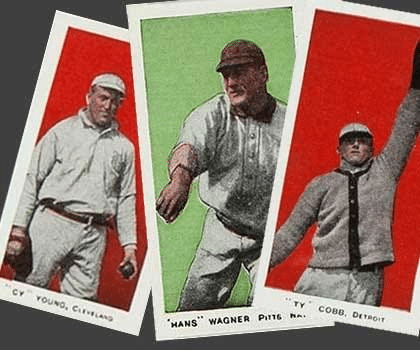
But inside were roughly 700 baseball cards dating back more than a century.
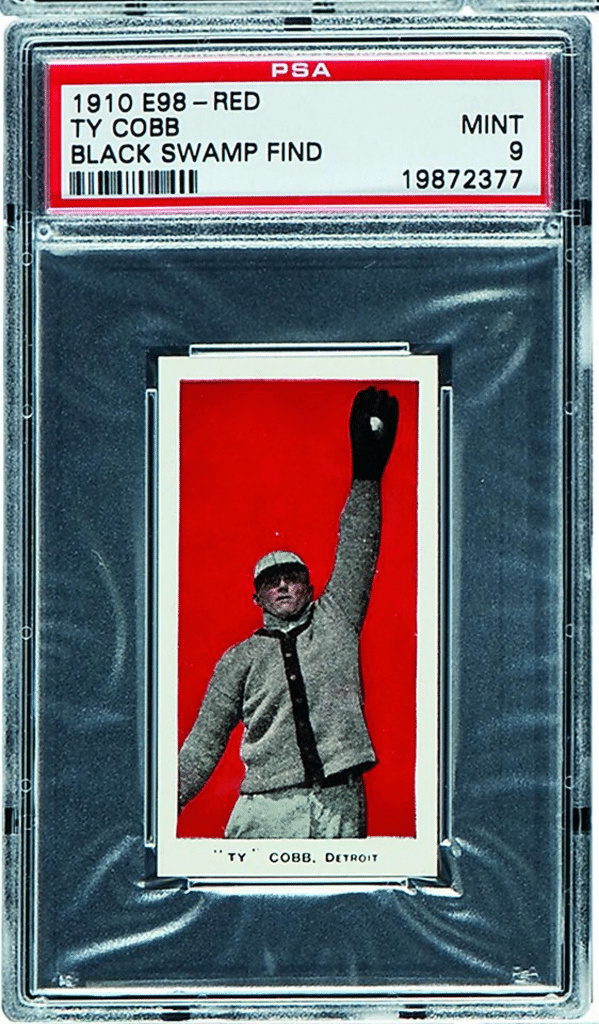
The discovery eventually revealed a rare collection from the E98 series, including cards featuring some of baseball’s most recognizable early stars. When the first 37 cards were offered at auction, they brought a combined $566,132.
What had spent decades hidden beneath a dollhouse had suddenly become a major sports memorabilia discovery.
The Ordinary Attic Box That Nobody Had Opened
The discovery happened while relatives were preparing the Defiance property for an estate cleanout.
The attic had remained largely undisturbed for years. That turned out to be an extraordinary stroke of luck for the baseball cards.
As the family worked through the room, they came across the old dollhouse. When someone moved it, the small cardboard box underneath finally came into view.
At first, there was little reason to think it contained anything special.
The family opened it and found stacks of early baseball cards. Their age was immediately apparent, but age alone does not tell you whether an old collectible is valuable.
The real surprise came later.
Experts determined that the cards belonged to the E98 baseball card set, a scarce candy-issue series produced around 1909 to 1911.
Suddenly, an ordinary attic box had become a historical time capsule.
A Collection Hidden in Plain Sight
Think about how easily the discovery could have gone differently.
The box could have been thrown away. The cards could have been separated among family members years earlier. Someone could have handled them repeatedly, folded them, or simply forgotten about them.
Instead, they remained together.
For nearly a century, the cards had avoided the everyday handling that destroys so many fragile paper collectibles.
That quiet neglect may have been the best preservation system they could have received.
Why 100-Year-Old Baseball Cards Can Be So Valuable
Collectors do not value vintage baseball cards simply because they are old.
Age is only one piece of the puzzle.
Collectors also look at the player’s identity, the rarity of the card, its condition, the printing history, and how many comparable examples have survived.
The E98 cards checked several important boxes.
The set dates from an era when baseball cards were commonly distributed as promotional items with products such as candy. Unlike modern trading cards, these small pieces of cardboard were never necessarily intended to become treasured collectibles.
Children handled them.
They carried them around.
They traded them.
They folded them.
And eventually, many disappeared.
That makes a century-old example in exceptional condition something entirely different.
The E98 Set Was Small but Historically Important
The E98 series is commonly associated with a set of 30 baseball subjects produced around 1909 to 1911.
The relatively small checklist makes the Defiance discovery even more intriguing.
The family did not uncover just one forgotten card.
They reportedly found roughly 700 cards, including multiple examples of players from the same set.
For collectors, that kind of concentrated find is extraordinary.
It is almost like opening an old family trunk and discovering that someone accidentally preserved an entire chapter of baseball history.
The Attic May Have Protected the Cards for Generations
Paper does not normally age gracefully.
Over a hundred years, baseball cards can suffer from moisture, sunlight, insects, rough handling, stains, bends, tears and countless other forms of damage.
The Defiance cards benefited from something collectors can rarely manufacture after the fact: time spent undisturbed.
The box had remained beneath the dollhouse, away from everyday handling.
Nobody was sorting through the cards every few months.
Nobody was taking favorite players out to show friends.
Nobody was putting them in pockets or stacking other objects on top of them.
Neglect Became an Accidental Preservation Method
That is one of the most fascinating parts of the story.
The family did not appear to preserve the cards using sophisticated archival equipment. There was no elaborate climate-controlled vault.
The collection simply sat there.
For generations, the cards remained inside an ordinary box in an attic.
Sometimes preservation happens deliberately.
Sometimes it happens because nobody remembers that something exists.
In this case, the second scenario appears to have worked remarkably well.
What Experts Saw in the Vintage Baseball Cards
Once the family realized they might have something important, professional evaluation became essential.
Vintage sports cards require careful examination. Experts need to determine whether the cards are authentic, identify their specific issue, evaluate their condition, and compare them with known examples.
Condition plays a particularly important role.
A card can be historically significant and still have relatively modest market value if it has heavy creases, missing corners, discoloration, writing or other serious damage.
The Defiance collection presented a much more unusual picture.
Many of the cards had retained strong colors, sharp corners and remarkably little evidence of handling.
That combination immediately attracted attention.
Video: Baseball cards nearly thrown away now up for auction with bids approaching $500,000
Why Condition Matters So Much
Imagine two baseball cards produced in the same year.
One spent decades being carried around by children, stuffed into drawers and handled thousands of times.
The other remained untouched in a dark box.
Both cards are technically the same age.
Their market values can be dramatically different.
For vintage collectors, condition is almost like a multiplier. Rarity creates interest, but exceptional preservation can push a scarce card into an entirely different category.
That is what made the Ohio discovery so compelling.
The Family Faced an Unexpected Decision
Finding valuable baseball cards is one thing.
Figuring out what to do with hundreds of them is another.
The collection reportedly involved approximately 20 cousins, all descendants of the family connected to the attic.
Suddenly, a routine estate cleanup had become a complicated collectibles transaction.
Who owned which cards?
Should the family sell everything at once?
Should they keep some pieces?
How should the proceeds be divided?
These are questions most families never expect to face during an attic cleanout.
A Family Discovery Became a Shared Windfall
Video: WAS THIS BOX OF VINTAGE BASEBALL CARDS WORTH $500?
Rather than treating the discovery as belonging to only one branch of the family, the relatives worked together around the collection.
That made the story more than just another tale about a valuable antique found in an old house.
It became a family story.
The cards had survived because they remained together for generations. Now, their value was being shared among the descendants of the people connected to the collection.
The financial result was impressive, but the history behind the discovery may be just as memorable.
The First 37 Cards Bring More Than $566,000
The family did not immediately send all 700 cards to auction.
Instead, an initial group of 37 cards was offered.
The results provided a powerful indication of just how significant the collection might be.
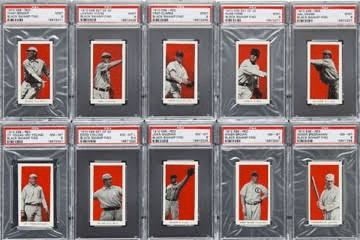
Those first 37 cards sold for a combined $566,132.
Individual prices varied depending on the player, rarity and condition of each card. The strongest examples attracted particular attention from collectors seeking early baseball memorabilia.
The sale also demonstrated something important about the collection’s provenance.
These were not random cards assembled from dozens of unrelated sources. They had been discovered together in a single family attic after spending generations in the same environment.
That kind of origin story adds a fascinating layer of authenticity and historical context.
Why the Dollhouse Became Part of Baseball History
The old dollhouse itself was never valuable because of baseball.
It simply happened to be sitting in exactly the right place.
For decades, it unknowingly covered the cardboard box that contained one of the family’s most valuable possessions.
That small detail gives the discovery its almost storybook quality.
Imagine moving an old piece of furniture because you’re preparing a house for sale. You expect dust underneath it.
Instead, you find a box filled with baseball cards that were already old when your grandparents were young.
A Forgotten Collection Became a Time Capsule
The cards offer more than financial value.
They provide a glimpse into American life more than a century ago, when baseball was becoming an increasingly important part of popular culture and collectible cards were still a relatively simple promotional novelty.
The players pictured on those cards belonged to an earlier generation of the sport.
The cardboard itself carries evidence of another era.
And the fact that the cards survived together for so long makes the collection feel almost like a message from the past.
Conclusion: The Attic Find That Changed Everything
The discovery in Defiance, Ohio, began with a simple estate cleanout and an ordinary cardboard box hidden beneath an old dollhouse.
Inside were roughly 700 baseball cards dating from the early 1900s, including cards from the highly regarded E98 series.
Their remarkable preservation made the collection especially significant. After professional evaluation, the first 37 cards were placed on the auction market and sold for a combined $566,132.
The story is a reminder that valuable history does not always announce itself.
Sometimes it sits quietly in a cardboard box.
Sometimes it hides beneath a forgotten dollhouse.
And sometimes the most extraordinary discovery in an old family home is the thing everyone walked past for decades without realizing what was underneath.