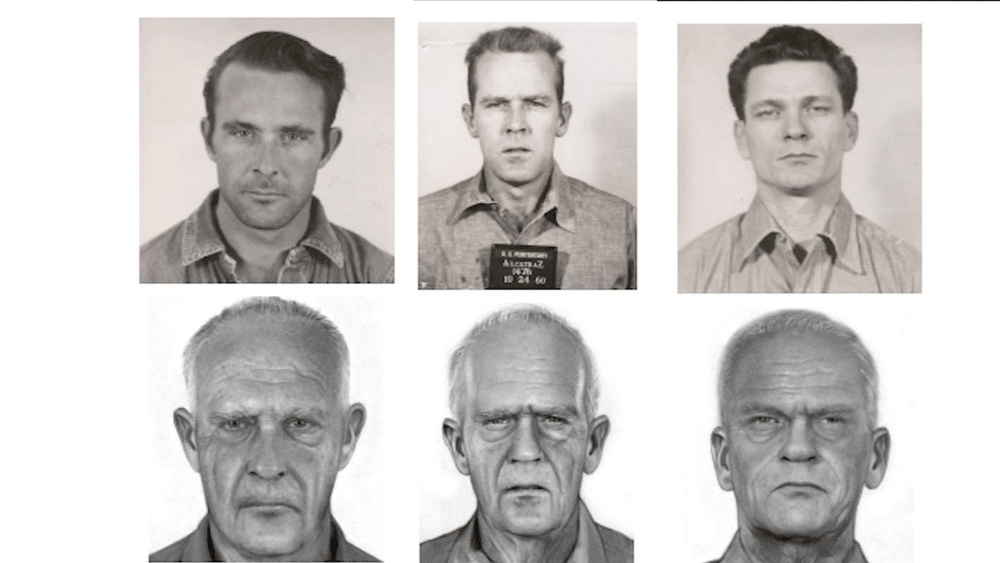
At first glance, everything appeared normal inside Alcatraz Federal Penitentiary on the morning of June 12, 1962.
Prisoners were supposed to be sleeping in their cells. Guards followed their usual inspection routine. Nothing seemed unusual.
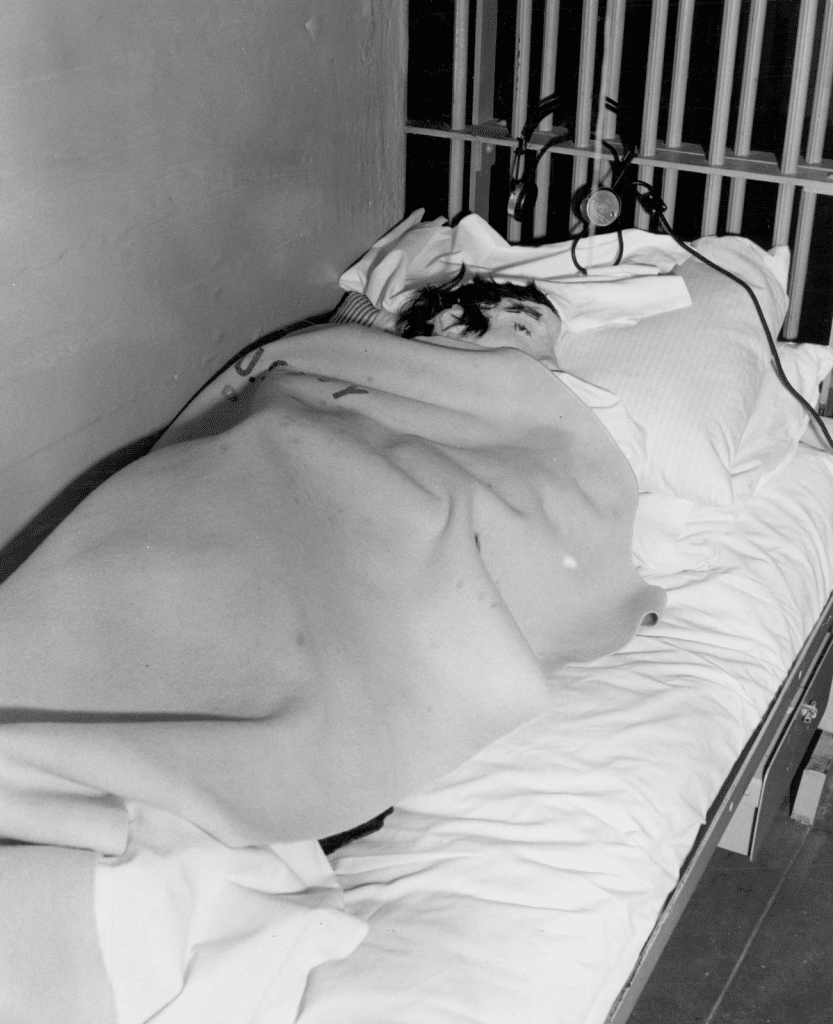
Then a guard reached toward one of the beds.
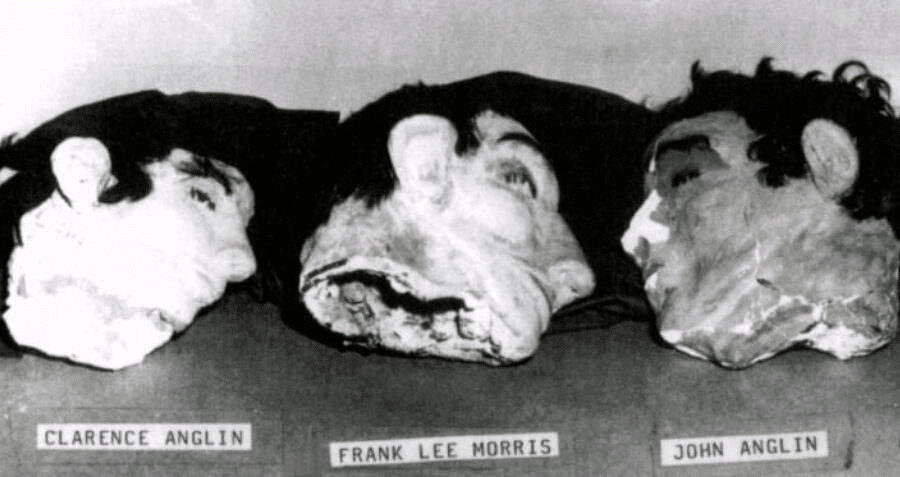
The head rolled off the pillow.
It was a dummy.
Within minutes, two more artificial heads were discovered. Three prisoners—Frank Morris and brothers John and Clarence Anglin—had disappeared.
The discovery exposed one of the most remarkable prison escapes in American history. The men had spent months secretly modifying their cells, creating disguises, building equipment and preparing a route across one of the most dangerous stretches of water in the United States.
What happened after they reached the bay remains a mystery.
Did they drown?
Did they somehow reach the mainland?
More than six decades later, no one has produced a definitive answer.
Why Escaping Alcatraz Was Considered Nearly Impossible
Alcatraz Island sits in San Francisco Bay, surrounded by cold water and strong currents.
From 1934 until the federal penitentiary closed in 1963, the island housed prisoners considered especially difficult to manage. The prison relied not only on reinforced construction and armed guards but also on geography.
The water itself was supposed to be the final wall.
Escape attempts were not unheard of. Thirty-six prisoners took part in 14 known attempts during the prison’s history. Most were captured, killed or presumed lost in the bay.
Frank Morris arrived at Alcatraz in 1960. John Anglin followed later that year, while his brother Clarence arrived in 1961. The men already knew one another from previous prison experiences.
Their cells were positioned close enough for communication.
That proximity gave them something valuable: time to plan.
The Secret Work Behind the Prison Walls
The escape did not happen overnight.
For months, the prisoners quietly worked on openings behind their cells. Each cell contained a ventilation area near the floor, and behind those openings was a narrow utility corridor.
Instead of attacking the heavily guarded front of the cells, the men gradually enlarged the space around the ventilation grilles.
They used improvised tools and carefully concealed the evidence of their work.
The prisoners covered the altered areas when necessary, allowing the cells to appear normal during inspections.
A Hidden Workshop Above the Cells
Once they gained access to the utility area, the men discovered a concealed space where they could work without immediately attracting attention.
There they gathered materials and constructed equipment for the escape.
Their most ambitious project was a homemade raft made from dozens of prison-issued raincoats. They also prepared paddles and makeshift flotation equipment.
The plan depended on getting beyond the prison building and then crossing the bay.
But there was another problem.
The men needed to leave their beds without immediately alerting the guards.
That is where the fake heads came in.
The Fake Heads That Fooled Alcatraz Guards
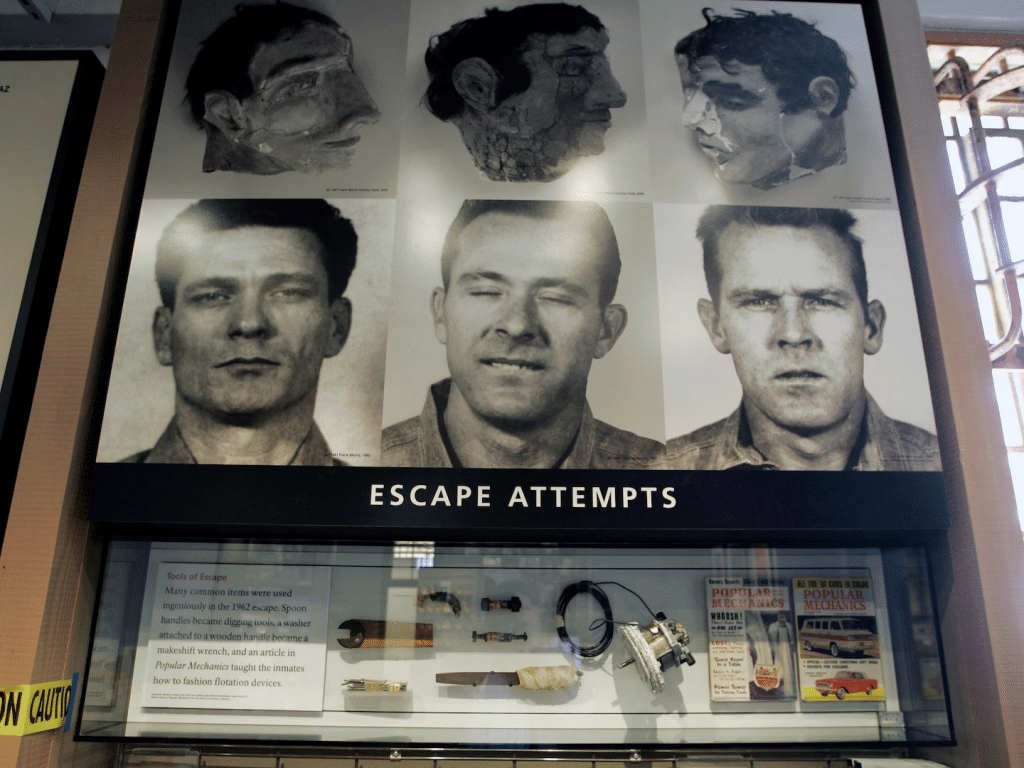
The escapees created artificial heads using materials available inside the prison.
They shaped the heads, painted them to resemble human skin and added real hair obtained from the prison barbershop.
From a distance, particularly in dim lighting, the illusion could appear convincing.
The prisoners placed the heads on their pillows and arranged blankets and clothing around them to create the appearance of sleeping bodies.
It did not need to fool anyone up close.
It only needed to survive routine inspections.
And it did.
The deception gave Morris and the Anglin brothers precious time.
One conspirator, Allen West, was also involved in the plan but could not escape his cell when the others departed. His opening was not ready, leaving him behind.
Later, West provided investigators with important information about what the other three men had planned.
The Night the Three Prisoners Disappeared
On the night of June 11, Morris and the Anglin brothers put their months of preparation into action.
They left their cells through the openings they had created and entered the utility corridor.
From there, they moved upward toward the prison roof.
Investigators later reconstructed much of their route. The prisoners reached the roof, crossed the building and eventually made their way toward the shoreline.
The plan was to use their homemade raft to leave Alcatraz.
According to West’s account, the men intended to travel toward Angel Island and eventually reach the mainland area around Marin County.
That plan, however, depended on one enormous uncertainty.
The bay.
Video: Alcatraz Escape Documentary: The Overlooked Evidence
The Water Was the Final Test
The San Francisco Bay crossing was dangerous even under ideal circumstances.
The water around Alcatraz is cold, and currents can change direction and strength. Darkness would have made navigation even more difficult.
The men had no conventional boat.
They had a homemade raft constructed from raincoats.
Investigators later found evidence that strongly suggested the prisoners had prepared for a water crossing. But no confirmed eyewitness account established exactly when or where the three men launched.
That missing piece became the central mystery.
The Search Found Clues—but Not the Prisoners
When guards discovered the fake heads on June 12, authorities immediately began searching.
The prison went into lockdown while investigators searched Alcatraz Island and surrounding waters.
The FBI, Coast Guard, Bureau of Prisons and other agencies became involved.
Evidence gradually appeared.
Investigators recovered items believed to be connected with the escape, including pieces of material, makeshift equipment and flotation-related objects.
Some evidence appeared along nearby shorelines.
Yet the most important discoveries were missing.
There were no confirmed bodies.
There was no verified sighting of Morris or the Anglin brothers after the escape.
And investigators never established that the three men had successfully reached the mainland.
Why the FBI Believed the Men Probably Drowned
The FBI eventually concluded that drowning was the most likely outcome.
The reasoning was straightforward.
The escapees had attempted a nighttime crossing in cold, dangerous water using improvised equipment. Even if the raft initially worked, currents could have carried them away from their intended destination.
If the raft failed, the men would have faced extremely difficult conditions.
But there was an important limitation to the official conclusion.
Investigators never recovered their bodies.
That meant authorities could not definitively prove that the three men died in the bay.
The FBI closed its active investigation in 1979, although the mystery did not disappear.
The U.S. Marshals Service continued to regard the men as fugitives.
Decades of Sightings Kept the Mystery Alive
Over the years, people reported alleged sightings of the Anglin brothers and Frank Morris.
Photographs, letters and family stories have periodically surfaced, leading to renewed speculation that the escapees might have survived.
Some theories suggest they reached the mainland and disappeared into ordinary life.
Others argue that the lack of reliable evidence makes survival unlikely.
The problem is that neither theory has been conclusively established.
A photograph that resembles one of the brothers does not prove identity. A reported sighting decades later is difficult to verify. Likewise, the absence of bodies does not prove that the prisoners survived.
The case remains caught between possibility and evidence.
The Mystery Is Really About What Happened After Alcatraz
There is surprisingly little uncertainty about the first part of the escape.
The men left their cells.
They reached the utility area.
They climbed toward the roof.
They crossed the prison grounds.
They made it beyond the island’s secured perimeter.
After that, the story becomes much less certain.
Did the raft carry them away?
Did the currents overwhelm them?
Did they reach another island or shoreline?
No surviving evidence has answered those questions beyond reasonable doubt.
The Alcatraz Escape That Still Has No Ending
The escape of Frank Morris, John Anglin and Clarence Anglin remains famous because the prisoners solved a problem that Alcatraz was specifically designed to prevent.
They did not overpower guards.
They did not simply break through the main doors.
Instead, they spent months exploiting an overlooked part of the prison, constructed disguises from ordinary materials and prepared a possible route across the bay.
The fake heads were perhaps the most memorable part of the plan.
They transformed three empty beds into a convincing illusion of sleeping prisoners—and bought the escapees enough time to disappear.
More than 60 years later, the artificial faces still represent the moment when Alcatraz’s security system failed to notice that three men were already gone.
Video: How Three Inmates Escaped Alcatraz | | History’s Greatest Mysteries (S5)
The prison eventually closed in 1963.
The escape, however, never really ended.
Whether Morris and the Anglin brothers died in San Francisco Bay or successfully reached freedom remains one of America’s most enduring unsolved mysteries.
The evidence tells us how they escaped Alcatraz.
It still cannot tell us where they went.