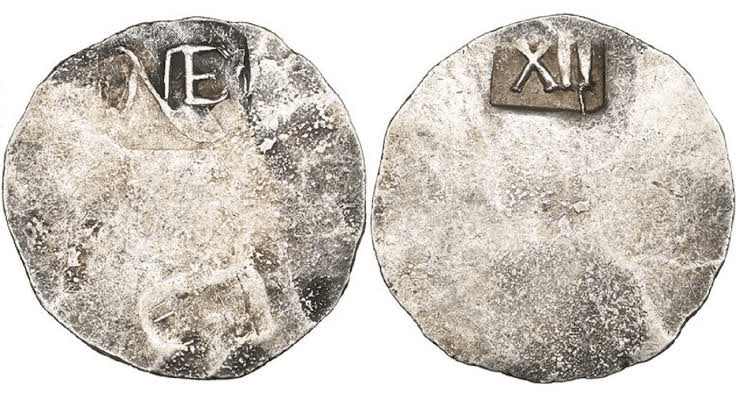
It looked like the sort of coin most people would overlook.
Small, worn, and tucked inside an ordinary candy tin, it sat among other old pieces that appeared to have little more than sentimental value. The British family who owned the collection had no reason to believe they were holding anything extraordinary.
Then a specialist took a closer look.
The unassuming silver disc turned out to be a 1652 New England shilling, one of the earliest coins produced in colonial Massachusetts and one of the rarest surviving examples of early American coinage.
After professional authentication and careful examination, the coin eventually sold for £264,000, roughly $351,900 at the time.
How could something worth hundreds of thousands of dollars remain hidden in a simple household collection for so long?
The answer begins nearly four centuries ago.
A Colonial Coin Hidden in Plain Sight
The coin surfaced in Britain as part of an inherited collection. Its precise journey into the family’s possession remains unclear, but that uncertainty is hardly surprising for an object dating back to the 17th century.
For generations, the shilling had apparently rested among other coins inside a candy tin.
There was no museum display case.
No elaborate documentation.
No protective archive.
Just a small container holding an assortment of old currency.
That ordinary setting may have been the last place anyone expected to find a significant piece of American monetary history.
When the family eventually decided to have the collection examined, most of the coins proved relatively unremarkable. But one caught the attention of a specialist.
Suddenly, the contents of the candy tin looked very different.
Video: A New England Colonial Shilling (1652) Found In Sweet Tin | £200,000 | BBC News Reporting
Why the 1652 New England Shilling Matters
To understand the coin’s extraordinary value, you have to travel back to colonial New England.
During the 17th century, Massachusetts faced a persistent shortage of reliable coins. Trade depended heavily on foreign currency, barter, and whatever silver coins happened to circulate through the colonies.
In 1652, Massachusetts established a mint in Boston.
The decision was practical. Colonial merchants needed dependable money, and local authorities wanted a more stable medium of exchange.
The earliest coins produced there were remarkably simple.
The New England shilling carried the letters “NE” on one side and the Roman numeral “XII” on the other, representing twelve pence, or one shilling.
There was no portrait of a king.
No elaborate royal emblem.
No elaborate artistic scene.
Just a few letters and numbers stamped into silver.
Yet that simplicity makes the coin historically fascinating.
It represents one of the earliest attempts by English colonists in North America to create a local monetary system.
The Meaning Behind the 1652 Date
There is an interesting detail hidden in the date.
Massachusetts silver coins of this era continued to carry the 1652 date even after that year had passed. The date related to the authorization of the colonial mint rather than necessarily identifying the precise year in which every individual coin was struck.
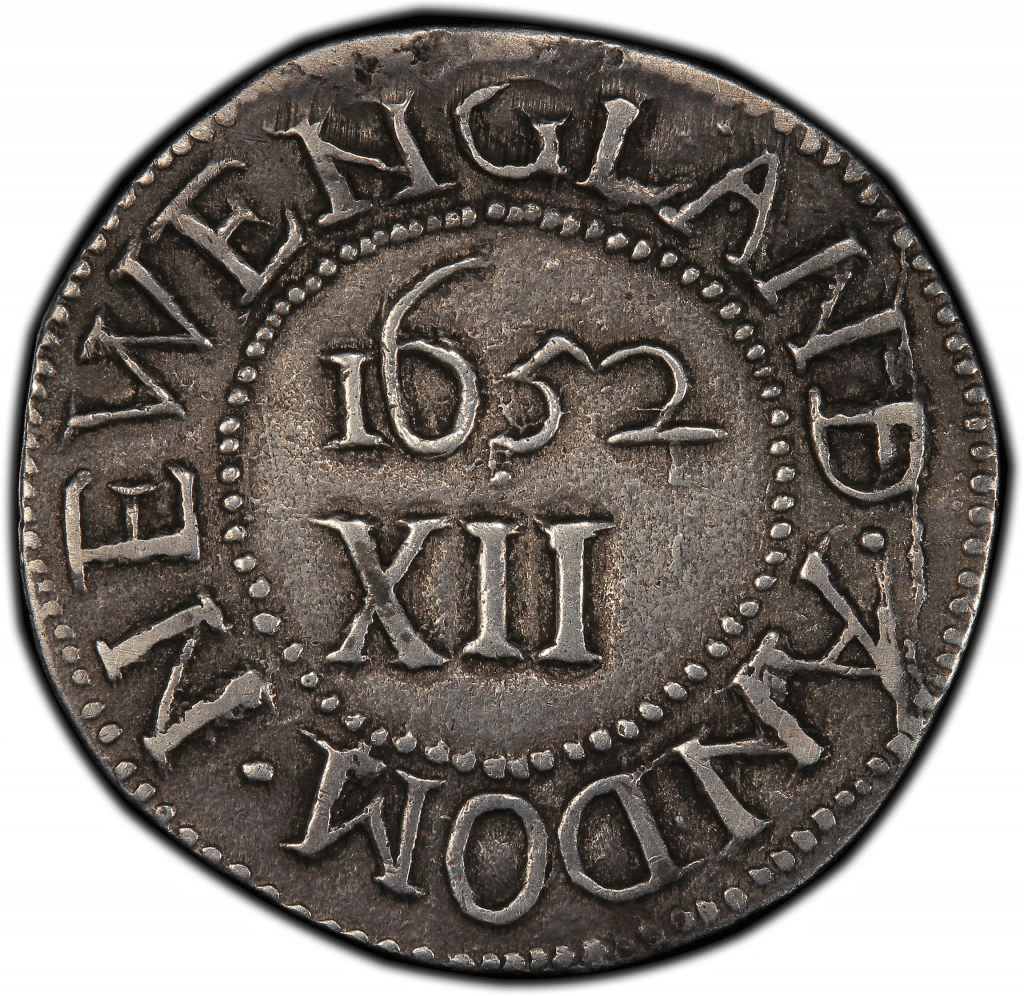
That means the date alone does not tell the entire story.
Collectors must examine the coin’s design, characteristics, weight, condition, and other details to determine exactly what they have.
For a rare early American coin, those distinctions can mean the difference between an interesting antique and a six-figure treasure.
A Design So Plain It Was Easy to Miss
The coin’s appearance probably contributed to its long period of obscurity.
Imagine opening a tin filled with old coins and seeing a small silver piece covered in the signs of age. Without specialized knowledge, why would you assume it was exceptionally rare?
The New England shilling lacks the visual drama that many people associate with valuable historic coins.
Its design is minimal.
One side features NE.
The other carries XII.
That is essentially it.
But numismatics has never been only about beauty.
Age, rarity, historical importance, survival rates, condition, and provenance can dramatically influence a coin’s value.
The New England shilling had an extraordinary combination of those qualities.
Very few examples of the early NE type are known to survive, making every genuine specimen important to collectors and historians.
How Experts Confirmed the Rare Shilling
Before anyone could place a six-figure estimate on the coin, specialists had to establish that it was genuine.
The piece was submitted to NGC, a major professional coin authentication and grading service.
That process is much more involved than simply looking at an old coin and comparing it with a photograph.
Experts examine characteristics such as weight, dimensions, metal composition, lettering style, striking characteristics, surface condition, and other details that can distinguish an authentic historical coin from a modern reproduction.
For extremely rare pieces, specialists also compare the coin with established examples and numismatic references.
Video: The Most Expensive Coin Deal in Pawn Stars History 💰 | 1652 New England Shilling Worth $250,000!
The candy-tin discovery therefore became much more than a fascinating family story.
It became a documented numismatic discovery.
Once authentication confirmed the coin’s significance, it could enter the professional collector market with far greater confidence.
Why Collectors Were Willing to Pay So Much
Age alone does not make a coin valuable.
There are millions of old coins that can be purchased for relatively modest sums.
What makes an object like the New England shilling different is the combination of rarity and historical importance.
This was not simply an old piece of silver.
It came from one of the earliest periods of organized coin production in what would eventually become the United States.
The coin also belongs to an exceptionally scarce type.
For collectors, acquiring one is not like buying another antique. It is more like obtaining a tiny surviving fragment of the country’s earliest monetary history.
The coin’s British discovery added another layer of intrigue.
It had apparently traveled across the Atlantic and survived for centuries before eventually sitting unnoticed in a family collection.
That journey is impossible to reconstruct completely, but the uncertainty makes the story even more compelling.
The Auction That Changed Everything
Once the coin had been authenticated and prepared for the market, it was offered through a major auction.
The result stunned anyone who might have considered the piece just another old coin.
It sold for £264,000, approximately $351,900 at the time.
Suddenly, a small silver disc that had spent years inside an ordinary candy tin had become a major numismatic acquisition.
The sale demonstrated something collectors already understand well: an item’s physical size has almost nothing to do with its historical or financial importance.
A tiny coin can carry an enormous story.
In this case, that story stretched from a colonial mint in Boston to a British household centuries later.
Who Owned It Before the Candy Tin?
That may be the most intriguing question of all.
Who originally possessed the shilling?
Was it carried by a merchant?
Did it pass through a colonial shop?
Was it saved by a wealthy household?
Did it travel between America and Britain through trade?
Or did it simply change hands countless times before eventually disappearing into a family collection?
There is no verified answer.
The coin itself cannot tell us who held it.
That is part of the magic of historical objects. They preserve evidence of the past without always preserving the names of the people who touched them.
Every scratch and worn edge represents another part of a journey that began long before modern collectors knew the coin existed.
A Small Coin With an Enormous Story
The discovery of the 1652 New England shilling is a reminder that extraordinary history does not always announce itself.
Sometimes it sits behind museum glass.
Sometimes it rests inside an archive.
And sometimes it hides for years inside something as ordinary as a candy tin.
The family who owned the collection could not have known what they had simply by looking at the coin. It took specialist knowledge, authentication, certification, and a professional auction to reveal its true significance.
That is what makes the story so memorable.
The coin itself is tiny. Its design is remarkably plain. Its surface carries centuries of wear.
Yet it represents one of the earliest chapters in American monetary history.
For nearly four hundred years, the shilling survived changes in governments, economies, borders, collecting habits, and generations of ownership.
Eventually, it ended up in a humble container in Britain.
Then someone finally looked closely.
The result was a coin worth more than $350,000 and a remarkable reminder that history can hide in the most unexpected places.
Sometimes the greatest treasures do not need a treasure map.
Sometimes all they need is for someone to open the tin.