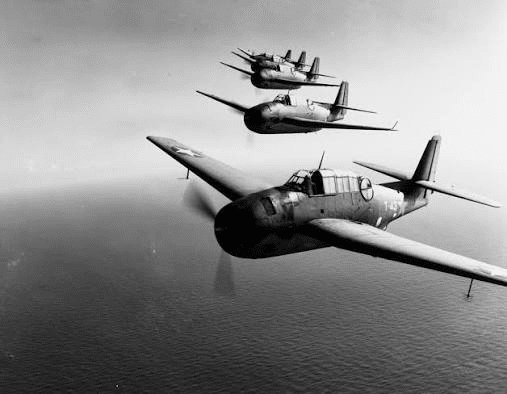
On December 5, 1945, five U.S. Navy bombers took off from Fort Lauderdale, Florida, for what should have been a routine training mission.
The aircraft were TBM Avengers. Fourteen servicemen were aboard.
They were experienced enough to fly the planned exercise, and nothing initially suggested that the afternoon would become one of the most enduring mysteries in American aviation history.
But the flight never returned.
As the afternoon progressed, radio transmissions became increasingly confused. The flight crew reported navigation problems and uncertainty about their position. By evening, all five aircraft had disappeared.
Then something even more unsettling happened.
A Martin PBM Mariner sent to search for the missing bombers also vanished.
Twenty-seven men and six aircraft were now missing in a single evening.
Nearly eight decades later, the story remains famous. Yet beneath the legends surrounding the so-called Bermuda Triangle is a more grounded mystery: investigators developed a plausible explanation for what happened to Flight 19, but no confirmed wreckage has ever definitively revealed where the five Avengers came down.
What Was Flight 19?
Flight 19 was not a combat mission.
It was a scheduled navigation exercise designed to test the crews’ ability to fly a predetermined route over open water and return safely to their base.
The five TBM Avengers departed Naval Air Station Fort Lauderdale at approximately 2:10 p.m. The planned course formed a large triangular route through the Bahamas region before bringing the aircraft back toward South Florida.
Leading the flight was Lieutenant Charles C. Taylor, an experienced naval aviator.
The other men were completing training requirements, and the mission itself was considered routine.
That detail makes the disappearance especially striking.
Nothing about the assignment suggested that the aircraft were entering an unusually dangerous situation. They had fuel, trained crews, and a familiar type of aircraft.
The problem developed after navigation began to go wrong.
And once the flight lost confidence in its position, every subsequent decision became more difficult.
Video: The Disappearance of Flight 19 | Atlas of Cursed Places
The Radio Messages Became Increasingly Confused
The radio record provides the most important evidence about Flight 19.
It also reveals just how quickly uncertainty can become dangerous over open water.
During the afternoon, Lieutenant Taylor reported that his compasses appeared to be malfunctioning. More importantly, he was unsure where the formation was located.
He believed the flight might be over the Florida Keys.
That assumption mattered.
If the aircraft were actually somewhere east of the Florida coast, turning in the wrong direction could carry them farther into the Atlantic rather than toward safety.
Naval personnel monitoring the transmissions attempted to help.
One of the clearest pieces of advice was essentially straightforward: fly west.
Over the Florida region, a sustained westward course would eventually bring the aircraft toward the mainland.
But Taylor apparently remained uncertain about his position and did not confidently follow the suggested heading.
Other members of the formation reportedly expressed different views about their location and the correct direction to fly.
Imagine being thousands of feet above an ocean that looks almost identical in every direction, watching daylight disappear while your instruments appear unreliable.
There are no roads.
No mountains.
No buildings.
No coastline.
Only sky and water.
That was the environment confronting Flight 19.
Why Navigation Became So Difficult
Modern pilots have access to satellite navigation, digital maps, sophisticated communication systems, and numerous instruments that constantly help establish position.
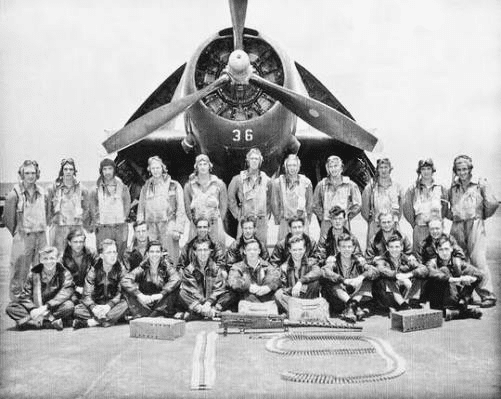
The crews of Flight 19 had none of those advantages.
They were flying in 1945.
Over the ocean, visual navigation could become extremely difficult when cloud cover, haze, darkness, and weather interfered with recognizable landmarks.
The situation became more dangerous as the afternoon continued.
Weather conditions deteriorated. Winds increased, seas became rougher, and daylight began to fade.
If the formation had already traveled farther east than Taylor believed, his attempt to correct the course could actually have pushed the aircraft deeper into the Atlantic.
This is where the fuel problem became critical.
An aircraft does not need to crash immediately after becoming lost.
It simply needs to remain lost long enough.
Once the available fuel begins to disappear, the range of possible outcomes shrinks rapidly.
The Final Hours of the Five Avengers
By roughly 5:15 p.m., radio transmissions suggested that the aircraft were running low on fuel.
The flight had been airborne for several hours.
The men knew they faced a serious problem.
The available radio evidence does not establish an exact final position. However, the Navy’s later investigation concluded that the aircraft most likely exhausted their fuel over the Atlantic.
At that point, the formation had very few options.
The Avengers could potentially have attempted water landings, but the sea conditions were poor and darkness was approaching.
A successful ditching in rough open water would have been extremely difficult even under favorable circumstances.
The aircraft themselves would also have been vulnerable to rapid sinking or dispersal after hitting the ocean.
And once the aircraft disappeared beneath the surface, locating them from ships or aircraft would have been extraordinarily difficult.
The final radio transmissions were incomplete and increasingly difficult to interpret.
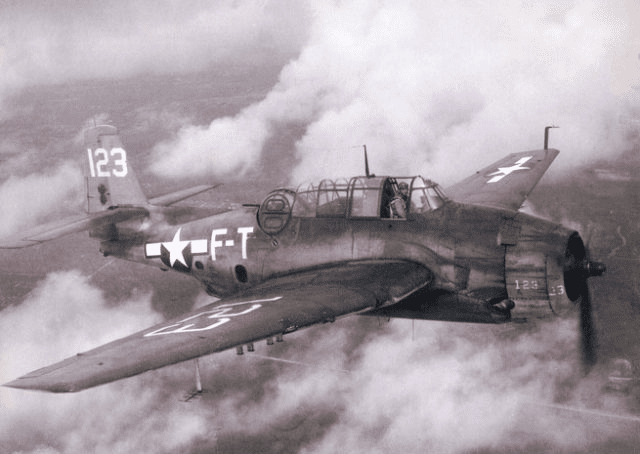
Then there was silence.
Five aircraft had disappeared.
Fourteen men were gone.
But the night was not over.
The Rescue Plane That Never Returned
The Navy immediately began organizing a search.
One of the aircraft dispatched to assist was a Martin PBM Mariner flying boat.
It carried thirteen men.
The Mariner departed Naval Air Station Banana River at approximately 7:27 p.m.
It never returned.
That second disappearance added another layer of mystery to an already extraordinary night.
A ship in the region reportedly observed an explosion or fire on the water after the Mariner departed. Investigators later considered the possibility that the aircraft had suffered an in-flight explosion.
The PBM Mariner had a known history of fuel-vapor hazards, making that explanation plausible.
But once again, confirmed wreckage was not recovered.
Suddenly, the search operation itself had become a recovery mission.
The Navy was no longer looking for five missing bombers.
It was looking for six aircraft and twenty-seven men.
The Largest Search the Navy Could Mount
The search operation was enormous.
Aircraft, ships, and submarines were deployed across a vast section of the Atlantic.
Video: Flight 19: The Classified Log That Changes Everything
More than 380,000 square miles of ocean were reportedly searched during the operation.
Think about the scale of that area.
Searching a forest for a missing vehicle is difficult because the vehicle remains in one place.
Searching the ocean is different.
Wreckage can sink.
Debris can drift.
Oil can disperse.
Life rafts can move with currents.
A damaged aircraft can break apart on impact.
And an aircraft that disappears beneath deep water may leave almost nothing visible from the surface.
Despite the enormous search effort, no positively identified wreckage from the five Flight 19 Avengers was recovered.
That absence became one of the defining features of the case.
Why Later Wreck Discoveries Did Not Solve the Mystery
Over the decades, reports periodically emerged claiming that the missing Avengers had finally been located.
One particularly notable discovery occurred in 1991, when a salvage team reported finding several Avenger aircraft on the ocean floor.
At first glance, it looked like the mystery might finally be over.
But the aircraft were not Flight 19.
Investigators determined that the planes belonged to other incidents and did not match the identifying information associated with the five Avengers lost in December 1945.
This distinction is crucial.
The waters around Florida and the Bahamas saw extensive military aviation activity during and after World War II.
Many aircraft were lost during training.
Finding an Avenger on the seafloor does not automatically make it one of the five missing aircraft.
To conclusively identify a Flight 19 wreck, investigators would need reliable evidence such as matching identification numbers, distinctive structural characteristics, or another documented connection to the aircraft involved in the December 5 mission.
No such identification has been publicly confirmed.
The Bermuda Triangle Became Part of the Story
The Flight 19 disappearance later became closely associated with the Bermuda Triangle, the loosely defined region between Florida, Bermuda, and Puerto Rico that has inspired decades of speculation.
Stories about the area often emphasize unexplained disappearances and unusual phenomena.
Flight 19 became one of the most famous examples.
But the popular version of the story often goes beyond the evidence.
The Navy did not conclude that the aircraft vanished because of a mysterious force.
Its investigation pointed toward navigation difficulties, human error, instrument problems, worsening weather, and eventual fuel exhaustion.
Those factors do not make the story less tragic.
If anything, they make it more understandable.
The crews were dealing with a dangerous combination of uncertainty, fading daylight, difficult weather, limited navigation technology, and dwindling fuel.
No supernatural explanation is necessary to account for an aircraft becoming lost over hundreds of miles of open ocean.
What the Navy’s Investigation Concluded
The formal Navy investigation eventually identified the most likely chain of events.
Taylor became disoriented.
The flight’s navigation instruments were reportedly giving unreliable indications.
The formation believed it was in a different location than it actually occupied.
As the crews attempted to correct their course, they likely moved farther from the Florida mainland.
Fuel continued to burn.
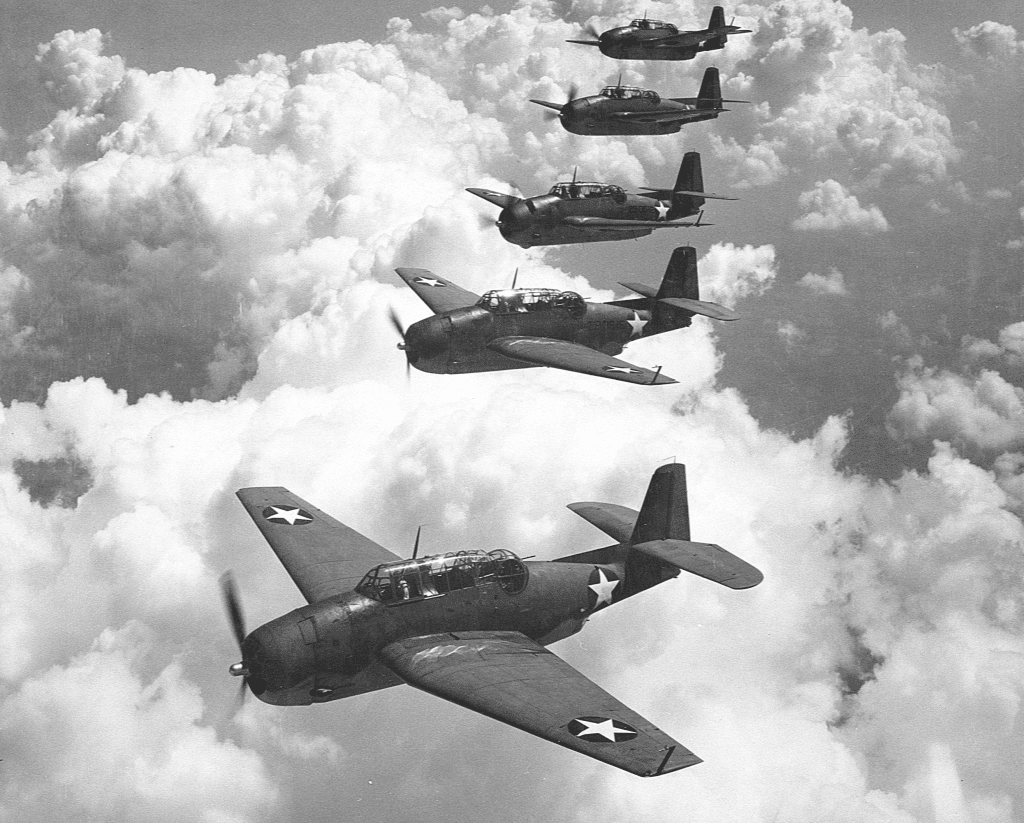
Eventually, the aircraft ran out.
The Navy therefore treated the disappearance as an aviation accident rather than an unexplained phenomenon.
That conclusion is important because it separates the documented evidence from the mythology that developed later.
The investigation could explain why the aircraft were likely lost.
What it could not establish was precisely where they went down.
And that is the part of the story that remains unresolved.
What We Still Do Not Know
Even after decades of research, several questions remain.
Where exactly did the five Avengers run out of fuel?
Did all five aircraft ditch in roughly the same area?
Did any crew members survive the initial impact?
How long did the aircraft remain afloat?
Did currents carry debris away from the original crash zone?
Without confirmed wreckage, historians cannot answer those questions with certainty.
Researchers have created different reconstructions using radio transmissions, weather information, fuel consumption, aircraft performance, and estimated headings.
These studies can narrow the possibilities.
But a calculated position is not the same as a discovered crash site.
That distinction matters.
A map showing where aircraft probably went down is evidence-based analysis.
A confirmed wreck containing identifying evidence would be physical proof.
Flight 19 still lacks that final piece.
Why the Mystery Has Survived for So Long
The disappearance of Flight 19 has everything needed to become a lasting historical mystery.
Five military aircraft vanish.
Their radio transmissions reveal confusion.
A rescue aircraft disappears on the same night.
An enormous search fails to locate the main wreckage.
Later discoveries fail to identify the missing planes.
And the entire episode becomes associated with one of the world’s most famous legends.
But the most compelling part may be simpler.
Flight 19 demonstrates how quickly a routine flight can become a survival problem when navigation fails over open water.
The aircraft were not equipped with modern technology.
The crews could not simply press a button and determine their exact coordinates.
Once they became uncertain about their position, every mile flown mattered.
One wrong assumption could lead to another.
And with fuel steadily disappearing, there was eventually no room left for another correction.
An Aviation Mystery With One Missing Piece
Flight 19 remains one of the most discussed disappearances in American naval history.
Five TBM Avengers departed Fort Lauderdale on December 5, 1945.
Fourteen men went with them.
The formation became disoriented, encountered worsening conditions, and apparently exhausted its fuel somewhere over the Atlantic.
A Martin PBM Mariner dispatched to search for them also disappeared, taking thirteen more men with it.
The Navy’s evidence supports a conventional explanation involving navigation error, instrument problems, weather, and fuel exhaustion.
Yet one important question remains unanswered.
Where are the five Avengers?
No confirmed wreckage has closed that final gap in the record.
That is why Flight 19 continues to capture the imagination nearly eighty years later. The mystery does not require a supernatural explanation. The real mystery is already powerful enough: fourteen men left Florida on a routine training mission, their aircraft disappeared into the Atlantic, and despite one of the largest searches of its time, the physical evidence needed to tell the complete story has never been found.
Sometimes history leaves behind a monument.
Sometimes it leaves behind a photograph.
And sometimes, all that remains is a radio signal, an empty stretch of ocean, and a question that refuses to disappear.