Imagine spending an ordinary afternoon at a huge shopping mall. You buy lunch, browse a few stores, maybe catch a movie, and head home without giving the building another thought.
Now imagine that, somewhere behind a locked utility door, eight artists have secretly built an entire apartment.
That is exactly what happened inside Providence Place in Rhode Island.
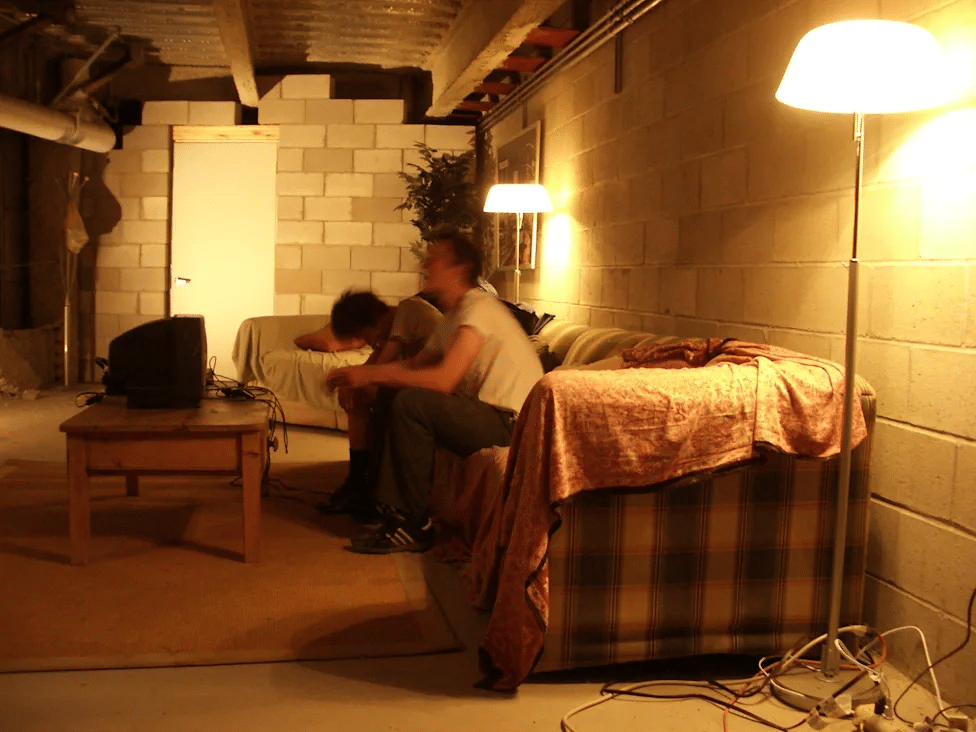
Beginning in 2003, a group of artists quietly transformed an unused section of the shopping complex into a furnished private space. It had couches, rugs, lamps, artwork, a television, dining furniture and even china.
Shoppers walked past every day without realizing what was behind the walls.
The secret lasted for roughly four years.
Then, in 2007, mall security discovered the hidden apartment—and an unusual experiment in art, friendship and urban life suddenly came to an end.
How the Secret Mall Apartment Began
The story started with a changing Providence.
Providence Place opened in 1999 as a major downtown development project. The enormous complex brought stores, restaurants, entertainment and a movie theater into one massive commercial destination.
For many people, the mall represented economic renewal.
For some local artists, however, it represented something else: the transformation of the city and the disappearance of inexpensive creative spaces.
Several members of the group had connections to Fort Thunder, an artist-run community that had occupied a former industrial building in Providence. Artists there created music, performances, artwork and unconventional living arrangements until redevelopment eventually forced the community out.
Against that background, the idea of secretly occupying part of a shopping mall began to sound less like a joke and more like an artistic experiment.
A Radio Advertisement Inspired the Idea
According to accounts from the artists, a Providence Place advertisement jokingly suggested that the mall contained almost everything a person could need.
The artists decided to take the claim literally.
What if someone could actually live there?
Their original experiment was relatively short. They planned to spend about a week inside the mall after hours, exploring the building and experiencing it from a completely different perspective.
But the group discovered something unexpected.
There were forgotten spaces inside the enormous structure.
One of those spaces would eventually become their secret home.
Finding an Empty 750-Square-Foot Space
Michael Townsend had followed the construction of Providence Place closely during the late 1990s. Because he lived nearby, he had developed a rough understanding of the building’s unusual layout.
During the group’s exploration, they discovered an approximately 750-square-foot area that had no obvious public purpose.
The space had reportedly been used during construction and was later left largely unused.
For ordinary shoppers, it might as well not have existed.
For the artists, it was perfect.
The location was difficult to reach and hidden from normal customer traffic. Access required navigating areas such as service corridors, stairways and parts of the parking structure.
That inconvenience became an advantage.
If reaching the space was difficult for the artists, it was also difficult for curious shoppers or casual visitors to stumble across it.
The group decided to turn the forgotten concrete space into an apartment.
Video: Secret Mall Apartment | Official Trailer HD
They Built a Real Home Behind a Locked Door
Creating an apartment inside a shopping mall required considerably more work than simply bringing in sleeping bags.
The artists constructed a cinder-block wall to separate the room from the surrounding area. They installed a door with a lock, creating an entrance that blended into the building’s utilitarian infrastructure.
Then came the furniture.
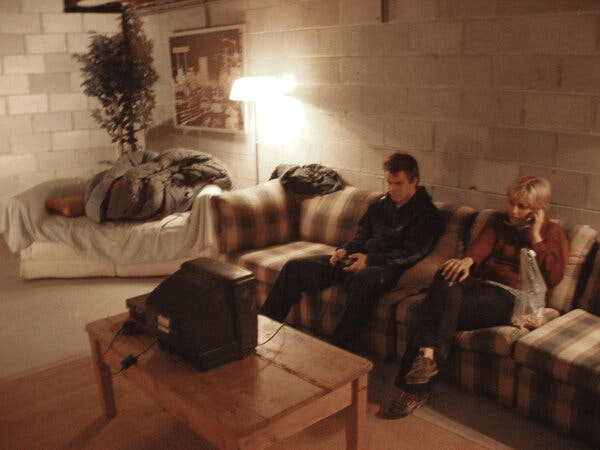
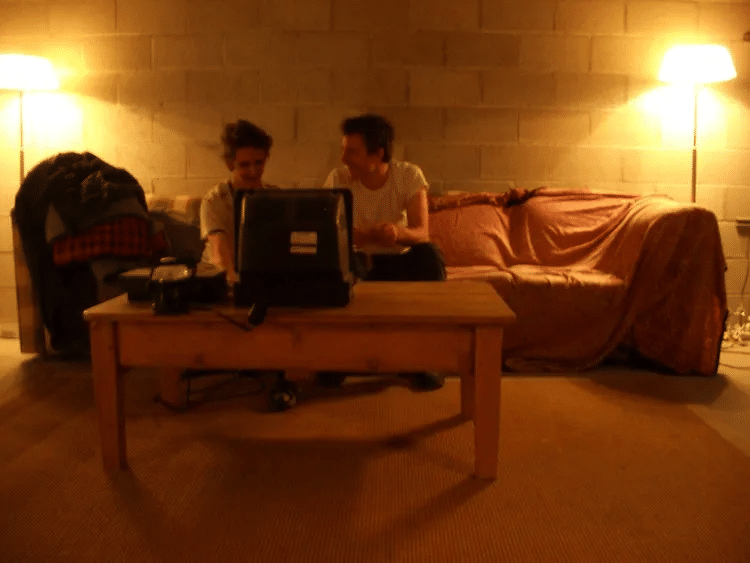
Piece by piece, the artists brought in couches, chairs, tables, rugs, lamps and artwork. The apartment eventually looked surprisingly comfortable.
There was a dining area.
There was a television.
There was a video-game console.
There was even a waffle maker and a cabinet containing china.
The result was less like a hidden bunker and more like a modest living room tucked inside a giant commercial building.
How Did They Get Electricity?
The apartment had electricity, allowing the group to use lighting and entertainment equipment.
But it never became a fully functional conventional residence.
There was no private plumbing.
The artists relied on the mall’s public restrooms rather than installing a bathroom inside the secret space.
That limitation was important. The apartment was convincing visually, but it remained an unauthorized installation inside private commercial property.
Still, the artists had managed to create something remarkably domestic in an environment designed primarily for shopping.
They Didn’t Live There Every Day
One common misconception is that all eight artists continuously lived inside the mall for four years.
The reality was more complicated.
The apartment existed from approximately 2003 until its discovery in 2007, but the artists used it intermittently. They slept there, spent extended periods inside and returned for meetings and creative work.
Some reportedly stayed for weeks at a time.
The room became a kind of private clubhouse as well as a living space.
It offered the artists something increasingly difficult to find in a rapidly changing city: a place where they could work, socialize and escape the pressures of everyday life.
Townsend was also involved in ambitious public-art projects during this period, including work connected with memorializing victims of the September 11 attacks.
The secret apartment provided a strange contrast to the public nature of those projects.
Outside, the artists were working in highly visible spaces.
Inside the mall, they had created a world almost nobody knew existed.
The Secret Began Showing Signs of Cracks
For several years, the arrangement worked.
Then things started to change.
The artists noticed that personal belongings had disappeared from the apartment. Items including photographs and a video-game console were reportedly missing.
Someone else had apparently found the room.
But who?
The group could not be certain whether an employee, security guard or another unauthorized visitor had discovered the space.
That uncertainty made the apartment feel less secure.
The artists became more cautious.
Their greatest protection had always been secrecy. The fewer people who knew about the apartment, the safer it remained.
Eventually, however, one decision exposed everything.
The Visitor Who Changed Everything
In 2007, Townsend brought a visiting artist from Hong Kong into the secret apartment.
It was a significant break from the group’s usual rules.
The room had remained hidden partly because almost nobody outside the group knew where it was.
While Townsend was showing the visitor around, he reportedly heard activity outside.
Video: Secret Mall Apartment | ART inc.
There were signs that security personnel were nearby.
The experiment that had survived for approximately four years was about to end.
Mall security discovered the room in September 2007.
The hidden apartment was no longer hidden.
At that point, the artists were reportedly still planning improvements. They had discussed installing additional flooring and making the space more complete.
Those plans never happened.
The mall sealed the area, and the furnishings were removed.
One Artist Took Responsibility
Townsend became the public face of the incident.
After authorities discovered the apartment, he was arrested and eventually faced a misdemeanor trespassing charge. He pleaded no contest and received probation.
He also accepted responsibility without publicly identifying the other members of the group at the time.
The mall treated the space as an unauthorized area rather than a legitimate residence.
From the property’s perspective, the artists had entered private areas and altered them without permission.
From the artists’ perspective, however, the apartment represented something much more complicated than trespassing.
It had become a creative project, a gathering place and, for some of them, a temporary home.
That tension became central to the story.
The Secret Apartment Became a Documentary
For years, the strange episode existed mostly as a local legend.
Then filmmaker Jeremy Workman learned about Townsend and the hidden apartment.
What made the story especially valuable for a documentary was the footage.
The artists had recorded portions of the project while they were building and using the apartment. Those recordings captured furniture being moved, the interior taking shape and the everyday experiences of the people involved.
Eventually, Workman brought the eight participants together for the documentary Secret Mall Apartment.
The film identified the artists as Michael Townsend, Adriana Valdez-Young, Colin Bliss, Andrew Oesch, Greta Scheing, James Mercer, Emily Ustach and Jay Zehngebot.
Their story became more than an unusual tale about secretly occupying a shopping mall. It also explored the changing cultural landscape of Providence and the complicated relationship between artists and commercial development.
Why the Hidden Apartment Still Fascinates People
The most remarkable thing about the story may be its sheer practicality.
The artists didn’t simply hide a sleeping bag behind a wall.
They built a functioning-looking room.
They carried in furniture.
They installed a wall and door.
They decorated the space.
They watched television, ate meals and spent time together.
Meanwhile, thousands of shoppers continued moving through Providence Place every week.
That contrast is almost surreal.
On one side of the wall was the polished world of retail: bright stores, restaurants, movie screens and crowded walkways.
On the other side was a secret living room that existed outside the mall’s intended purpose.
It was almost like discovering a private house inside an airport terminal—except the people who built it had managed to keep the secret for years.
From Unauthorized Room to Part of Providence History
The hidden apartment eventually disappeared, but the story did not.
The documentary Secret Mall Apartment brought the experiment to a much larger audience and preserved the memories of the artists who created it.
Perhaps the strangest twist came years later, when the film was eventually shown at Providence Place itself.
Townsend returned to the same shopping center where the secret apartment had once existed, decades after the experiment began. His long-standing ban from the property was reportedly lifted.
The place had changed.
The artists had changed.
But the story remained.
A Secret Home That Was Never Meant to Last
The Providence Place apartment was never a conventional home. It had no lease, approved plumbing or permission from the mall’s owners.
Yet for roughly four years, eight artists turned an overlooked piece of commercial architecture into something deeply personal.
They created walls where there had been open space. They brought in furniture and household objects. They built routines. They made memories.
And they did it while shoppers passed nearby, completely unaware.
The experiment ultimately ended when mall security discovered the room, but its significance lasted much longer.
The hidden apartment became a snapshot of an era when artists were searching for unconventional spaces in a rapidly changing city—and a reminder that the most unexpected stories can sometimes exist directly behind an ordinary door.
For years, Providence Place looked like exactly what it was: a shopping mall.
But somewhere inside, behind a locked door, eight artists had quietly built a little world of their own.