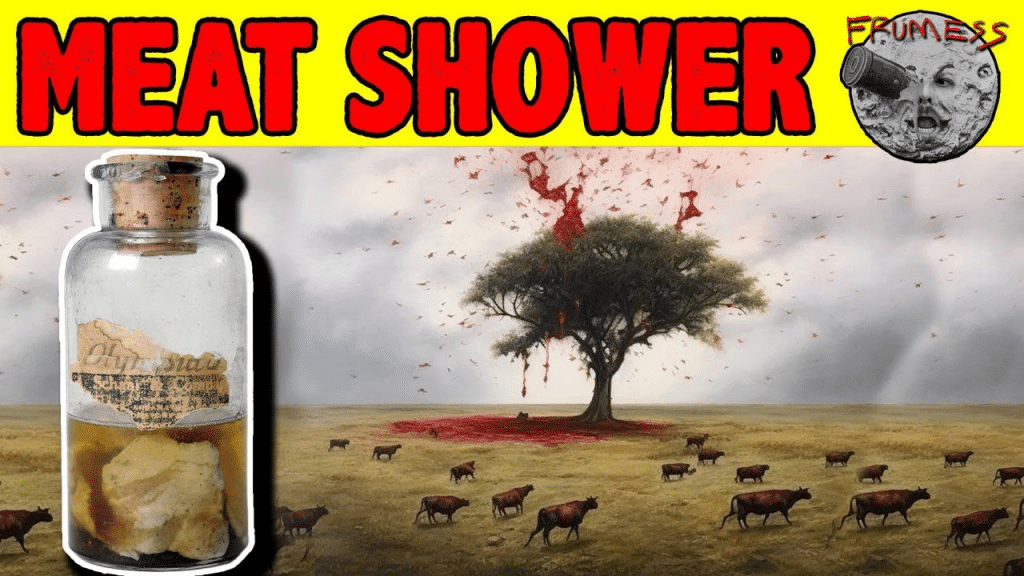
On March 3, 1876, the sky above a quiet farm near Olympia Springs, Kentucky, looked completely ordinary.
There were no dark storm clouds overhead. No heavy rain was falling. A light breeze moved across the hills of Bath County while Rebecca Crouch worked outside near her family’s home.
Then something bizarre began dropping from above.
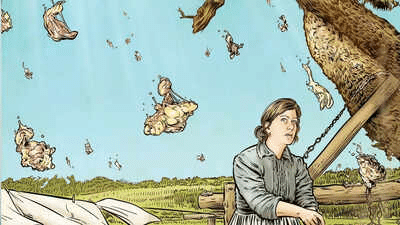
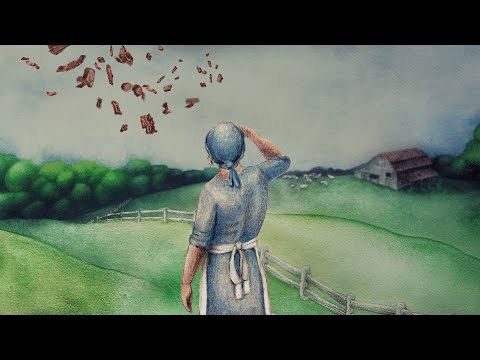
Small pieces of pale, flesh-like material fell across the property. Some fragments were tiny, while others reportedly measured several inches across. One piece supposedly struck the ground close enough to Crouch to make a noticeable sound.
The strange shower lasted only a minute or two.
When the event ended, pieces remained scattered across the property, hanging from fences and caught among vegetation.
The incident eventually became known as the Kentucky Meat Shower, one of the strangest unexplained events in American history.
But was it truly mysterious?
Or did something surprisingly ordinary create one of the most unusual stories ever reported in a Kentucky newspaper?
What Witnesses Saw on the Crouch Farm
The earliest reports appeared in newspapers only days after the incident.
A report published by The New York Times on March 10, 1876, drew from information originally reported by the Bath County News. It placed the event near the home of Allen Crouch, a few miles from Olympia Springs.
Rebecca Crouch reportedly described the falling material as resembling pieces of beef. Some fragments looked almost like large snowflakes as they descended.
A later New York Herald investigation provided additional details after a correspondent visited the area and spoke directly with people connected to the event.
Crouch reportedly placed the incident sometime between 11 a.m. and noon. She said the unusual fall continued for somewhere between one and two minutes.
Most importantly, she described the sky as clear.
That detail immediately made the story more difficult to explain.
Video: Kentucky Meat Shower – The Day It Rained Mystery Meat
There was no obvious storm system, waterspout or heavy rainfall to account for material suddenly appearing across the farm.
How Much Material Actually Fell?
Even the size of the affected area became a subject of disagreement.
One early account estimated a strip approximately 100 yards long and 50 yards wide. Another observer described the material as scattered irregularly across roughly two acres.
That difference may seem minor today, but it matters when reconstructing a historical event.
The evidence suggests that the material did not form a perfectly uniform carpet. Instead, fragments appeared in scattered locations, with some pieces landing on fences and vegetation while other sections remained untouched.
That pattern would later become important when investigators considered whether the material might have been released from above.
Scientists Examined the Mysterious Samples
The Kentucky event might have disappeared into local folklore if people hadn’t collected samples.
They did.
Pieces of the strange material were preserved and sent to investigators, chemists and microscopists.
Instead of producing one clear answer, the samples generated several competing theories.
One investigator initially believed a specimen resembled frog spawn because of its gelatinous appearance.
After examining additional material and microscopic preparations, however, that explanation changed.
Other researchers reported finding structures resembling muscle, cartilage, fat and lung tissue.
That was a major development.
If the observations were accurate, at least some of the material appeared to have come from an animal rather than from a plant, fungus or unusual weather phenomenon.
But another scientist proposed a very different explanation.
He identified the substance as Nostoc, a gelatinous cyanobacterium sometimes associated with mysterious masses appearing after wet weather.
The disagreement made the story even more fascinating.
Instead of asking only, “What fell from the sky?” investigators now had to ask whether every sample actually came from the same source.
The Nostoc Theory Offered a Natural Answer
Nostoc is a cyanobacterium capable of forming gelatinous colonies.
When dry, these colonies can remain relatively inconspicuous. After absorbing moisture, they can swell dramatically and become much more noticeable.
Historical reports of mysterious “star jelly” have sometimes been connected with Nostoc, making it an appealing explanation for strange material found outdoors.
In the Kentucky case, however, the theory had serious limitations.
Rebecca Crouch reportedly watched the material descend from above during clear weather. The fragments were not simply discovered lying on damp soil after a storm.
More importantly, some microscopic examinations reportedly identified animal tissues.
That does not automatically prove that every piece came from an animal. Historical samples were handled, stored and transported under conditions far less controlled than those used in modern laboratories.
Still, Nostoc struggled to explain the complete collection of observations.
The mystery remained.
The Most Unusual Explanation Involved Vultures
Then came a theory that sounded almost as strange as the original event.
Perhaps the material had not fallen from the sky at all.
Perhaps it had fallen from birds.
The leading natural explanation proposed that a group of vultures had been feeding on an animal carcass and then regurgitated partially digested material while flying over the farm.
It sounds bizarre until you learn that vultures really do regurgitate food.
For a scavenging bird, this behavior can serve a practical purpose. If a vulture becomes threatened, overloaded or needs to become lighter quickly, regurgitation can help empty its digestive system.
A flock feeding together could therefore carry pieces of recently consumed animal material into the air.
If several birds released that material while flying over the same area, the result could look extraordinarily strange from the ground.
And suddenly, several pieces of the Kentucky mystery begin to fit together.
Why the Vulture Theory Makes Sense
First, it could explain the reported animal tissue.
Muscle, cartilage, fat and other soft tissues could all originate from scavenged remains.
Second, it could explain why the fragments appeared different from one another.
A carcass contains many kinds of tissue. Birds feeding from the same animal would not necessarily consume identical pieces.
Third, the explanation fits the clear sky.
No unusual weather event would have been necessary.
The material could simply have been released from above by birds that were difficult to see against the bright daytime sky.
The distribution also makes sense. A flock moving across the landscape could release fragments along a narrow, irregular path rather than covering the entire property evenly.
Most importantly, the explanation requires no extraordinary phenomenon.
It requires only ordinary animals behaving in an unusual-looking way.
But Nobody Actually Saw the Vultures
This is where the story becomes more complicated.
The vulture explanation is plausible, but it has never been proven.
Video: History’s WEIRDEST Mysteries | Compilation
Rebecca Crouch reportedly watched the material falling but did not identify birds as its source.
No observer documented a flock flying directly overhead.
No specific carcass was discovered and conclusively linked to the material.
And the surviving historical samples cannot provide a complete answer.
That distinction is important.
There is a difference between saying “this probably happened” and saying “we know this happened.”
The evidence supports the vulture theory better than many of the alternatives, but it does not close every gap.
Historical investigations also suffered from inconsistent sample handling. Pieces were passed between different investigators, preserved in various liquids and examined at different times.
Without modern chain-of-custody procedures, it becomes difficult to determine whether every sample came from the same event or whether contamination and misidentification affected some conclusions.
A Mystery Preserved in a Jar
More than a century later, an intriguing physical reminder of the incident reportedly resurfaced.
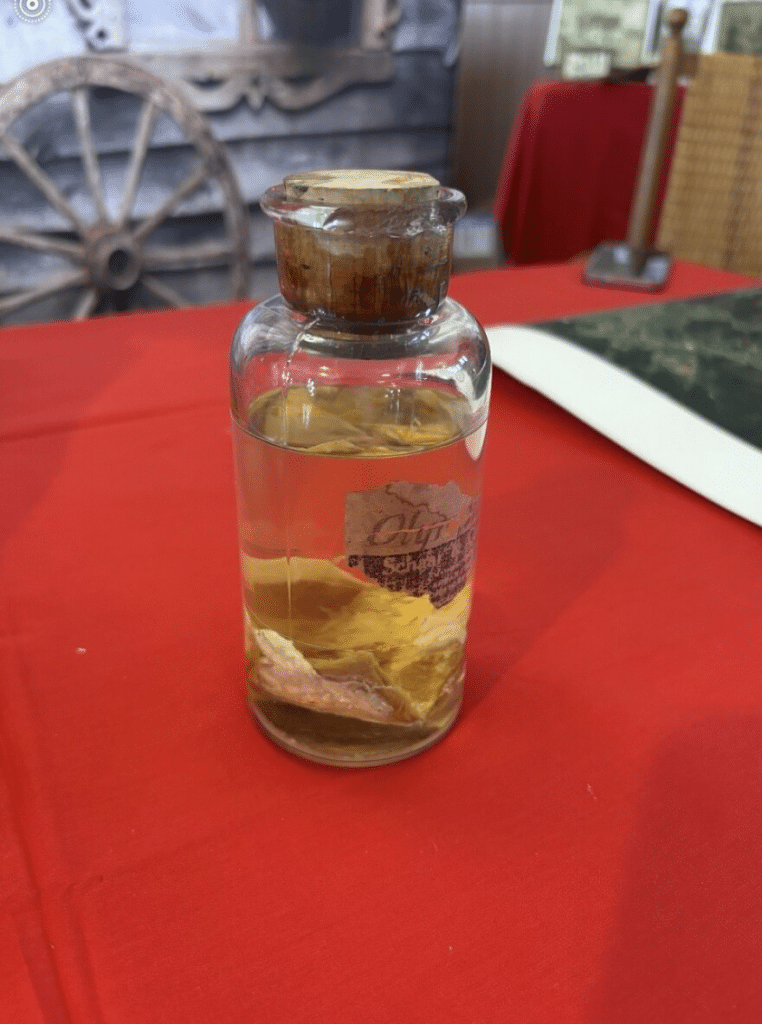
In 2004, a professor at Transylvania University discovered a labeled jar in university storage containing a preserved piece associated with the Olympia Springs event.
Researchers attempted to identify it scientifically.
Unfortunately, the material was extremely old and contaminated, making definitive testing difficult. Later genetic analysis reportedly produced incomplete results that were closest to goat DNA, but the evidence was not strong enough to establish a conclusive identification.
The jar became another piece of the mystery rather than the final answer.
Video: Kentucky Meat Shower of 1876 — Scientists Who Investigated It Were Told to Drop the Report
That is perhaps fitting.
The Kentucky Meat Shower has survived for nearly 150 years precisely because the evidence never quite reaches a neat conclusion.
How a Strange Farm Incident Became a Legend
The story spread rapidly through 19th-century newspapers.
As different publications repeated the original reports, additional details entered the narrative. Some accounts became more dramatic, while humorous interpretations appeared alongside serious scientific discussion.
One satirical publication even suggested an absurd cosmic explanation involving belts of meat traveling through space.
Over time, the distinction between satire, speculation and scientific theory became increasingly blurred.
That is how strange historical stories often evolve.
A documented event begins with a handful of witnesses. Newspapers repeat it. Later writers embellish it. Eventually, the original evidence becomes buried beneath decades of retelling.
Yet the Kentucky case has an important difference.
There really was an event.
People reported unusual material falling.
Samples were collected.
Scientists examined them.
And at least some investigators believed they had identified animal tissue.
The question is not whether something happened.
The question is exactly what happened in the sky above that Kentucky farm.
Conclusion: The Natural Explanation May Be Stranger Than the Mystery
The 1876 Kentucky Meat Shower remains one of America’s most peculiar historical mysteries.
On a clear March morning, witnesses reported pieces of flesh-like material falling across a farm near Olympia Springs. Investigators later examined samples and reported finding structures resembling animal tissue, while other researchers proposed that the material might have been Nostoc.
Today, the most convincing explanation is a flock of vultures carrying recently eaten carrion and regurgitating it while flying overhead.
That theory explains the animal tissue, the scattered distribution and the clear weather without requiring anything supernatural.
But it remains an explanation, not a witnessed fact.
No one conclusively saw the birds responsible. No source carcass was identified. And the surviving material cannot provide a complete scientific reconstruction of the event.
Perhaps that is what makes the story so memorable.
The answer may not involve something falling from outer space or a mysterious force in the atmosphere.
It may involve nothing more exotic than a flock of hungry scavengers passing over a Kentucky farm at precisely the wrong moment.
Sometimes the truth isn’t less strange than the mystery.
Sometimes, it’s stranger.