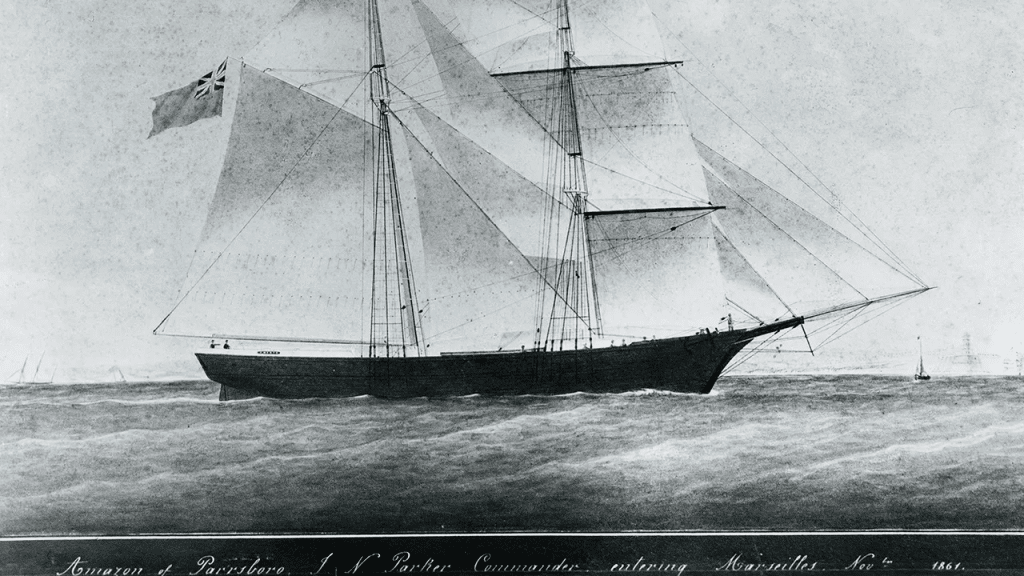
On December 4, 1872, the Atlantic offered sailors aboard the Dei Gratia a sight they would never forget.
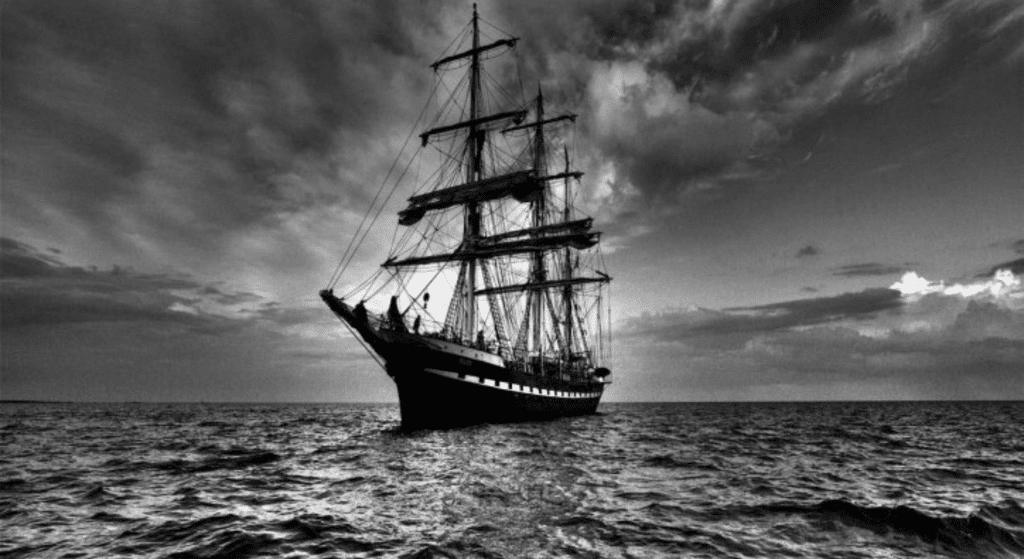
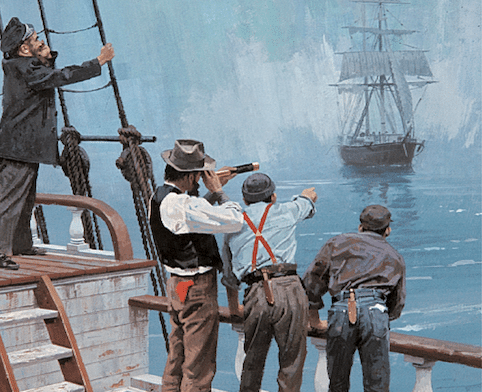
About 600 miles west of Portugal, they spotted another vessel drifting strangely across the open water. Its sails were still partly raised, yet the ship’s movements appeared erratic. No one seemed to be steering.
First Mate Oliver Deveau and several crew members approached the mysterious vessel and called out.
Nobody answered.
When they climbed aboard, they discovered something deeply unsettling. The ship was still afloat. Much of its cargo remained in place. Food and water were available. The vessel itself was not a wreck.
But every person aboard had vanished.
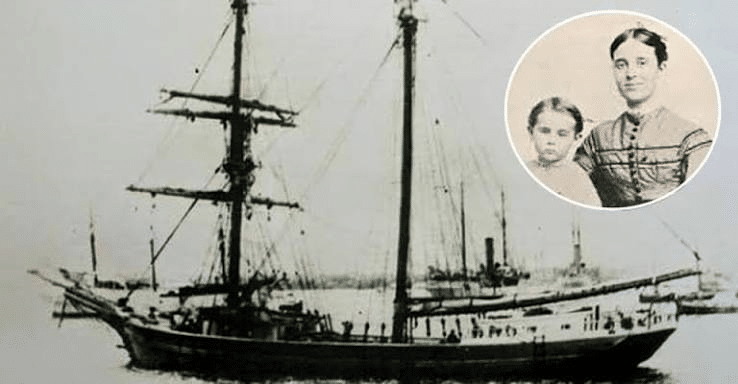
The ship was the Mary Celeste, and its captain, his wife, their young daughter and seven crew members were nowhere to be found.
The lifeboat was missing too.
More than 150 years later, the disappearance remains unresolved. Yet the physical evidence offers an important clue: the crew probably did not abandon the ship because it was already sinking. They may have believed they were facing a sudden emergency and intended to return.
The real mystery may be what happened after they climbed into that small boat.
The Last Known Voyage of the Mary Celeste
The Mary Celeste began her fateful voyage from New York on November 7, 1872.
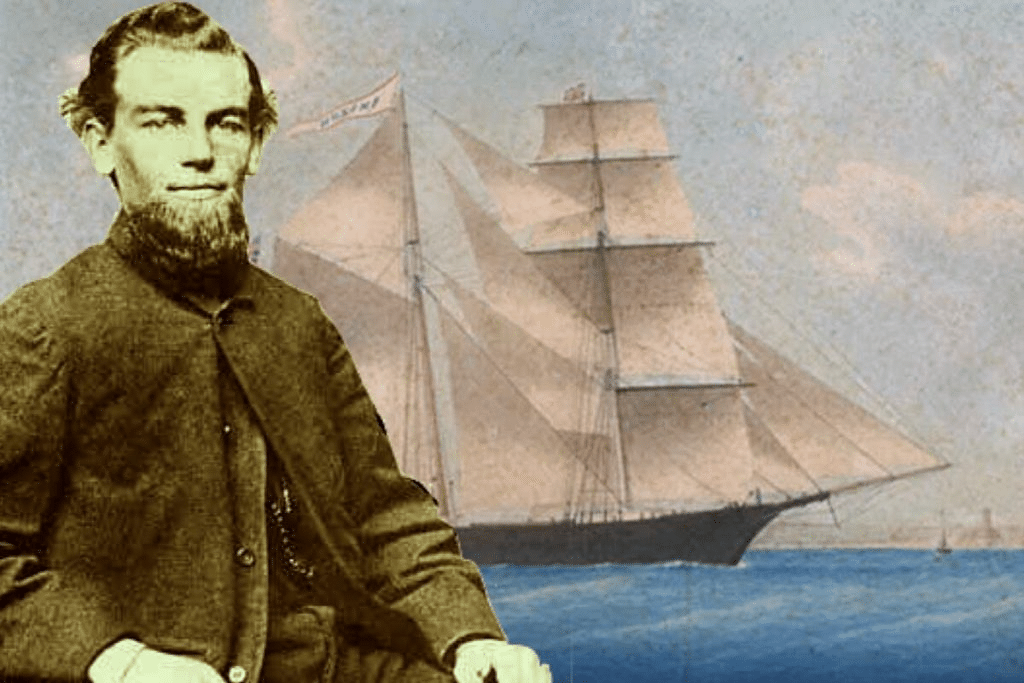
Captain Benjamin Briggs commanded the brigantine. He was accompanied by his wife, Sarah, their two-year-old daughter Sophia and seven professional crew members.
The destination was Genoa, Italy.
The ship carried a particularly interesting cargo: 1,701 barrels of commercial alcohol.
Another vessel, the Dei Gratia, left New York eight days later and followed a similar Atlantic route.
On November 25, the Mary Celeste made its final recorded log entry near the Azores. After that, the historical record becomes silent.
Nine days later, the Dei Gratia encountered the abandoned vessel.
That gap is critical.
Video: Ghost Ship Mary Celeste: The 150 Year Mystery
The ship had apparently continued moving for days after the crew disappeared, drifting or sailing without anyone aboard.
Imagine leaving your car running, stepping away for a moment, and returning to discover that it has driven hundreds of miles by itself. The Mary Celeste presented a maritime version of that impossible-looking scene.
What the Rescuers Found Aboard the Abandoned Ship
The Mary Celeste was not the ghostly wreck later stories sometimes portrayed.
It was still largely intact.
The cargo remained aboard, and the vessel had enough food and fresh water for the people who had been traveling on it. There was no convincing evidence of a violent struggle.
The ship’s condition suggested that the crew had left voluntarily—or at least had made a deliberate decision to enter the ship’s small boat.
Several details make that conclusion particularly important.
A sounding rod used to measure water inside the hold was found on deck. That suggested someone had recently checked the level of water below.
The pump was also reportedly problematic.
The ship’s navigational instruments, including items such as the chronometer and sextant, were missing. Those were precisely the kinds of objects sailors would need if they expected to navigate from the ship.
Then there was the missing yawl.
The small boat had disappeared with the crew.
Perhaps most intriguing of all, a rope was reportedly trailing from the stern, with its end appearing frayed.
Put those clues together and a possible sequence emerges.
Someone became worried.
They checked the water.
They gathered navigation equipment.
They launched the small boat.
And they apparently remained connected to the Mary Celeste by a line.
That does not look like a permanent abandonment.
It looks more like an emergency evacuation that was supposed to be temporary.
The Gibraltar Investigation Found No Proof of Murder
After the Dei Gratia brought the Mary Celeste to Gibraltar, British authorities opened a formal investigation.
The case immediately attracted suspicion.
Could the crew of the Dei Gratia have attacked the Mary Celeste and then invented the story of finding her abandoned?
The inquiry examined the possibility of foul play.
Some stains were initially treated as potentially suspicious. However, further examination did not establish that they were blood. The captain’s sword also showed no convincing evidence of having been used in a violent confrontation.
The ship did not appear to have been ransacked.
Its valuable cargo remained largely intact.
The investigators ultimately found no evidence strong enough to prove murder, mutiny or piracy.
The Dei Gratia crew did receive a salvage award, but the amount was reduced because authorities remained uneasy about the circumstances.
Still, the inquiry closed without solving the central question.
Why had ten people left a functioning ship?
The Strongest Clue May Have Been the Alcohol Cargo
The most compelling modern theory focuses on what the Mary Celeste was carrying.
The ship held thousands of barrels of commercial alcohol, and nine barrels were reportedly found empty or significantly depleted.
Video: The Maritime Mystery Of The Mary Celeste
Under certain conditions, alcohol can produce dangerous vapors. If enough vapor accumulated in the hold, opening the hatch could have produced a sudden release.
It might not have created a massive explosion.
It might simply have produced a loud pressure release, a strong smell or a frightening burst of vapor.
To a captain who feared that the cargo might ignite, however, that could have looked like the beginning of a catastrophic disaster.
And that is where the other clues suddenly become more interesting.
If Briggs believed the ship was in danger of exploding, he might have ordered everyone into the yawl temporarily.
The navigational instruments would have been taken because the crew expected to return.
The sounding rod would have been left on deck because they had just been checking the water.
The rope could have been attached to keep the small boat near the ship.
Everything would have made sense—until the line failed.
The Rope May Explain the Final Disappearance
This is perhaps the most haunting possibility.
Imagine ten people sitting in a small open boat beside a much larger sailing vessel.
They believe they are staying close enough to return.
Then the wind changes.
The Mary Celeste begins moving.
The rope tightens.
The line snaps or becomes separated.
Suddenly, the crew is no longer beside their ship.
The brigantine continues sailing.
The yawl drifts farther away.
And the people aboard have no practical way to catch up.
If that happened in the open Atlantic, the consequences could have been devastating.
The crew may have watched helplessly as their own ship disappeared into the distance.
Eventually, exposure, thirst, exhaustion, rough seas or capsizing could have ended their lives.
The tragedy would leave almost no physical evidence behind.
That theory also explains something that has puzzled historians for generations: why the Mary Celeste itself remained in relatively good condition.
The crew may not have been forced away by a sinking ship.
They may have left the ship because they thought it was about to become dangerous.
Another Possibility: Sudden Weather or Flooding
The alcohol-vapor theory is not the only explanation.
Some researchers have suggested that sudden severe weather, a waterspout or unexpected flooding could have convinced the crew that the ship was in immediate danger.
The sounding rod supports the possibility that water levels had caused concern.
A malfunctioning pump would have made that concern even more serious.
If the crew believed the vessel might sink, entering a small boat could have seemed safer than remaining aboard.
This theory also provides a possible explanation for the missing lifeboat.
A violent weather event could have separated the yawl from the ship and destroyed it.
However, the surviving evidence does not provide a clear record of a catastrophic storm immediately before the abandonment.
That makes the weather theory possible, but less complete than explanations that connect several physical clues at once.
Why Murder and Pirates Probably Don’t Fit
The Mary Celeste mystery has inspired countless dramatic theories, but the evidence weakens many of them.
A mutiny would normally leave some indication of violence or conflict.
A pirate attack would raise an even bigger problem: why leave valuable cargo behind while taking no obvious treasure?
There was no convincing evidence of a fight, no confirmed bloodshed and no clear sign that someone had forcibly removed the passengers and crew.
Even the original investigators struggled to build a criminal case.
The simplest explanation is therefore not that someone secretly murdered everyone aboard.
It is that the people on the ship made a decision that seemed reasonable at the time—and then suffered a catastrophic consequence.
The Famous Ghost-Ship Details Were Exaggerated
Much of what people “remember” about the Mary Celeste never happened.
Later retellings often describe a breakfast left untouched, steaming cups on a table or meals abandoned in the middle of eating.
Those details became part of the legend, but they do not accurately reflect the documented investigation.
Arthur Conan Doyle later published a fictional story inspired by the case, and elements of that fictional account gradually became mixed with the historical record.
Over time, the Mary Celeste transformed from a documented maritime mystery into a cultural legend.
Sea monsters, pirates, supernatural forces and even extraterrestrial explanations have all appeared in later versions.
Yet none is necessary.
The real evidence is already strange enough.
The Clue That Still Matters Most
So, which clue best explains why the crew left?
The strongest answer may be the combination of the sounding rod, missing lifeboat, missing navigation equipment and trailing rope.
Together, they suggest that the crew investigated a possible emergency and deliberately entered the yawl while expecting to remain close to the ship.
The alcohol cargo provides a plausible reason for that fear.
A sudden release of alcohol vapor could have convinced Captain Briggs that the hold was dangerous. The crew could have evacuated temporarily, tethered their boat to the ship and waited for the danger to pass.
Then something went wrong.
The rope parted.
The Mary Celeste sailed away.
The lifeboat did not follow.
That sequence is not proven, but it explains more of the surviving evidence than many of the sensational alternatives.
Conclusion: A Ship That Kept Sailing Without Its People
The Mary Celeste remains one of history’s most enduring maritime mysteries because the most important facts are so simple.
A functioning ship was discovered without its crew.
The lifeboat was gone.
The cargo remained.
Navigation equipment had been taken.
A sounding rod was found on deck.
And a rope trailed from the stern.
Those details suggest that the crew probably left intentionally during what they believed was an emergency. A dangerous vapor release from the alcohol cargo may have triggered the decision, while a broken or separated line could explain why they never returned.
But the final chapter remains missing.
Nobody knows exactly when the crew lost contact with the ship. Nobody knows where the lifeboat went. No confirmed survivor ever appeared.
Perhaps that is why the Mary Celeste still captures our imagination.
The mystery does not require ghosts.
It does not require pirates or sea monsters.
It may have taken only one frightened decision, one small boat and one broken rope.
And somewhere in the vast Atlantic, that missing boat carried the final secret of the Mary Celeste with it.