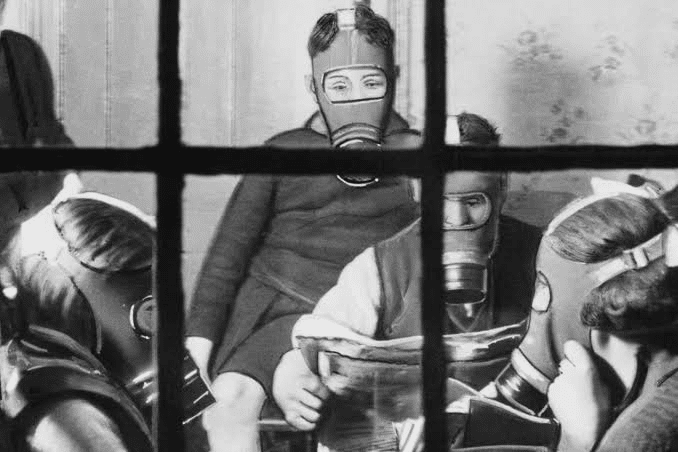
Imagine opening your bedroom window on a warm September night, only to notice a strange, sweet smell drifting through the darkness.
At first, it might seem harmless.
Then your legs feel weak.
Your throat burns.
You become nauseated.
And suddenly, you wonder whether someone outside is trying to hurt you.
That unsettling scenario played out repeatedly in Mattoon, Illinois, during September 1944. Residents reported unusual odors, mysterious physical symptoms and, in some cases, shadowy figures near their homes. Within days, newspapers had transformed scattered complaints into a frightening story about an unknown chemical attacker.
The name stuck: the Mad Gasser of Mattoon.
But was there really a gas-wielding prowler moving through the city at night? Or did wartime anxiety, environmental conditions and sensational reporting combine to create a mystery that became larger than the evidence?
More than 80 years later, there is still no definitive answer. Yet the surviving record gives us a surprisingly detailed picture of what happened.
How the Mad Gasser Mystery Began
The first widely documented complaint came on September 1, 1944.
A Mattoon woman reported experiencing weakness after noticing an unusual odor entering her home. She also claimed to have seen a figure outside.
Her report might have remained an isolated incident.
Instead, similar complaints soon appeared elsewhere in the city.
Residents described the smell in different ways. Some compared it to flowers, others to ether or a sweet chemical substance. Reported symptoms included nausea, dizziness, weakness, numbness and irritation of the mouth or throat.
The circumstances were especially unsettling because many incidents reportedly occurred at night, often around homes with open windows.
Mattoon was also living through World War II. Families worried about relatives serving overseas, industrial work was operating under wartime pressure, and newspapers constantly carried stories about the conflict.
Video: The Mad Gasser of Mattoon
Fear already had fertile ground.
Then the local press gave that fear a name.
The Newspaper Story That Changed Everything
By September 5, the Mattoon Daily Gazette was reporting the possibility of a “Mad Anesthetist” stalking residents.
That headline mattered.
Before the story appeared, only a relatively small number of complaints had been recorded. Afterward, reports increased sharply.
Suddenly, residents had a template through which to interpret unfamiliar sensations.
A strange smell was no longer simply a strange smell.
It could be evidence of the mysterious gasser.
A headache could become a symptom.
A shadow outside a window could become a suspect.
The story had acquired a life of its own.
What Residents Actually Reported
Over the following weeks, authorities received numerous complaints. Estimates vary, but roughly two to three dozen reports became associated with the episode.
Some witnesses described physical symptoms. Others claimed they had seen someone outside their homes.
Yet the descriptions of the supposed attacker were remarkably inconsistent.
There was no reliable composite sketch.
No suspect was identified.
No one was arrested.
And most importantly, investigators never recovered a chemical device that could be connected to the alleged attacks.
That absence does not automatically prove that nothing unusual happened. It does, however, create a major problem for the theory of a deliberate chemical assault.
If someone had repeatedly entered or approached homes carrying an incapacitating substance, investigators would expect at least some physical trace.
They found none that conclusively established such a crime.
The Search for a Chemical Explanation
Police and state authorities took the reports seriously.
Local officers increased patrols. Fire officials became involved. State investigators examined complaints, while federal authorities were also notified.
One piece of material became particularly interesting: a cloth that a resident believed might have been associated with the suspected gas.
Investigators tested it.
The results did not identify a chemical agent that could establish the presence of a deliberate attack.
Authorities also lacked reliable environmental measurements from the exact moments when residents reported symptoms.
That missing data creates an important historical problem.
Suppose an irritating industrial odor had drifted through a neighborhood for only a short period.
Without an air sample collected at that exact moment, decades later we could not prove it happened.
And the same problem applies in reverse.
Without contemporaneous measurements, investigators could not conclusively prove that environmental chemicals played no role.
Mattoon Was an Industrial Town During Wartime
This is where the mystery becomes more complicated.
Mattoon was an active wartime manufacturing community in 1944. Industrial facilities operated during a period when factories were working hard to support the American war effort.
Certain industrial processes can produce noticeable odors, particularly when weather conditions trap emissions close to the ground.
Temperature, wind direction and atmospheric stability can all affect how odors travel.
An odor that seems overwhelming inside one neighborhood might be barely noticeable a few streets away.
Could something like that have contributed to the Mattoon reports?
It is possible.
But the surviving evidence does not provide enough environmental data to establish a specific factory, chemical or emission event as the cause.
That leaves the industrial theory in the category of plausible explanation rather than proven fact.
The Mass Psychogenic Illness Explanation
One of the most influential interpretations came from sociologist Donald M. Johnson of the University of Illinois.
After examining complaint records, newspaper reports and investigative material, Johnson argued that the Mattoon episode was best understood as a form of mass hysteria, a term commonly used at the time.
Modern researchers would generally use more precise language, such as mass psychogenic illness or a collective anxiety episode.
The basic idea is not that people were pretending.
That distinction is crucial.
Fear can produce genuine physical reactions.
An anxious person can experience dizziness, nausea, weakness, rapid breathing, tingling or other uncomfortable sensations. When people share a common fear, those reactions can spread socially as people compare experiences and interpret ambiguous sensations through the same explanation.
In Mattoon, newspaper coverage may have acted like an amplifier.
One person reported an unusual smell.
Another read about it.
Someone else later noticed an odor and wondered whether the same thing was happening.
The story continued to grow.
Why the Theory Became So Influential
Johnson identified several patterns that supported his interpretation.
The reports increased after extensive newspaper coverage.
They appeared in clusters.
Descriptions of symptoms varied.
No confirmed chemical agent was found.
And the entire episode eventually faded away.
That pattern resembles other documented episodes in which fear, expectation and social suggestion contribute to clusters of real symptoms.
But there is an important caveat.
Video: The Mad Gasser Of Mattoon • Unexplained Stories
The earliest complaints complicate a simple “newspaper caused everything” explanation. Some reports appear to have preceded the most influential newspaper coverage.
That means the press may have amplified an existing concern rather than creating the entire episode from nothing.
And that distinction matters.
Could Industrial Odors Have Started the Panic?
A more nuanced explanation combines the two leading ideas.
Perhaps some residents encountered a genuine but harmless or irritating environmental odor.
Maybe industrial emissions played a role.
Perhaps atmospheric conditions concentrated an unusual smell in certain neighborhoods.
Those initial experiences could then have been interpreted through the rapidly spreading “Mad Gasser” narrative.
Once residents became aware of the supposed threat, ordinary sensations could take on new meaning.
A headache became evidence.
A smell became suspicious.
A noise outside became footsteps.
A shadow became a prowler.
This combined explanation cannot be proven, but it fits more comfortably with the uncertainty of the surviving evidence than a simple choice between “the gasser was real” and “everyone imagined it.”
Reality is sometimes messier than either extreme.
What About the Mysterious Figure?
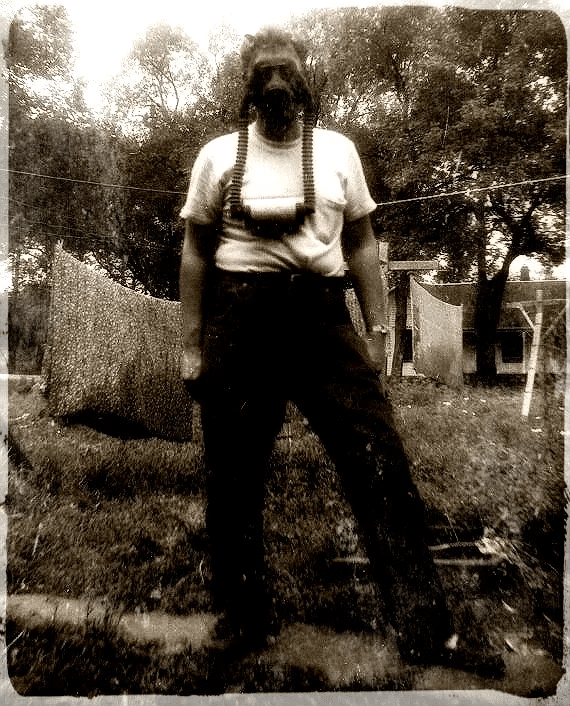
The reports of a dark figure remain one of the more intriguing parts of the case.
Some residents claimed they saw someone near their homes or windows.
But the descriptions were too inconsistent to identify a particular person.
Police did not recover convincing physical evidence linking an intruder to the incidents.
There were no confirmed footprints, no chemical delivery apparatus and no identified suspect.
Could someone have been lurking around Mattoon?
It cannot be completely ruled out from the historical record.
But there is also a psychological explanation.
Once newspapers had established the image of an unknown “gasser,” people became more alert to possible signs of an attacker. In darkness, ordinary movement, shadows or passing pedestrians can appear threatening, particularly when a community already believes a dangerous person is nearby.
The figure therefore remains documented as a witness claim, but not verified as evidence of a criminal.
Why the Mad Gasser Story Never Really Died
The episode ended almost as mysteriously as it began.
By the middle of September, reports began declining.
By the end of the month, the wave of complaints had effectively disappeared.
No attacker was caught.
No weapon was discovered.
No definitive chemical source was established.
And no single explanation satisfied every detail.
That uncertainty gave the story staying power.
Later writers emphasized the most dramatic elements: a mysterious stranger, poisoned air, terrified families and an unseen attacker moving through the darkness.
The more complicated reality was less cinematic.
There may have been genuine odors.
People may genuinely have felt ill.
Fear may have amplified those experiences.
Newspaper coverage may have accelerated the process.
And investigators may simply have arrived too late to identify whatever environmental conditions existed during the earliest reports.
So, Was There Ever a Mad Gasser?
The evidence does not establish that a mysterious chemical attacker operated in Mattoon in 1944.
No suspect was identified.
No weapon or delivery system was conclusively recovered.
No chemical agent was confirmed at the reported locations.
At the same time, dismissing every witness as dishonest would go too far.
The residents experienced something they considered frightening and physically real. Their complaints were documented by police and journalists, and the community response was genuine.
The strongest scholarly explanation remains a combination of collective anxiety and social suggestion, potentially complicated by unidentified environmental factors.
The industrial-emission hypothesis remains plausible but unproven because the necessary environmental measurements from the relevant nights do not survive.
That leaves the central mystery unresolved—but not completely directionless.
Conclusion: The Mystery May Have Been Real Even If the Gasser Wasn’t
The Mad Gasser of Mattoon remains fascinating because it sits at the crossroads of fear, science, journalism and memory.
Something happened in Mattoon during September 1944.
Residents reported strange odors.
Some experienced real physical symptoms.
Others believed they saw a shadowy intruder.
Authorities investigated.
No attacker emerged.
No convincing chemical weapon was found.
And as quickly as the reports spread, they eventually stopped.
Perhaps an environmental odor triggered the first complaints. Perhaps wartime stress and uncertainty made residents especially sensitive to unfamiliar sensations. Perhaps newspaper coverage transformed isolated experiences into a citywide threat.
The most convincing explanation does not require an invisible criminal slipping through windows at night.
It requires something more ordinary—and, in some ways, more fascinating.
A community became frightened.
That fear changed how people interpreted the world around them.
The “Mad Gasser” may never have existed as a criminal at all. But the fear he inspired was undeniably real, and that is precisely why the Mattoon mystery has survived long after the mysterious odor disappeared.