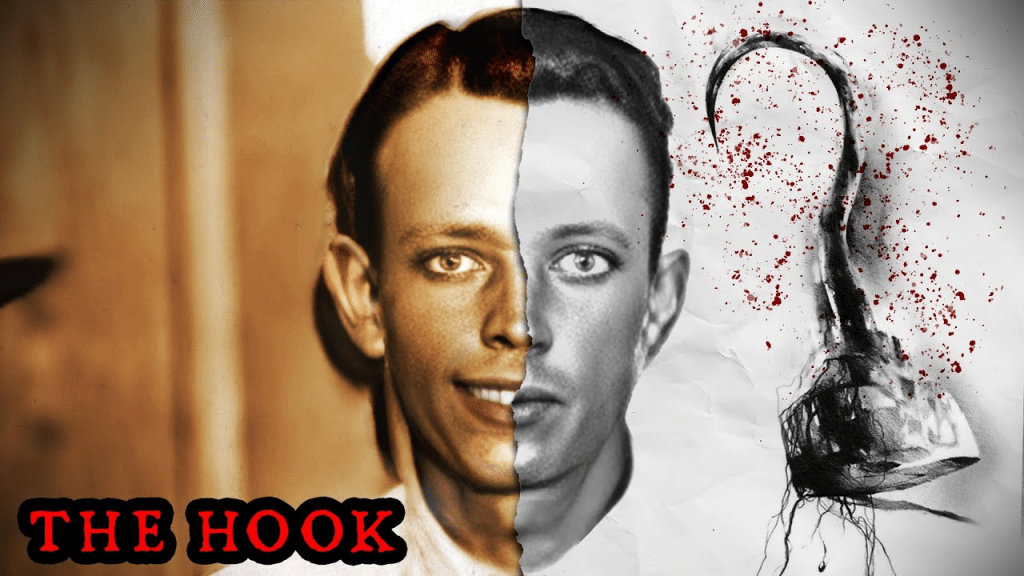
Picture a quiet road after dark. The streetlights have disappeared behind you, the radio is playing softly, and the rest of the world feels miles away.
A young couple sits inside a parked car, enjoying a few private minutes together.
Then the music suddenly cuts out.
A radio announcer delivers an unsettling bulletin. A dangerous inmate has escaped. He is believed to be somewhere nearby. Worse still, according to the warning, the man has a metal hook where one hand should be.
Suddenly, the quiet road does not feel so quiet.
The couple decides to leave. Tires spin over gravel as the car pulls away. They do not stop until they reach a brighter, safer location.
Then they notice something hanging from the door.
A curved metal hook.
It is one of the most recognizable endings in American folklore—and one of the clearest examples of how a simple cautionary tale can survive for generations.
But where did the Hookman legend actually come from? Was it based on a real criminal case, or did the story emerge entirely from American teenage folklore?
The surviving evidence points strongly toward the latter.
The Hookman Legend Was Already Circulating by the Late 1950s
Trying to identify the exact birthplace of an urban legend is a little like trying to find the first ripple on a lake. By the time anyone notices it, the water has already carried it somewhere else.
That appears to be what happened with the Hookman.
Folklore researchers have found evidence that versions of the story were circulating orally by the late 1950s. The earliest accounts were already recognizable: two young people parked somewhere secluded, a frightening warning on the radio, an unseen attacker and a shocking piece of evidence discovered after their escape.
A notable early printed version appeared in 1959. The following year, the story reached an even larger audience through the nationally syndicated Dear Abby column.
That publication was important because it demonstrated that the tale was already familiar enough for people to discuss it as something teenagers were telling one another.
It was not presented as a newly discovered crime report.
Video: The VERY Messed Up Origins of THE HOOKMAN | Urban Legends Explained
It was a story.
And once it appeared in newspapers across the country, its journey became even easier.
Why the Radio Warning Matters
The radio broadcast may seem like a minor detail, but it performs an important job in the story.
Imagine hearing about an escaped criminal from an anonymous announcer while sitting in an isolated parking area. The warning feels official. It sounds like something that could genuinely happen.
That makes the story more frightening than a supernatural tale.
There is no ghost. No monster. No mysterious curse.
There is simply a criminal on the loose.
The couple has been warned, too. That creates the central tension: Will they listen?
In many versions, one person immediately wants to leave while the other hesitates. The story therefore becomes a miniature lesson about judgment. The person who takes the warning seriously turns out to be right.
The radio essentially becomes the voice of adult authority entering a private teenage world.
And the couple’s decision to remain there for even a few more minutes becomes the mistake that drives the story toward its famous ending.
The Hook Is More Than a Scary Object
Why a hook?
A knife would be frightening. A gun would be frightening. Yet neither would work quite as well for this particular legend.
The hook is unusual, immediately recognizable and easy to visualize.
Most importantly, it gives the alleged attacker a distinctive identity.
A criminal with a hook is not simply an unknown person hiding in the darkness. He becomes a character listeners can picture instantly. The unusual physical feature makes him easier to remember and easier to describe when the story travels from one person to another.
Then comes the final twist.
The hook is no longer attached to the attacker.
It is attached to the car.
That changes everything.
The couple did not merely imagine danger. According to the story, they have physical evidence that someone really was close enough to reach them.
The Perfect “Legend Trip” Ending
Folklorists often examine stories that contain a supposed physical object or piece of evidence that supposedly proves the event occurred.
The Hookman has one of the simplest examples imaginable.
The hook.
It is the perfect storytelling device because it answers the listener’s biggest objection: How do you know this really happened?
The story responds, in effect, “Because they found the hook.”
Of course, no authenticated criminal case has established the complete Hookman scenario. But narratively, the object makes the tale feel remarkably convincing.
It turns an invisible threat into something tangible.
Lovers’ Lane Was the Perfect Setting
The location matters just as much as the hook.
For generations, the phrase “lovers’ lane” has evoked secluded roads, wooded overlooks, quiet parking areas and places where young couples could escape adult supervision.
That made such locations perfect settings for cautionary folklore.
The story was especially powerful in the 1950s and 1960s, when American society was increasingly focused on teenage independence, dating and juvenile behavior.
Cars gave young people something earlier generations had not enjoyed to the same extent: mobility and privacy.
That freedom came with anxiety.
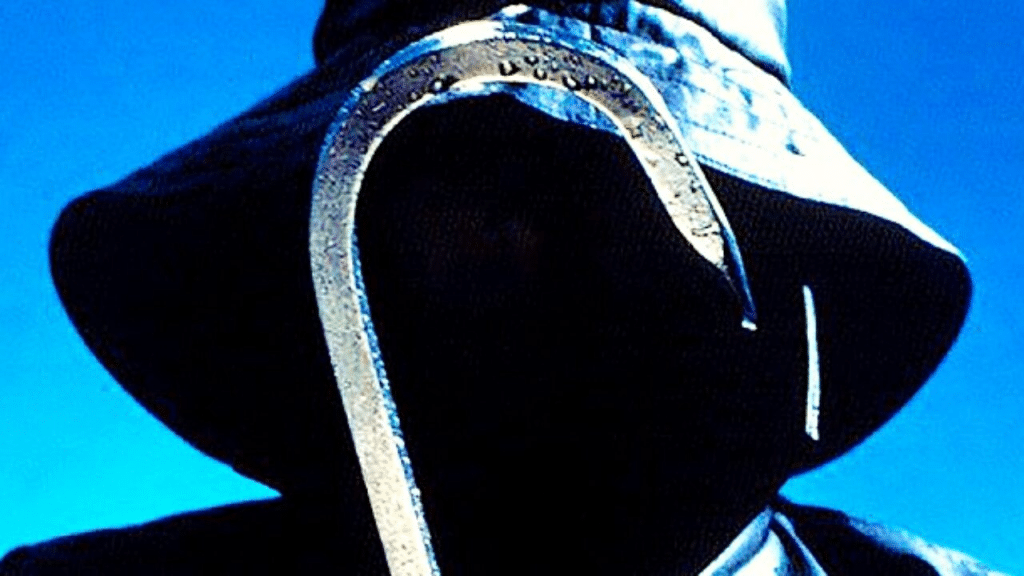
Parents could not always see where their children were going. Teenagers could drive beyond the familiar neighborhood. A parked car after dark could become a private world.
The Hookman legend turned that freedom into a warning.
The Fear Behind the Story
The message was simple: isolation has consequences.
You might think you are alone.
You might believe you are safe.
You might even receive a warning and decide it is probably nothing.
Then something outside the car reminds you that darkness can hide more than you realize.
The legend therefore works as both horror story and social lesson.
It tells teenagers to listen to warnings, avoid isolated locations and recognize when a situation feels wrong.
That combination helped the story travel.
Were Real Crimes Behind the Hookman Story?
The Hookman has occasionally been connected to real crimes, especially attacks on couples in parked cars.
One frequently mentioned example is the Texarkana Moonlight Murders, a series of attacks against young couples in 1946 near the Texas-Arkansas border.
The similarities are obvious enough to understand why people connect the two stories.
Both involve young couples.
Both involve isolated nighttime locations.
Both draw on fears surrounding attacks against people who believe they are safely hidden from public view.
But similarity does not prove ancestry.
Researchers have not established a documented connection between the Texarkana crimes and the Hookman legend. The Texarkana case involved real attacks, but its circumstances do not match the famous hook story.
The connection is therefore better understood as cultural rather than factual.
Real crime created genuine public anxiety.
Folklore transformed that anxiety into a memorable narrative.
How the Legend Changed Over Time
Once a story enters oral tradition, it rarely stays completely still.
Video: The Hookman: The Terrifying Legend of America’s Lover’s Lanes
Different communities began changing the details of the Hookman.
Some versions gave the escaped criminal a specific name. Others identified a particular prison or road. Some placed the lovers’ lane in a nearby town, making the story feel much closer to home.
That localization is common in urban legends.
A story becomes more frightening when the storyteller can point toward an actual road and say, “It happened right there.”
Other versions changed the couple themselves. Sometimes the young woman wanted to leave. Sometimes the young man did. The underlying lesson remained the same: one person senses danger, the other hesitates, and the couple narrowly escapes.
The story could adapt without losing its identity.
That is one reason it survived.
From Campfire Tale to Horror Movie Icon
The Hookman eventually moved beyond conversations between teenagers and became part of popular entertainment.
Its basic ingredients—an isolated couple, a mysterious attacker, a warning ignored and danger approaching from outside—fit naturally into the developing horror genre.
Later films borrowed or directly referenced the imagery.
One of the most recognizable modern examples is the hook-wielding killer associated with the 1997 film I Know What You Did Last Summer. That movie introduced the imagery to an entirely new generation, helping preserve the visual connection between hooks, nighttime roads and young people in vulnerable situations.
The interesting part is that the movie did not create the fear.
The folklore came first.
Hollywood simply gave an old image a new costume.
What the Historical Record Does Not Prove
Despite decades of retelling, researchers have not identified a verified case that matches the complete Hookman scenario.
There is no authenticated police report establishing that an escaped prisoner with a hook attacked a young couple in a secluded car, nearly caught them and left his prosthetic hook hanging from their door.
There have certainly been real crimes involving parked couples. There have certainly been escaped prisoners. People have used prosthetic hooks. And criminals have attacked people in isolated locations.
But combining several real-world possibilities does not create evidence that the legendary event actually occurred.
That distinction matters.
The Hookman story is best understood as folklore, not as a solved or forgotten criminal case.
Its earliest documented appearances show that the tale was already circulating as a story rather than being reported as a verified incident.
Why the Hookman Legend Still Works Today
More than six decades later, the Hookman remains remarkably effective.
Why?
Because the setting may have changed, but the fear has not.
The story is really about vulnerability.
It is about being somewhere isolated and realizing, perhaps too late, that you are not as alone as you thought.
It is also about the strange power of physical evidence. The hook hanging from the car door gives the audience something concrete to remember. The couple escaped, but the object left behind proves how close the danger came.
That is a powerful storytelling trick.
Fear disappears when the lights come on. The hook does not.
A Story Built to Be Remembered
The Hookman contains almost everything an enduring urban legend needs: a familiar setting, ordinary people, a believable warning, a moment of hesitation, an unseen threat and a final image that sticks in the mind.
It is short enough to tell in a few minutes.
It is frightening without requiring anything supernatural.
And, most importantly, it ends with a question.
What if it really happened?
That question has helped the legend survive far longer than the particular roads, radio stations and lovers’ lanes where early versions were supposedly set.
Conclusion: The Hookman Was Probably Never One Real Event
The evidence does not point to a single criminal incident that created the Hookman legend. Instead, the story appears to have emerged from the anxieties of postwar America and spread through teenage conversation, newspapers and later popular culture.
Real fears about crime, juvenile independence and isolated dating spots provided the ingredients. Folklore supplied the structure. The hook supplied the unforgettable ending.
The 1959 and 1960 print appearances demonstrate that the story was already circulating by the time it entered the wider public record. Later folklorists documented how consistently its central elements survived, even as locations, characters and small details changed.
So, was there ever a real escaped criminal waiting beside a lovers’ lane with a hook?
No verified evidence has established that.
But perhaps that is exactly why the story has lasted.
The road is dark. The radio has issued its warning. Someone outside has made a sound.
And somewhere, just beyond the headlights, a hook may still be waiting.