Late at night, a simple request can feel strangely different.
Imagine sitting alone in a parked car when two children suddenly approach. They appear young, calm and perfectly polite. They do not shout. They do not threaten you. They simply ask for a ride.
You hesitate.
Something about the situation feels wrong, although you cannot immediately explain why.
Then you look at their faces.
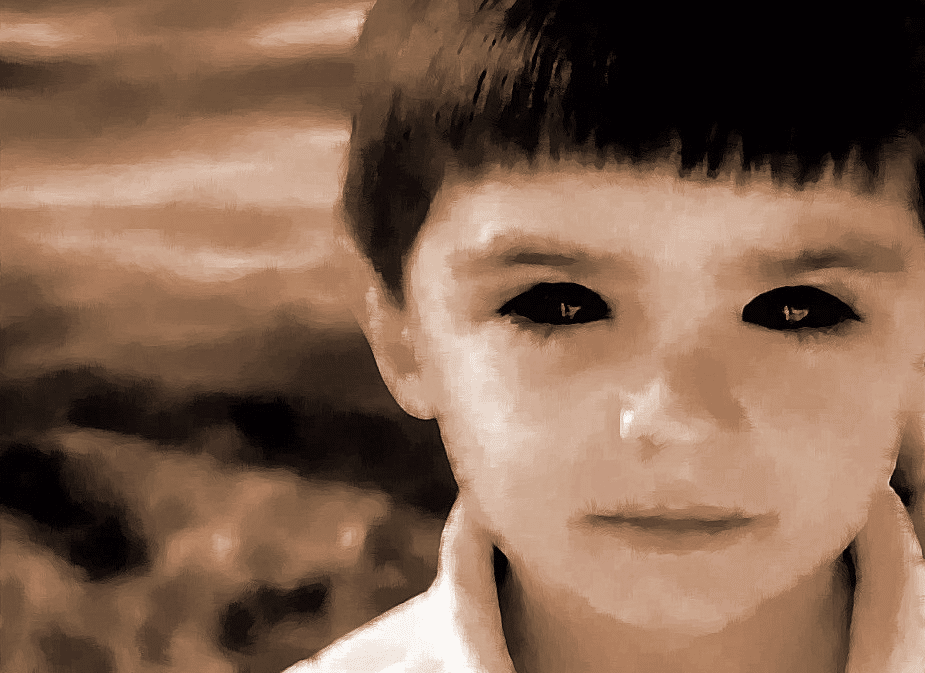
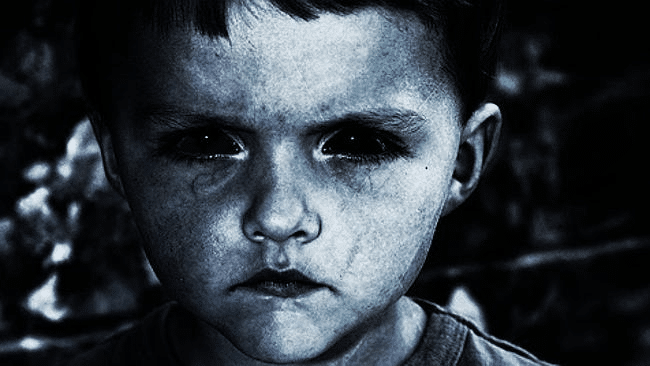
Their eyes appear completely black.
No visible whites. No ordinary irises. Just an unnaturally dark appearance that turns an otherwise ordinary encounter into something deeply unsettling.
This is the basic premise behind the Black-Eyed Children legend, a modern supernatural story that has traveled through Internet forums, paranormal websites, television programs and social media for decades.
But unlike many mysterious legends that supposedly stretch back centuries, this one has a surprisingly traceable beginning.
So who were the original Black-Eyed Children, and how did one strange account become a worldwide piece of modern folklore?
The Strange Encounter That Started the Black-Eyed Children Legend
The story’s modern trail leads back to Brian Bethel, a journalist based in Abilene, Texas.
According to Bethel’s account, the encounter occurred in 1996 outside a movie theater. He was sitting in his vehicle late at night when two young boys approached.
They wanted a ride.
At first, nothing about that request necessarily suggested anything supernatural. Children sometimes ask strangers for assistance, particularly when they claim they need to get home.
Yet Bethel described experiencing an overwhelming sense of fear.
It was not simply nervousness. He later portrayed it as a powerful instinct telling him that he should not allow the boys into his car.
He hesitated.
For a moment, he reportedly considered unlocking the door.
Then he looked more closely at the children.
Video: Don’t Let Them In! The Urban Legends of Black-Eyed Children | Monstrum
That was when he noticed their eyes.
A Detail That Changed Everything
According to Bethel’s account, the boys’ eyes appeared entirely black, without the normal distinction between the white of the eye, the iris and the pupil.
He became even more frightened and eventually drove away.
The encounter could have remained a strange personal memory. Instead, Bethel later wrote about it online.
In January 1998, he reportedly posted the story to the Ghost Watchers mailing list, a paranormal discussion community.
That post became the earliest widely cited appearance of the modern Black-Eyed Children story.
The importance of the account lies less in proving what Bethel actually saw and more in its influence. His story contained nearly every ingredient that later versions would repeat: mysterious children, nighttime isolation, a request for access, overwhelming dread and those unmistakably black eyes.
In other words, the legend already had its skeleton.
The Internet simply gave that skeleton a much larger body.
Why Brian Bethel’s Story Became So Influential
Bethel’s identity helped the story gain attention.
He was not presented as an anonymous storyteller hiding behind a screen name. He was a journalist with a verifiable professional background, and he continued to maintain that his experience was genuine.
That distinction mattered in the early days of Internet folklore.
An anonymous post could easily be dismissed as fiction. A detailed account attached to the name of a working journalist felt different.
But credibility is not the same thing as independent verification.
No physical evidence has established that the children existed as described. No independent witness has been confirmed to have observed the same encounter. The surviving record therefore cannot establish exactly what happened to Bethel.
What it can establish is something historians of folklore find fascinating: his account became the foundation for a recognizable legend.
And once people began repeating it, the story started changing.
The Black-Eyed Children Details That Keep Returning
One reason the legend became so memorable is its remarkable collection of recurring details.
Across later reports, the children tend to appear at night. They are usually young. They behave politely. They ask the witness to let them inside a vehicle or home.
Then comes the feeling of dread.
Finally, the eyes reveal what supposedly makes them different.
That pattern is important because legends survive by being easy to remember.
A complicated story can lose its shape after being told twenty times. The Black-Eyed Children legend does not need much explanation.
Two children.
A strange request.
A closed door.
Black eyes.
Fear.
That is almost all the listener needs.
The Mysterious Threshold
The doorway or car door plays a particularly important role.
The children generally do not force their way inside. Instead, they ask for permission.
That small detail creates a powerful question: What happens if you say yes?
The answer is often left unclear.
In many versions, the witness refuses, drives away or closes the door. That uncertainty may actually make the legend more frightening. The audience never receives a complete explanation.
The danger remains just beyond the threshold.
It is like standing at the edge of a dark forest and hearing footsteps without ever seeing who is walking toward you.
The Ancient Folklore Hidden Inside a Modern Story
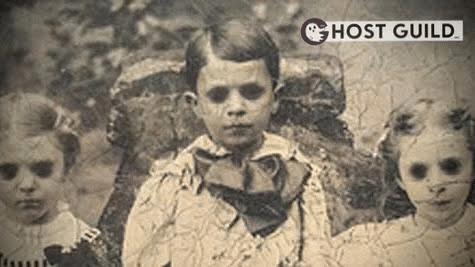
Although the Black-Eyed Children legend emerged during the Internet era, its basic ideas are much older.
Folklore from many cultures contains stories about dangerous visitors who require permission before entering a protected space.
Vampire traditions provide one familiar example. In many popular versions, the vampire cannot simply cross into a private home without an invitation.
European folklore also contains stories about strange or supernatural children whose appearance seems normal at first but gradually reveals something disturbing.
Changelings, for example, appear in older traditions as beings substituted for human children. The unsettling element is not necessarily an obvious monster. Instead, the child looks almost right while behaving in a way that makes the family suspicious.
The Black-Eyed Children story fits neatly into this older pattern.
The modern legend replaced the medieval setting with a parking lot, suburban home or car. It replaced traditional supernatural creatures with mysterious children.
And instead of fangs, claws or obvious deformities, it gave them one unforgettable feature.
Their eyes.
How the Internet Turned a Texas Story Into Global Folklore
The timing of Bethel’s account was crucial.
During the late 1990s, the Internet was becoming an increasingly important place for people interested in paranormal stories. Mailing lists, message boards and early websites allowed unusual encounters to travel far beyond their original communities.
The Black-Eyed Children story was perfectly suited to that environment.
Readers could encounter the original account and then imagine having a similar experience themselves.
Soon, other reports began appearing.
Some people claimed to have seen black-eyed children near their homes. Others placed them beside vehicles or on porches. The locations changed, but the essential ingredients remained surprisingly stable.
Video: The Black-Eyed Children | Reprise
From Paranormal Forums to Television
As paranormal websites grew, the legend gained a digital home.
Websites collected alleged encounters and encouraged visitors to submit their own stories. Every new account appeared to strengthen the impression that something unusual was happening.
But there was another possibility.
The growing collection may have helped teach people what a Black-Eyed Children encounter was supposed to look like.
Television then amplified the effect.
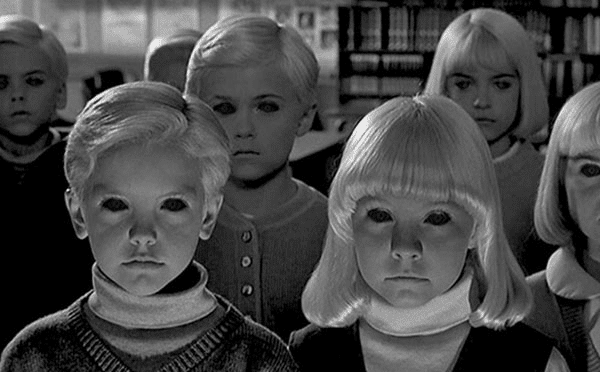
Paranormal programs and documentaries recreated the encounters, giving audiences a consistent visual image of the mysterious children. Once those images entered popular culture, later accounts could easily echo them.
This is a familiar pattern in modern folklore.
A story creates an image.
The image creates expectations.
Those expectations influence later stories.
And eventually the repeated version can feel older and more established than it really is.
What Was Added to the Legend Over Time?
The earliest known account was relatively straightforward. Later versions became increasingly elaborate.
Some stories introduced claims that witnesses became sick after meeting the children. Others suggested that electronics malfunctioned, strange events followed the encounter or something terrible happened after a person allowed the children inside.
Other versions tried to give the legend a much older history.
Stories began claiming that Black-Eyed Children had appeared decades before Bethel’s account, sometimes supposedly in old newspaper articles or police records.
However, those alleged earlier records have not produced a reliable documentary trail confirming the modern legend.
This kind of retroactive history is common in folklore.
Once a story becomes popular, people naturally begin searching for older examples that seem similar. Sometimes they find genuine older stories with related themes. Other times, vague similarities become proof in the telling.
The result is a legend that appears to have existed forever.
Are Black-Eyed Children Actually Real?
This is where the story needs a clear distinction between personal experience and documented evidence.
There are many alleged encounters online, but no independently verified evidence has established the existence of supernatural children with completely black eyes.
No authenticated photograph has demonstrated the phenomenon.
No verified police investigation has established a recurring group of mysterious children matching the legend.
No scientific examination has confirmed a nonhuman explanation.
That does not automatically mean every person who reports an unusual encounter is deliberately inventing a story.
Human perception can be complicated, especially in darkness, under stress or during an unexpected encounter.
Memory can also change over time.
Once someone knows a powerful story, that story can influence how an ambiguous experience is understood later. A strange encounter with unfamiliar children could potentially become much more frightening when the person already knows the Black-Eyed Children legend.
The Supernatural Theories
Over the years, believers have proposed numerous explanations.
Some describe the children as demons. Others have suggested extraterrestrial beings, supernatural parasites, government experiments or entities that need permission to enter a home.
The problem is simple: none of these theories has produced independently verified evidence.
They attempt to explain a phenomenon that itself remains supported primarily by personal accounts.
From a folklore perspective, a simpler explanation exists.
The Black-Eyed Children may be exactly what the historical record suggests: a modern legend that developed from one memorable account and expanded through repetition.
Why the Story Still Works After All These Years
Why does this particular legend remain so effective?
Because it touches something deeply human.
Most of us understand the instinct to hesitate before opening a door to a stranger. We know the feeling of walking toward a car alone at night. We understand how darkness can make an ordinary situation seem completely different.
The legend takes those familiar feelings and pushes them one step further.
What if the stranger looked like a child?
What if they were polite?
What if every logical reason to help them conflicted with an unexplained feeling telling you to stay away?
That is the real engine of the story.
The black eyes are memorable, but the hesitation is what makes the legend work.
The story asks you to trust an instinct you cannot explain.
And that is a remarkably old idea.
The Black-Eyed Children May Be Modern, But Their Story Is Ancient
The documented history of the Black-Eyed Children legend points toward Brian Bethel’s reported 1996 encounter and his 1998 Internet posting. From there, the story moved through paranormal communities, websites, forums, television and popular culture.
Its ingredients, however, are much older.
The mysterious visitor.
The dangerous threshold.
The uncanny child.
The fear of inviting something unknown into a protected space.
Those themes have appeared in folklore for generations.
Bethel’s account simply gave them a modern setting and one extraordinary visual detail.
The result was a legend perfectly designed for the Internet age: short enough to share, strange enough to discuss and ambiguous enough to resist a final answer.
Conclusion: The Mystery May Be the Story Itself
There is no verified evidence proving that supernatural Black-Eyed Children exist.
What we do have is a fascinating trail showing how a modern legend can form.
A journalist reported a disturbing encounter in the 1990s. An online community preserved and circulated the account. Other storytellers adapted it. Paranormal websites collected new versions. Television gave the children a recognizable appearance. The Internet then carried the legend far beyond its original Texas setting.
The story changed along the way, but its central image remained intact.
Two children stand outside.
They ask politely to come inside.
Something feels wrong.
Then you notice their eyes.
Perhaps that is why the legend continues to linger. It does not depend entirely on believing in monsters. It depends on something much more familiar—the uneasy moment when instinct tells us that appearances can be deceiving.
The Black-Eyed Children may never have been documented as a real supernatural phenomenon.
But as a piece of modern folklore, they are undeniably real.
And somewhere, late at night, someone is still hearing a knock at the door and wondering whether they should answer.