
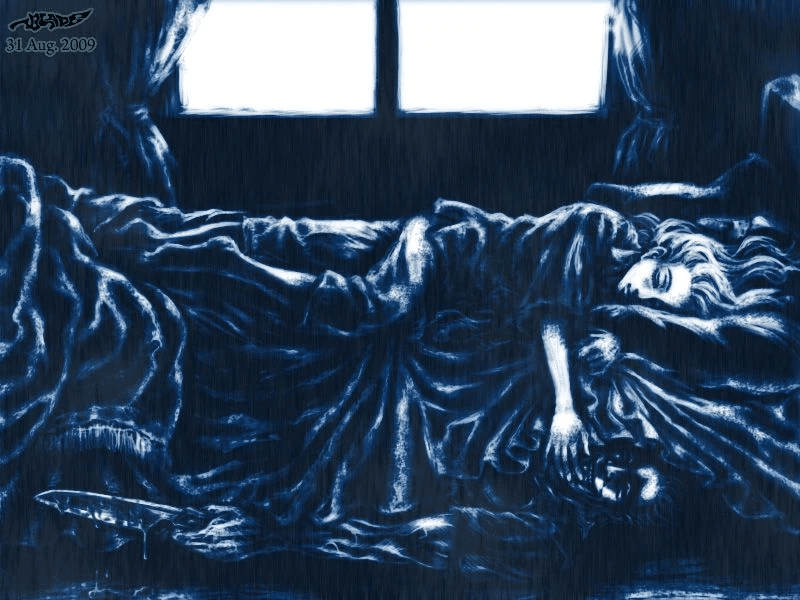
The house was quiet, the kind of quiet that makes every little sound seem louder.
A faint drip came from somewhere down the hallway. She barely noticed it. Her dog was nearby, or so she believed, and that familiar thought was enough to make the darkness feel ordinary.
Then she lowered one hand over the side of the bed.
Something warm touched her fingers.
Then came a lick.
She relaxed.
Her dog had done that countless times before. What reason was there to be afraid?
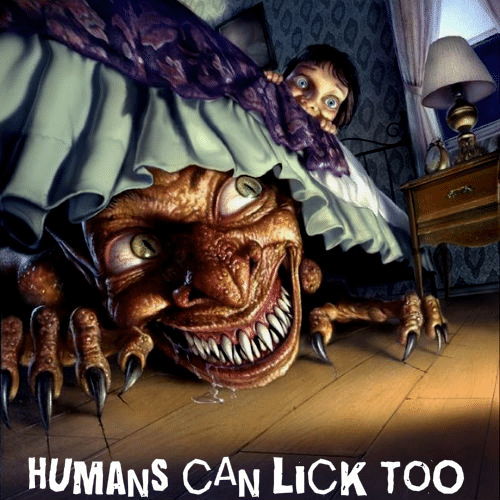
By morning, however, the comfort of that moment had completely changed. In the most famous versions of the story, the woman discovers a chilling message written on a mirror or nearby surface: “Humans can lick too.”
The tale has frightened generations of listeners, particularly at sleepovers, summer camps, and late-night gatherings. It sounds like a story that happened to somebody’s friend—or perhaps to a friend of a friend.
But the real mystery isn’t whether the story happened exactly as told.
It’s where the story came from, and why it has survived for so long.
The Licked Hand Legend Has a Much Older History
The familiar dog-under-the-bed story can feel like a product of modern horror culture. Yet the central idea is considerably older.
Folklore researchers have traced versions of the deceptive-licking motif back to the nineteenth century. An 1871 account discussed in folklore research contains an important part of the same narrative structure: a person alone at night reaches out for reassurance, receives what appears to be an affectionate lick, and later discovers that the comforting explanation was false.
There is an important distinction here.
The early version did not necessarily contain the modern combination of a dog, an intruder, a bedroom, and the famous message about humans licking. Instead, it contained the mechanism that makes the legend work.
Someone expects safety.
They receive a familiar signal.
They accept that signal without question.
Then the meaning changes.
That simple reversal became the foundation for later versions.
Video: The Story of ‘The Licked Hand’ | Urban Legend
From an Old Motif to a Modern Urban Legend
By the twentieth century, the story had developed into a recognizable urban legend.
Folklorist Jan Harold Brunvand, one of the best-known researchers of American urban legends, documented versions of the tale during his work on stories that circulate as believable personal experiences.
The details varied from place to place, but the basic pattern remained surprisingly stable.
A person is alone at night. A beloved pet provides a sense of security. Something strange is heard. The person reaches into the darkness and receives a lick. Because the lick seems to come from the trusted animal, the character feels reassured.
Only later does the truth emerge.
The animal is gone, dead, or somewhere it could not possibly have been.
And the person realizes that the thing touching their hand was something—or someone—else.
That delayed realization is what gives the legend its staying power.
Five Details That Make the Story So Effective
Although storytellers have changed the setting and wording over the years, several elements appear again and again.
1. The Character Is Alone
Isolation immediately raises the stakes.
There is no parent in the next room. No roommate is awake. Nobody is available to confirm whether that strange sound was really nothing.
The character has to make every decision alone.
That is important because uncertainty becomes much more frightening when there is no one nearby to provide reassurance.
2. The Dog Represents Safety
The pet is not simply another character.
The dog represents familiarity.
For many people, a sleeping pet is part of the nighttime routine. You know its sounds. You recognize its movements. You expect its affection.
So when the hand receives a lick, the character doesn’t stop to investigate.
Why would she?
A dog licking its owner’s hand is one of the most ordinary things imaginable.
That normality is precisely what the story turns against the listener.
3. The Strange Dripping Sound
The unexplained dripping is another recurring feature.
At first, it seems harmless. Perhaps a faucet is leaking. Maybe rain is hitting a window. Perhaps an old pipe is making noise.
The character hears it but doesn’t investigate.
Later, however, the audience learns that the sound may have had a much darker explanation.
This is a clever storytelling technique. A harmless detail introduced early becomes important only after the audience already knows the ending.
Suddenly, every earlier moment looks different.
4. The Mysterious Message
Then comes the final clue.
In many modern versions, the character discovers writing on a bathroom mirror or wall. The exact wording changes, but the message usually reveals the same terrible idea: the thing that provided comfort was never the dog.
The message works because it removes uncertainty.
Until that point, the listener can still imagine innocent explanations.
Afterward, there is nowhere to hide.
5. The Final Reversal
The most important element is the reversal.
The character feels safest at precisely the moment when she should have been most afraid.
That is the heart of the legend.
It takes something comforting and quietly turns it into something threatening.
Why the Story Feels Uncomfortably Real
The Licked Hand legend works because it plays on an everyday human habit: we automatically trust familiar signals.
Imagine hearing a noise downstairs late at night.
Your first instinct might be to explain it away.
The house is old.
The pipes make noises.
The wind moved something.
A pet is walking around.
Most of the time, those explanations are correct.
We could not function if we investigated every unusual sound as a potential emergency.
The legend takes that ordinary habit and pushes it into an extreme situation.
Video: The Licked Hand (People Can Lick Too) Urban Legend Reading
And once that assumption changes, everything that happened before becomes frightening.
The Horror of a Safe Place Becoming Unsafe
There is another reason the story works so well.
The danger isn’t outside the house.
It’s already inside.
The bedroom is supposed to be a protected place. The bed represents comfort. The pet represents companionship. Darkness represents sleep rather than danger.
The legend takes each of those reassuring elements and turns them upside down.
That’s why the story can remain frightening even after someone tells you it’s fictional.
You don’t have to believe in the legend to understand the fear behind it.
Why Sleepovers Were Perfect for This Story
Few settings were better suited to the legend than an overnight gathering.
Picture the classic scene: several friends are awake long after midnight, the lights are off, everyone is trying to appear brave, and somebody suddenly says, “Have you ever heard this story?”
The atmosphere does the rest.
The audience is already in a bedroom.
The story is about someone in a bedroom.
The characters are trying to sleep.
The darkness surrounding the listeners resembles the darkness inside the tale.
That overlap makes the story feel immediate.
A good urban legend doesn’t merely tell you something frightening. It makes you look around and wonder whether the same thing could happen where you are sitting.
The Licked Hand does that exceptionally well.
How the Legend Changed Over Time
Like most oral traditions, the story has never had just one permanent version.
Different tellers have changed the animal, the house, the wording of the message, and the identity of the person responsible.
Some versions feature a dog. Others mention a cat. Some place the character in a bedroom, while others move the story to a cabin, dormitory, or unfamiliar house.
The details change because storytellers naturally adapt legends to their audiences.
But the essential structure survives.
Someone believes they are receiving comfort.
They discover that the comfort came from an unexpected source.
That is the part that cannot disappear without destroying the story itself.
The Internet Gave the Legend a New Life
The arrival of the internet didn’t create the legend.
It simply gave it a faster road to travel.
Stories that once moved through classrooms, camps, family gatherings, and sleepovers could suddenly spread through forums, email chains, websites, and social media.
The old “friend of a friend” formula remained intact.
Someone would claim that the story happened to a relative, a neighbor, a friend’s cousin, or somebody in another town.
The lack of verifiable details often made the story more intriguing rather than less.
After all, if it happened to somebody you don’t know, how could you prove it didn’t?
What the Evidence Actually Tells Us
This is where the legend becomes especially interesting.
Despite its long history, there is no verified police report, court record, or contemporaneous news account establishing the famous Licked Hand story as a specific documented crime.
That doesn’t mean real home invasions never happen. They certainly do.
It means that the particular narrative—the dog, the nighttime licking, the hidden intruder, and the final message—belongs to the world of folklore rather than established criminal history.
The nineteenth-century material is valuable because it demonstrates that the central deceptive-comfort motif is old.
It does not prove that the modern story happened.
That distinction matters.
A story can be ancient, influential, and culturally important without being factual.
Why We Still Tell It After All These Years
So why has this particular urban legend refused to disappear?
Perhaps because it understands something very basic about people.
We want familiar things to remain familiar.
We trust our homes.
We trust our pets.
We trust the sounds we recognize.
We trust the routines that tell us everything is normal.
The Licked Hand asks a disturbing question: What if the signal you trusted most was the one you misunderstood?
That question reaches far beyond the story itself.
It is about uncertainty, vulnerability, and the fragile boundary between feeling safe and actually being safe.
The legend doesn’t need ghosts or monsters to create that unease. A dark bedroom, an unexplained sound, and one ordinary touch are enough.
The Real Secret Behind the Licked Hand
The most fascinating part of the story may not be the supposed intruder at all.
It is the way the story changes meaning after the final reveal.
At the beginning, the lick means comfort.
At the end, the exact same lick becomes evidence of danger.
Nothing about the touch itself changed.
Only the information surrounding it changed.
That is why the legend is so effective. It makes the listener mentally replay the entire story from the beginning, searching for clues that seemed harmless the first time.
The dripping sound.
The darkness.
The hand reaching down.
The assumption that the dog was nearby.
Everything suddenly feels different.
Conclusion: A Simple Touch Became a Lasting Legend
The Licked Hand is far older than the modern internet versions that continue to circulate today. Its roots reach back to nineteenth-century folklore, while twentieth-century collectors such as Jan Harold Brunvand helped document its place within American urban legend traditions.
Over time, storytellers changed the setting and added memorable details, but the central idea remained remarkably consistent: a person reaches into the darkness expecting reassurance and discovers that the source of that comfort was never what they thought.
There is no reliable evidence establishing the famous tale as a real crime.
But perhaps that is exactly why it has survived.
The story doesn’t depend on believing in anything supernatural. It depends on something much more familiar—the human instinct to trust what feels safe.
And that is what makes the final realization so effective.
Sometimes the scariest part of a story isn’t what was hiding in the dark.
It’s realizing that, for one brief moment, you were completely comfortable with it.