In December 1984, television producer Jaime Shandera received an unexpected package in his mailbox.
There was no sender.
Inside was a roll of 35mm film.
After the film was developed, the images appeared to show something extraordinary: highly classified documents describing a secret American government committee allegedly created to investigate recovered extraterrestrial technology.
The committee supposedly had twelve members.
Its name was Majestic 12, often shortened to MJ-12.
If the documents were genuine, they would have represented one of the most explosive revelations of the 20th century. They appeared to connect the U.S. government directly to the famous 1947 Roswell incident and suggested that senior officials had secretly managed evidence of alien spacecraft for decades.
But there was an immediate problem.
Nobody could establish where the documents came from.
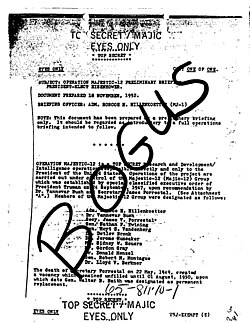
And when the FBI examined them, the agency placed a blunt assessment on its file: “BOGUS.”
How the Majestic 12 Mystery Began
The strange story began with the photographs Shandera received in 1984.
The images appeared to show pages from an alleged briefing prepared for President-elect Dwight D. Eisenhower in November 1952. The document claimed that a secret committee had been established years earlier to oversee information concerning unidentified flying objects and recovered alien material.
The papers described a supposed crash near Roswell, New Mexico, in 1947.
According to the document, military personnel had recovered a damaged craft along with the remains of several unusual beings.
The alleged committee supposedly included some of the most important American officials and scientists of the postwar era.
That detail made the documents immediately persuasive to some readers.
The names were real.
The positions were real.
Video: Majestic 12 | Secret Documents Expose UFO Cover-Up Vol. 1
The historical setting was real.
But authenticity requires more than realistic names and convincing formatting.
It requires provenance.
The Missing Chain of Custody
A genuine government document normally leaves traces.
There may be filing records, routing information, correspondence, classification records, archival references or other documents that establish when and where it was created.
The Majestic 12 papers had none of that.
Researchers could examine the photographs, but they could not trace the original documents back to an identifiable government office.
That missing history became one of the central problems surrounding the entire MJ-12 controversy.
The papers had appeared.
But nobody could explain their journey before they reached Shandera.
The People Behind the Documents Were Real
Part of the MJ-12 story’s appeal came from the people named in the alleged documents.
They included figures such as Rear Admiral Roscoe H. Hillenkoetter, the first director of the CIA, along with scientist Vannevar Bush and other senior military and government officials.
These people genuinely held influential positions.
That made the documents look much more convincing than a fictional paper filled with invented names.
But there is an important distinction.
A forged document can contain accurate information.
In fact, using accurate information is one of the easiest ways to make a fabricated document appear authentic.
A person creating a fake government memorandum would naturally choose real officials, real agencies and real historical events.
The question is not whether the names existed.
The question is whether those people actually participated in the organization described.
After decades of searching, no reliable government record has established that a committee called Majestic 12 operated as described in the papers.
Why the FBI Became Involved
Once the documents became public, the controversy attracted federal attention.
The FBI obtained copies and investigated whether the papers represented authentic classified material or a deliberate fabrication.
The Bureau’s conclusion was devastating to the MJ-12 claim.
Its file identified the documents as “BOGUS.”
That doesn’t mean the FBI proved who created them.
It means the Bureau could not authenticate them as legitimate government records and found no supporting documentary trail that would establish their claimed origin.
That distinction is important.
The FBI did not need to prove that extraterrestrials do not exist.
It only needed to determine whether these particular papers were genuine government documents.
The available evidence did not support that conclusion.
What the Investigation Failed to Find
Researchers looking for confirmation could not locate the expected administrative trail.
There was no authenticated presidential order establishing MJ-12.
There was no matching government file documenting the committee.
There was no reliable record showing that the alleged briefing had passed through the normal channels associated with highly classified government material.
For a document supposedly involving the most sensitive information imaginable, that absence was difficult to explain.
The Cutler-Twining Memo Added Another Mystery
The MJ-12 controversy became even more complicated in 1985.
Researcher William Moore discovered another document that appeared to provide independent support for the secret committee.
It became known as the Cutler-Twining memo.
The short document appeared to concern a meeting involving MJ-12 and was supposedly connected to Robert Cutler, a special assistant to President Eisenhower.
Because the document appeared in an archival collection, supporters considered it potentially important evidence.
At first glance, it seemed to solve one of the biggest problems with the original MJ-12 papers.
There was now something apparently sitting inside a government archive.
But closer examination raised additional questions.
A Date That Created a Serious Problem
Researchers examining the document discovered that Cutler’s whereabouts did not fit comfortably with the date printed on the memo.
Records indicated that Cutler was traveling outside Washington around the time the document was supposedly created.
Other concerns involved the paper itself, formatting and classification terminology.
Individually, any one discrepancy might have been dismissed as an administrative mistake.
Together, however, the problems became harder to ignore.
The document did not simply lack provenance.
Parts of its physical and historical context appeared inconsistent with the period in which it was supposedly produced.
The Truman Signature Raised Another Red Flag
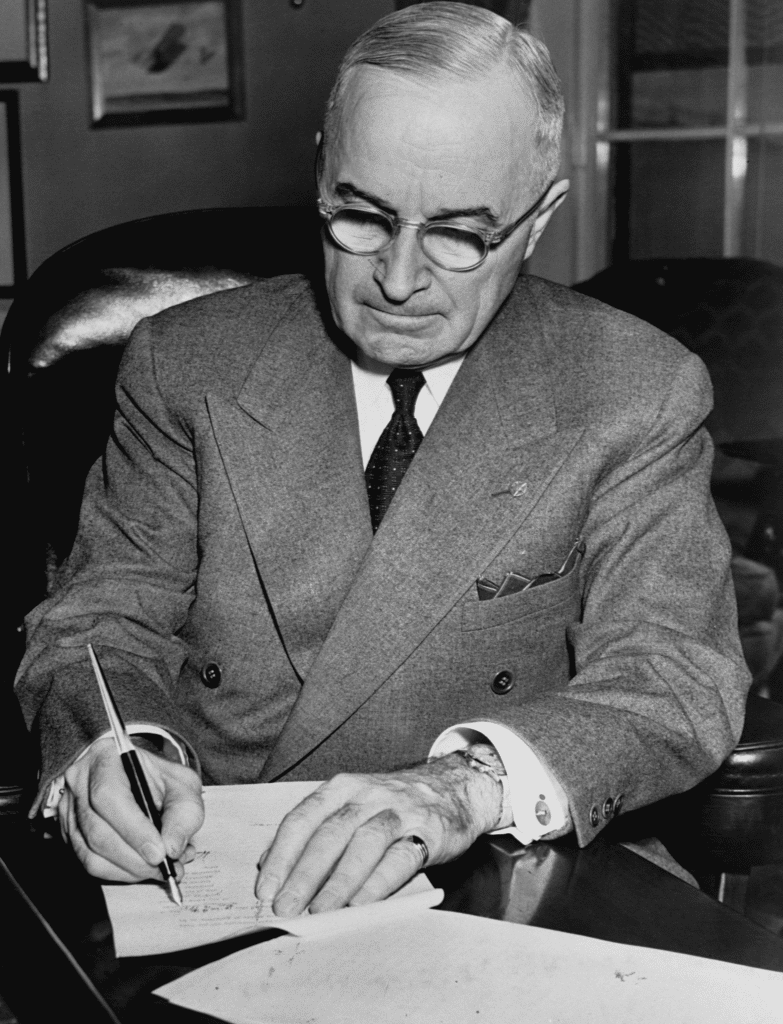
Another alleged MJ-12 document was supposedly authorized by President Harry Truman.
The signature became a major point of controversy.
Researchers compared the signature appearing on the document with an authenticated Truman signature from another government record.
The two appeared remarkably similar—so similar that critics argued the MJ-12 signature had been reproduced rather than independently written.
That matters because genuine handwritten signatures naturally vary.
Even when a person signs the same name repeatedly, small differences in pressure, spacing and letter formation normally appear.
An apparently identical signature can therefore raise questions about whether one version was copied from another document.
Again, this did not reveal who created the MJ-12 papers.
But it added another problem to an already lengthy list.
Why Some UFO Researchers Still Defended the Papers
Not everyone accepted the government’s conclusion.
UFO researcher Stanton Friedman spent years arguing that the documents deserved closer consideration. Supporters suggested that individual problems could have innocent explanations.
Perhaps paper had been replaced.
Perhaps a date had been recorded incorrectly.
Perhaps an official had authorized something before traveling.
Perhaps unusual formatting reflected an obscure classification practice.
These arguments are worth considering because historical documents can contain genuine administrative errors.
But the problem for MJ-12 supporters was cumulative.
The controversy involved provenance, formatting, paper, signatures, dates and the absence of corroborating records.
The more inconsistencies researchers identified, the harder it became to argue that they were all harmless coincidences.
Could the Documents Have Been Government Disinformation?
This possibility became one of the more intriguing alternatives.
Some researchers proposed that the documents were deliberately fabricated by intelligence agencies as a form of disinformation.
Under this theory, the papers might have been fake—but perhaps they were fake for a reason.
Maybe officials wanted to confuse UFO researchers.
Video: The Majestic-12 Documents [With Ryan S. Wood]
Maybe someone wanted to test how quickly classified-looking information would spread.
Or perhaps the documents were designed to distract attention from something else.
It is an interesting hypothesis.
But there is a crucial problem.
There is no authenticated evidence proving that a government agency created or distributed the MJ-12 papers.
A theory cannot become established simply because it explains away evidence that contradicts another theory.
Without documents, witnesses or an identifiable operation connecting the government to the fabrication, the disinformation explanation remains speculation.
What About Roswell?
The MJ-12 story cannot be separated completely from Roswell.
Something unusual happened near Roswell in 1947. The U.S. military recovered debris, and the public explanation surrounding that material changed rapidly.
Decades later, the U.S. government attributed the debris to classified military balloon activity associated with Project Mogul.
That explanation has remained controversial among UFO researchers.
But even if someone remains unconvinced about the official Roswell explanation, that does not authenticate the Majestic 12 documents.
Two questions have to remain separate:
What happened at Roswell?
And:
Are the MJ-12 papers genuine government documents?
Evidence for one does not automatically establish the other.
What the Evidence Actually Establishes
After decades of debate, several points are reasonably clear.
The MJ-12 documents physically exist.
Researchers really did receive them.
The FBI really examined them.
The Bureau really labeled them “BOGUS.”
The individuals named in the papers were real historical figures.
Roswell was a genuine historical event involving a military recovery operation.
But no authenticated government record has established that a secret committee called Majestic 12 existed in the form described by the documents.
No verified chain of custody connects the papers to a government office.
No independent archival trail confirms the alleged presidential authorization.
And no credible evidence has demonstrated that the U.S. government secretly recovered extraterrestrial spacecraft through the program described in the papers.
The Biggest Mystery May Be the Documents Themselves
There is still one genuinely unanswered question.
Who created them?
That question has never been satisfactorily resolved.
Someone knew enough about American government, military officials and UFO history to create documents that initially looked convincing.
Someone also managed to get the film into Shandera’s hands.
That is a real mystery.
But it is a very different mystery from proving that twelve senior officials secretly ran America’s extraterrestrial program.
Why the Majestic 12 Story Still Survives
The MJ-12 papers have lasted because they combine several ingredients that make a conspiracy story almost irresistible.
There is Roswell.
There are secret government programs.
There are famous military and scientific figures.
There are mysterious documents.
There is an anonymous source.
And there is the tantalizing possibility that somewhere behind the official story lies another story waiting to be uncovered.
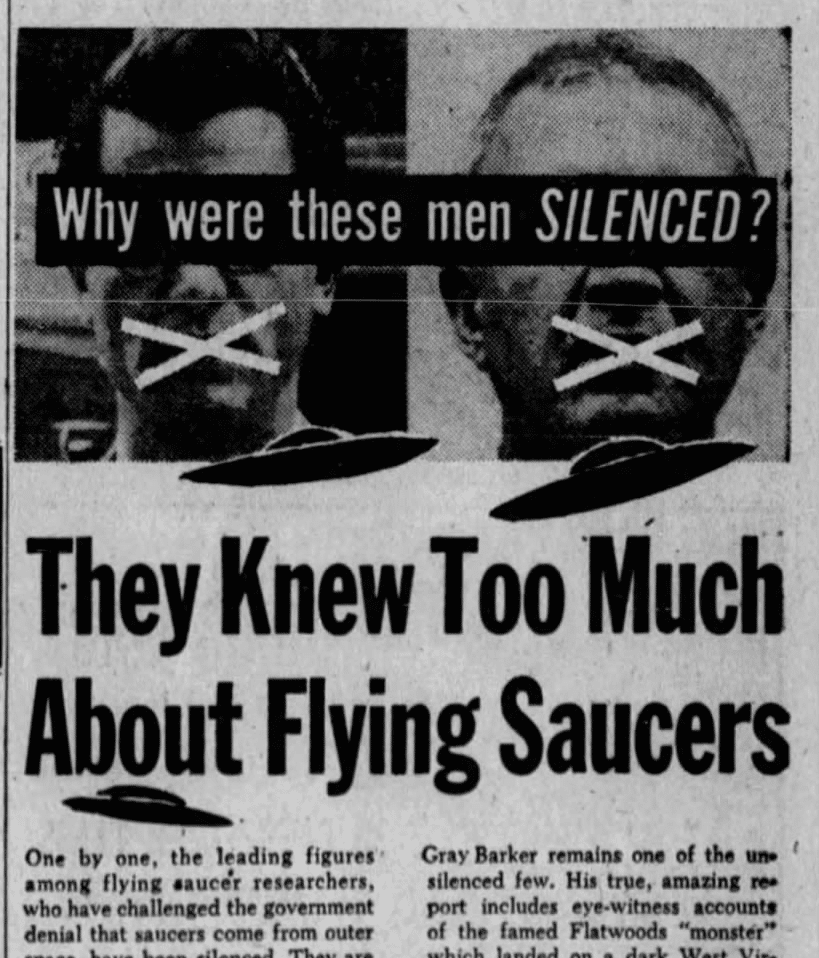
That combination is powerful.
But historical research demands something that mystery stories often do not: evidence that can be independently checked.
The Majestic 12 documents have never crossed that threshold.
Conclusion: A Famous Mystery Built Around Unproven Papers
The Majestic 12 papers remain one of the most famous document controversies in UFO history.
Their story began with anonymous film, moved through UFO research circles, attracted federal scrutiny and eventually became part of the wider mythology surrounding Roswell and alleged government secrecy.
The documents look important.
The names inside them were important.
The historical period was real.
But appearance is not provenance.
The FBI’s “BOGUS” assessment, the archival problems surrounding the Cutler-Twining memo, questions surrounding the Truman signature and the continuing absence of a legitimate government paper trail all point in the same direction.
There is no reliable evidence that the MJ-12 documents are authentic records of a secret presidential committee investigating extraterrestrial technology.
The identity of their creator remains unknown.
And perhaps that is the most honest ending to the story.
The mystery is real—but the alien committee has never been proven.