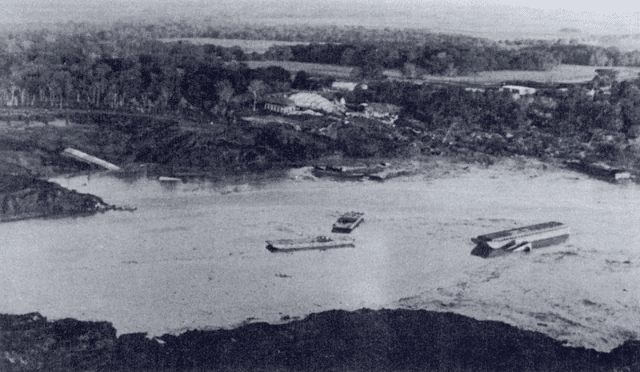
On the morning of November 20, 1980, workers on Lake Peigneur, Louisiana, noticed something was wrong with an oil-drilling operation.
The drill had become stuck.
At first, that probably sounded like an ordinary problem. Drilling crews deal with equipment failures, unexpected resistance and difficult underground formations all the time.
But this was different.
The rig stood on a collection of barges floating on a lake that was only about 11 feet deep. Within hours, the entire scene would change.
The drilling operation had accidentally opened a connection between the lake and an underground salt mine.
Water began pouring downward.
The lake started draining.
And before the disaster was over, an oil rig, another drilling platform, 11 barges and large sections of the surrounding landscape had disappeared.
Even more astonishing, everyone escaped alive.
Lake Peigneur Before the 1980 Disaster
Before the accident, Lake Peigneur was a relatively shallow body of water near Jefferson Island in Iberia Parish.
It covered roughly 1,300 acres and looked nothing like the dramatically deep lake that exists there today.
The area supported several industries, including oil exploration and salt mining.
That combination would prove disastrous.
Beneath the lake sat the Jefferson Island salt mine, operated by Diamond Crystal Salt Company. The mine consisted of enormous underground chambers carved into a salt dome.
The chambers were supported by pillars of salt, creating a large subterranean industrial network.
From the surface, however, the lake and the mine appeared to be separated.
That separation was critical.
As long as the lake remained isolated from the mine, the two industries could operate in the same area without directly interfering with one another.
But drilling changed that relationship in a matter of minutes.
Two Worlds Were Operating Above and Below Each Other
The oil company Texaco had hired Wilson Brothers Corporation to operate the drilling equipment.
The crew was searching for oil beneath Lake Peigneur.
Far below them, miners were working inside the salt mine.
The drilling operation depended on knowing exactly where the mine was located underground.
Somewhere during the process, that separation was compromised.
The drill eventually penetrated the structure protecting the mine.
At first, nobody understood what had happened.
Then the lake began to move.
The Drilling Accident That Opened the Lake Floor
The drill assembly became stuck at a relatively shallow depth.
The crew attempted to free it.
Then the drilling platform began tilting.
That was the moment the situation became unmistakably dangerous.
Workers abandoned the rig and made their way to shore.
They had little idea that their drilling operation had created a pathway for Lake Peigneur to enter the mine below.
Once water reached the salt formation, the situation became self-amplifying.
Salt dissolves when exposed to flowing water.
As more water entered the mine, it dissolved additional salt. That enlarged the underground opening, allowing even more water to enter.
The process became a vicious cycle.
More water created a larger opening, and the larger opening allowed more water to enter.
The lake had effectively found a drain.
The Oil Rig Disappeared Into an 11-Foot Lake
The first rig stood roughly 150 feet tall.
That made what happened next especially difficult for witnesses to comprehend.
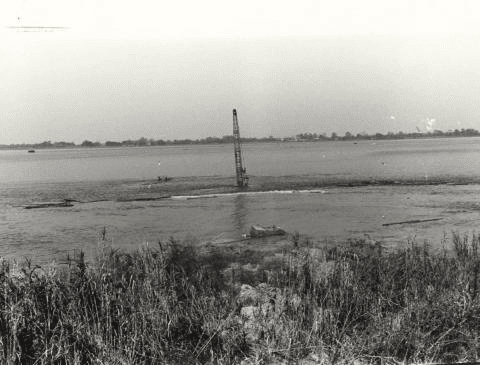
The lake had previously been only around 11 feet deep.
Yet the drilling platform began sinking.
The surface water accelerated toward the growing opening beneath the lake. The rig tilted farther, slipped toward the vortex and eventually disappeared.
It was not simply submerged.
The ground beneath the lake was collapsing as water entered the salt mine.
What had been a shallow lake was becoming the surface opening of an enormous underground cavity.
A Whirlpool Replaced the Calm Lake
As the underground chambers flooded, Lake Peigneur developed a gigantic whirlpool.
Water rushed toward the center.
Mud and debris followed.
Trees, vehicles and equipment near the shoreline were dragged toward the collapsing area.
Another drilling platform disappeared.
Eleven barges were pulled toward the vortex.
The scale of the event was extraordinary because the lake was effectively draining downward instead of overflowing outward.
The landscape itself seemed to be disappearing beneath the water.
Miners Underground Had Only One Way Out
While the destruction unfolded on the surface, an even more frightening situation was developing underground.
Workers inside the Diamond Crystal salt mine began encountering water.
Video: The Lake Peigneur Giant Sinkhole Disaster 1980
The mine had always been kept dry.
Now water was entering through the newly created breach and spreading through the underground chambers.
The miners had to reach the mine’s elevator and escape before the advancing water blocked their route.
Every second mattered.
The mine’s underground passages were not designed to become evacuation routes during a sudden flood.
Workers made their way toward the shaft while the flooding continued.
The situation could easily have become a mass-casualty event.
Instead, every miner escaped.
The drilling crew had already reached safety.
People on the surface also moved away from dangerous areas as the shoreline began collapsing.
The disaster was enormous, but its human toll was remarkably low.
The Delcambre Canal Suddenly Ran Backward
Perhaps the strangest part of the Lake Peigneur disaster came next.
The lake normally connected with the Delcambre Canal, which linked the area to the Gulf of Mexico.
As Lake Peigneur rapidly lost water, its elevation dropped dramatically.
The difference in water levels changed the direction of flow.
Instead of water moving outward toward the Gulf, Gulf water began rushing toward the lake.
The canal effectively reversed.
A massive flow of water entered Lake Peigneur, helping refill the enormous basin that had formed when the mine collapsed.
The transformation was almost surreal.
A lake that had been shallow and freshwater was suddenly being reshaped by powerful saltwater currents.
Barges were dragged toward the disaster zone, while some later resurfaced after the violent circulation subsided.
The water that eventually returned to Lake Peigneur was not the same water that had been there before.
How a Salt Mine Helped Change the Entire Lake
The underground salt mine played the central role in the catastrophe.
Once water entered the mine, it dissolved the salt around the original breach.
That process expanded the opening and destabilized portions of the underground structure.
As the mine filled, the lake above lost enormous quantities of water.
The mine itself was destroyed as a functioning operation.
Equipment and underground infrastructure disappeared beneath the lake.
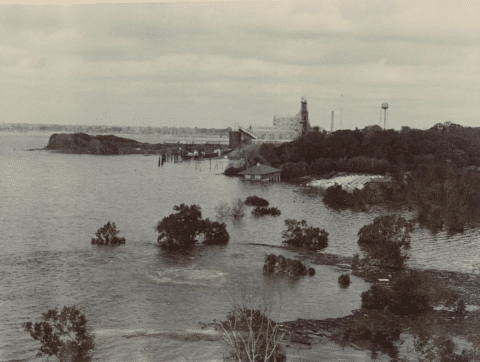
The lakebed collapsed and the basin became dramatically deeper.
In some areas, depths reached roughly 200 feet—an extraordinary transformation from a lake that had previously averaged only about 11 feet.
The disaster therefore did more than temporarily drain Lake Peigneur.
It permanently changed its geography.
The Lake Became Saltier and Much Deeper
When the Delcambre Canal reversed, salt water from the Gulf entered the newly deepened lake.
That changed the lake’s environment.
The freshwater body that local residents had known before 1980 was replaced by a deeper, more brackish ecosystem.
The landscape around Jefferson Island also changed permanently.
Sections of shoreline disappeared.
Trees and soil were pulled into the collapse.
The salt mine remained flooded and could not simply be reopened.
What began as an oil-drilling operation had transformed the entire physical character of the area.
Video: The Lake Peigneur Drilling Disaster 1980 | Plainly Difficult Documentary
Who Was Responsible for the Lake Peigneur Disaster?
The accident also produced a complicated legal battle.
Diamond Crystal Salt Company argued that the drilling operation had penetrated the mine and caused the flooding.
Texaco disputed aspects of the responsibility and the circumstances surrounding the drilling location.
The exact chain of technical decisions became difficult to reconstruct because the accident destroyed or submerged much of the evidence at the site.
The underground mine could no longer be examined in its original condition.
Eventually, Diamond Crystal reached a settlement with Texaco and Wilson Brothers.
The settlement reportedly totaled approximately $32 million.
The legal resolution provided compensation, but it did not make the disaster any less remarkable.
A relatively ordinary drilling operation had triggered one of the most extraordinary industrial accidents in Louisiana history.
Why Nobody Died in One of America’s Strangest Disasters
The Lake Peigneur story is often remembered for the oil rig and barges that vanished.
But perhaps the most remarkable fact is what did not happen.
No one was killed.
The miners escaped.
The drilling crew escaped.
People near the lake moved away from the collapsing shoreline.
Considering the speed and scale of the flooding, the outcome was extraordinary.
Imagine standing beside an ordinary lake and watching its water begin racing toward a giant hole that appears to have opened beneath it.
There would be almost no time to understand what was happening.
The workers who escaped did not know that they were witnessing a chain reaction capable of permanently changing the lake.
The Lake Peigneur Disaster Changed Louisiana Forever
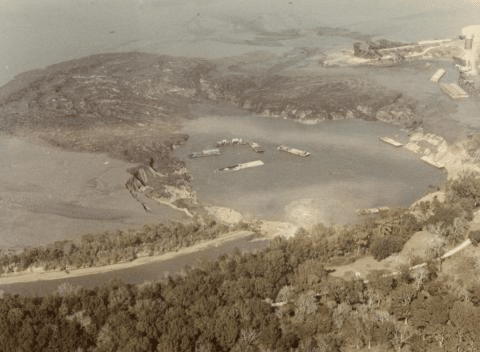
Today, Lake Peigneur is a reminder of how closely connected surface geography and underground industry can be.
From above, the lake looks like a body of water.
Below it lies the history of a salt mine that was destroyed in a matter of hours.
The 1980 accident demonstrated how a single breach can trigger a cascade of physical events.
Change block type or style
Move Image block from position 138 up to position 137
Move Image block from position 138 down to position 139
Change alignmentAdd image
A drilling error opened a pathway.
Water entered the salt mine.
The salt dissolved.
The opening expanded.
The lake drained.
The canal reversed.
The surrounding land collapsed.
And the lake eventually refilled as a dramatically different body of water.
Conclusion: The Day a Lake Turned Into a Drain
The Lake Peigneur disaster sounds almost impossible until the sequence is understood.
The lake did not mysteriously swallow an oil rig.
A drilling operation accidentally connected the surface water with an underground salt mine.
Once that connection opened, basic physics and geology did the rest.
Water followed gravity.
Flowing water dissolved salt.
The underground opening expanded.
The lake drained into the mine, dragging equipment and debris with it.
Then the surrounding canal reversed direction and brought water back into the transformed basin.
The result was one of the strangest industrial accidents ever recorded: a shallow Louisiana lake became dramatically deeper, an operating salt mine disappeared beneath it, an oil rig and 11 barges were swallowed, and the surrounding landscape was permanently altered.
Yet amid all that destruction came one astonishing fact.
Everyone got out alive.
Lake Peigneur’s story is a powerful reminder that some of the most unbelievable disasters do not require anything supernatural. Sometimes, one small mistake beneath the surface is enough to make an entire landscape change.