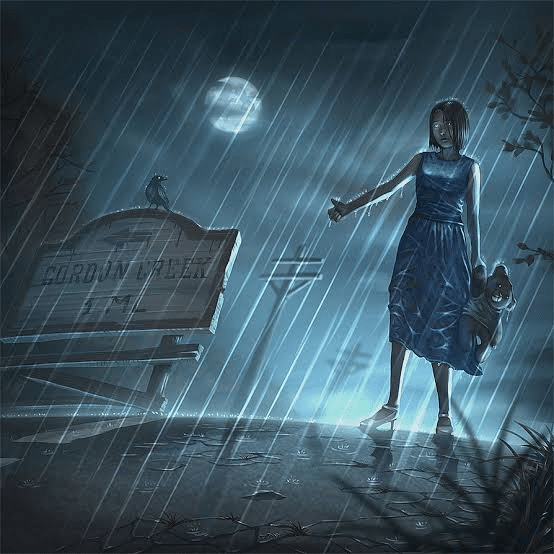
Picture a lonely road after dark.
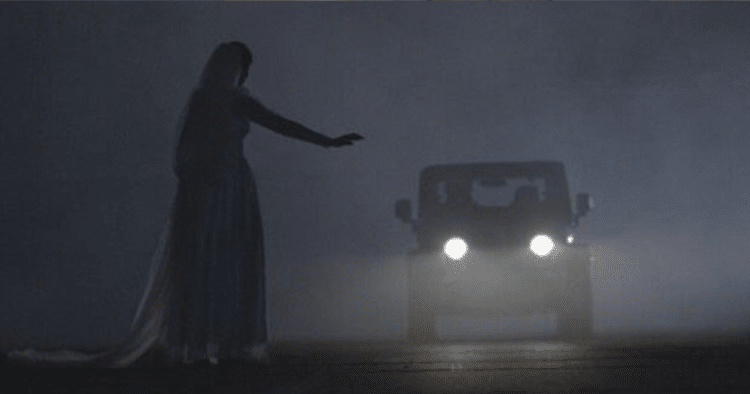
Rain taps against the windshield. The highway stretches ahead with almost no traffic. Then, in the headlights, the driver notices someone standing beside the road.
A stranger.
The car slows. The passenger climbs inside and quietly gives an address. For several minutes, nothing seems unusual.
Then the driver looks toward the passenger seat.
It is empty.
The door never opened. The car never stopped. Somehow, the passenger has vanished.
Versions of this unsettling story have circulated for generations. The road changes. The country changes. The name of the passenger changes. Yet the basic plot remains remarkably familiar.
So why does the same mysterious story keep appearing in places separated by thousands of miles?
The answer has less to do with ghosts than with the remarkable way folklore adapts to everyday life.
The Vanishing Hitchhiker Is Older Than the Automobile
It is easy to assume that the vanishing hitchhiker was born with the rise of the automobile.
After all, the story seems perfectly suited to modern roads: a lonely driver, a stranger on the shoulder and an unexplained disappearance somewhere between two destinations.
But folklore researchers discovered something surprising.
The basic story existed before cars became common.
In a landmark 1942 study published in California Folklore Quarterly, researchers Richard Beardsley and Rosalie Hankey collected numerous examples of what became known as the “vanishing hitchhiker” tradition.
Some of their examples involved automobiles, but others reached back to an earlier era of horse-drawn transportation.
A traveler would encounter a mysterious person on the road, offer a ride and continue toward a destination. Before the journey ended, the passenger would disappear.
Later, the traveler might discover that the stranger had died years earlier.
Video: The Vanishing Hitchhiker | Dark Urban Legend
Only the Vehicle Changed
That pattern is important.
The supernatural passenger did not need a car.
A horse-drawn carriage could serve the same purpose. A wagon could do it. Even a journey on foot could provide the basic framework.
The technology changed, but the story remained.
That tells us something important about folklore: people often preserve the emotional structure of a story while replacing its details with things familiar to their own time.
When automobiles became common, the horse and wagon disappeared from the legend.
The car took their place.
The ghost simply kept traveling.
What Happens in the Classic Vanishing Hitchhiker Story?
Although local versions differ, several elements appear again and again.
First comes the lonely road.
The setting is usually isolated, especially after sunset. The driver may be traveling through rain, fog or darkness, creating an atmosphere in which ordinary details already feel slightly unfamiliar.
Then comes the stranger.
The passenger is usually quiet and polite. Nothing about the encounter initially seems threatening.
That is important.
The story rarely begins with a terrifying apparition. Instead, the driver believes they are helping an ordinary person.
The passenger provides a destination and settles into the vehicle.
Then comes the disappearance.
Sometimes the passenger vanishes while the driver is watching the road. In other versions, the driver looks away for only a moment and discovers an empty seat.
But the most memorable versions do not end there.
They add a clue.
The Cemetery Reveal Makes the Legend Feel Real
Perhaps the driver follows the address the passenger provided.
A family answers the door.
The driver describes the mysterious passenger.
Then comes the revelation.
Someone matching that description died years ago.
Perhaps the death occurred on the same road. Perhaps the person died while traveling home. Sometimes the family remembers the exact date.
And in one of the best-known variations, the driver eventually discovers a grave.
The passenger’s identity is confirmed.
But the story often adds one final detail.
A coat.
The driver had given the passenger a jacket because the night was cold. After the passenger vanished, the coat somehow appears at the cemetery, draped over the grave.
It is a wonderfully effective storytelling device.
Why?
Because the coat feels like physical evidence.
The ghost may be impossible to prove, but the coat is something tangible. In the imagination of the listener, it transforms an impossible encounter into something that could almost be investigated.
Why Specific Details Make the Story More Convincing
The story often includes an exact road, a specific house, a particular accident and a recognizable family.
Those details create the impression of eyewitness testimony.
The listener is not simply hearing, “Someone saw a ghost.”
Instead, they hear:
A driver picked someone up on a particular road.
The passenger gave a real address.
A family lived there.
Someone with the same name had died.
There was a cemetery nearby.
Suddenly, the legend feels less like fiction and more like a strange local event.
That is one of the secrets behind its longevity.
The Friend-of-a-Friend Formula
There is another detail that appears with remarkable consistency.
The person telling the story is almost never the driver.
Instead, the story usually begins with something like:
“My friend’s cousin experienced this.”
Or:
“My uncle knew the driver.”
Or:
“This happened to someone who lived near here.”
Folklorists refer to this kind of structure as a “friend-of-a-friend” narrative.
It creates a fascinating balance.
The story feels personal enough to be believable, but the original witness remains just out of reach.
You cannot easily interview the driver.
You cannot inspect the car.
You cannot ask the passenger what happened.
The story stays permanently one step beyond verification.
Folklorist Jan Harold Brunvand examined this mechanism extensively in his work on American urban legends, including his 1981 book The Vanishing Hitchhiker: American Urban Legends and Their Meanings.
The title itself shows how central the story became to the study of modern folklore.
Why the Legend Appears on Roads Around the World
The most fascinating feature of the vanishing hitchhiker is its geographical flexibility.
American versions may involve a young woman who died in a highway accident.
Elsewhere, the mysterious passenger might appear in different clothing, have a different identity or be connected to a completely different local tragedy.
In some traditions, the figure is associated with a particular road or bridge.
Video: The Blue Bell Hill Ghost – The Real Story Of A Phantom Hitchhiker
In others, the story connects the passenger to a cemetery or family home.
The details change because communities naturally reshape stories around familiar places.
A legend about a mysterious traveler becomes much more powerful when people can say:
“It happened on that road.”
That is how folklore becomes local.
Every Community Can Give the Story Its Own Road
A supernatural story does not need a famous location.
It only needs a road people already know.
That makes the vanishing hitchhiker unusually adaptable.
A highway outside a major city can become the setting.
So can a mountain pass.
A country lane.
A suburban road.
A road beside a cemetery.
The physical landscape provides the stage, while the community supplies the names and details.
Over time, those additions can make the story feel as though it belongs exclusively to that place—even though nearly identical versions exist somewhere else.
The Legend May Borrow From Real Tragedies
There is another reason these stories can feel so convincing.
Sometimes a real tragedy exists behind a local version.
Someone really may have died in a road accident.
A family really may have lost a daughter, son or spouse.
A particular stretch of highway may genuinely have a history of serious crashes.
Folklore can attach itself to those events.
But that does not mean the supernatural portion of the story is historically verified.
A real accident provides emotional material.
The legend provides the explanation.
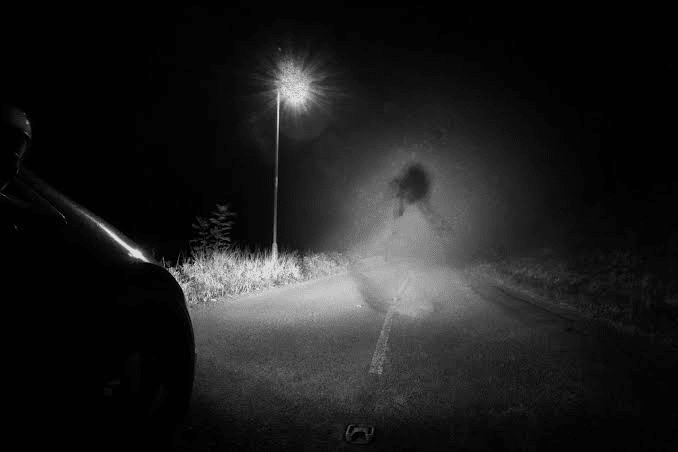
This combination can be powerful because the underlying grief is genuine.
The ghost story simply gives that grief a narrative form.
The Psychology Behind the Mysterious Passenger
Why would people continue telling a story like this for more than a century?
Part of the answer may be psychological.
Roads represent movement.
We leave one place and travel toward another. Most journeys have a beginning and an end.
The vanishing hitchhiker interrupts that familiar pattern.
The passenger gets into the car but never reaches the destination.
That unfinished journey becomes the heart of the story.
The passenger may represent someone who died suddenly, someone who never made it home or someone whose final journey ended too soon.
In that sense, the ghost is not necessarily frightening.
Sometimes, the figure is almost sympathetic.
The passenger simply wants to go somewhere.
Perhaps home.
Perhaps somewhere they never reached in life.
That emotional ambiguity gives the story far more staying power than a simple tale about a monster on a dark road.
How Cars Turned an Old Ghost Story Into Modern Folklore
The automobile transformed the legend because it created a new kind of private space.
A driver alone at night occupies a small enclosed world.
The doors are locked. The windows are closed. The road outside is dark.
Then someone enters.
The stranger is suddenly inside the driver’s personal space.
That creates an immediate sense of vulnerability.
The vanishing hitchhiker combines several familiar anxieties at once:
Traveling alone.
Meeting strangers.
Driving at night.
Road accidents.
Sudden death.
And the fear that something can enter your world without warning.
That combination made the story almost perfectly suited to twentieth-century car culture.
What the Historical Evidence Actually Shows
Folklorists have documented hundreds of variations of the vanishing hitchhiker.
That evidence is significant.
It demonstrates that the story has circulated widely, changed across generations and adapted to different cultures.
What it does not demonstrate is that a supernatural passenger has ever been independently verified.
No authenticated police report establishes a passenger disappearing from a moving vehicle under paranormal circumstances.
No documented case proves that a coat left on a grave belonged to a mysterious hitchhiker who vanished during a journey.
And no single original incident has been established as the definitive source of the legend.
The evidence points toward something different.
The vanishing hitchhiker is a highly successful folklore pattern.
Why the Story Still Works After All These Years
The modern world has changed dramatically since the earliest versions of this story appeared.
Cars are safer.
Phones can locate us almost instantly.
GPS can tell us where we are.
Emergency services can be reached within seconds.
Yet the story survives.
Why?
Because its emotional ingredients have not disappeared.
People still travel alone.
People still die unexpectedly.
People still wonder about those who never made it home.
And people still drive along dark roads where the world outside the headlights seems to disappear.
The vanishing hitchhiker occupies that narrow space between ordinary travel and the unknown.
Perhaps that is why the story feels so familiar even when we hear a completely new version.
Conclusion: The Passenger Keeps Changing, but the Story Remains
The vanishing hitchhiker did not belong to one highway, one country or one generation.
Researchers found versions that predated the automobile, proving that the underlying story was already circulating before cars transformed transportation.
The vehicle changed.
The road changed.
The passenger’s name changed.
The local tragedy changed.
But the basic pattern survived: a stranger appears, receives a ride, disappears before reaching the destination and leaves behind a clue suggesting that the passenger was never alive in the first place.
There is no verified evidence that such supernatural journeys actually occurred.
But there is abundant evidence that people have been telling versions of the story for generations.
And perhaps that is the more interesting mystery.
The ghost may not be real.
The story certainly is.